Yard waste pickup is one of the better deals in municipal services. You rake, you bag, you drag it to the curb, and a truck takes it to a compost site. The catch is that every Ontario municipality runs its program a little differently, and the rules about bags, bundles, weights and seasons decide whether your pile gets collected or gets a sticker and stays put.
This guide explains how yard waste pickup works in our part of Ontario, using the published rules from four municipalities we deliver bins in: Kingston, Peterborough, Durham Region and Barrie. Then it covers the jobs that are too big, too heavy or too woody for the curb, and what to do with them. If you want a plan for the fall rush itself, our fall yard cleanup guide covers the season. This one is about the pickup program and how to work with it year-round.
How curbside yard waste pickup works
Most programs share the same bones, even when the numbers differ.
Yard waste goes out in kraft paper yard waste bags or in a rigid, open-top container with handles. Plastic bags are refused almost everywhere, because the material goes to a composting facility and plastic ruins compost. Some municipalities refuse compostable plastic bags too, and cardboard boxes are being dropped from more programs because they fall apart when wet.
Branches go out in bundles tied with natural twine or string. Each program sets a maximum bundle length, a maximum bundle diameter, and a maximum thickness for any single branch. Wire, tape and plastic cord are common reasons a bundle gets left behind.
Every bag, can and bundle has a weight limit, somewhere between 13 and 23 kilograms in the programs below. That limit exists for the person lifting it, which is why a soaked paper bag of leaves can be refused even though it looks like every other bag on the street.
Collection is seasonal. In our area, programs run from early spring to late fall, some weekly and some every second week, then stop for winter. Christmas trees often get their own collection in January.
And every program has a list of things it will not take. Sod, soil, stones and stumps are on most of those lists. More on that below.
Four real examples from our area
The rules below come from each municipality's own yard waste page, checked in October 2026. They change, sometimes with a new collection contract, so read the linked page before you set anything out.
| Municipality | Curbside season | Bundle limits | Weight limit | Sod at the curb? |
|---|---|---|---|---|
| City of Kingston | Fall brush and leaf weeks | 90 cm long, 15 cm across | Under 20 kg per bag or container | No, drop it off |
| City of Peterborough | Weekly, April to end of November | 1 m long, 30 cm across | Under 13 kg | Small amounts only |
| Region of Durham | April to early December | 1 m long, 76 cm wide, no branch over 10 cm | 20 kg | No |
| City of Barrie | Every other week, April to November | 1.2 m long, 30 cm across, limbs under 7 cm | 20 kg | Yes |
City of Kingston
Kingston runs free brush and leaf pickup at the curb in the fall, with brush and leaves collected on separate, designated weeks for each zone. Put the wrong material out on the wrong week and it stays at the curb. Leaves go in brown kraft paper bags or rigid containers with handles, each under 20 kg, and the city is clear that plastic bags are refused even when they are compostable. Brush bundles can be no larger than 90 cm long and 15 cm across, tied with natural materials such as string, twine or jute.
Outside the fall program, Kingston offers free yard waste drop-off year-round at the Kingston Disposal Site. Tree limbs, logs, root balls, Christmas trees and sod go there rather than to the curb, and the city asks that sod be dry with the excess dirt shaken off. When we checked, larger limbs and logs had been temporarily redirected to a different site, so read the page before you load the trailer.
City of Peterborough
Peterborough collects yard waste weekly from the first full week of April to the end of November, and there is no cap on how much you put out. Use paper yard waste bags, bushel baskets, or a rigid open-top container of up to 80 litres with two handles and the city's yellow yard waste labels. Each one has to weigh less than 13 kg, which is lighter than most programs. Brush bundles can be up to 1 m long and 30 cm across.
Peterborough takes small quantities of sod within the weight limit. Large quantities of sod, soil, stones, stumps and oversized brush are refused. Yard waste can also go to the City/County Landfill year-round. One practical tip from the city: in late fall, bags work better than bins, because wet leaves freeze to the sides of a container and do not dump cleanly.
Region of Durham
Durham's yard waste program runs from April to early December. Paper yard waste bags or clearly labelled, returnable open-top containers are accepted, and the Region suggests drilling drainage holes in the bottom of a container. Nothing can weigh more than 20 kg. Brush bundles can be up to 1 m long and 76 cm wide, with no branch thicker than 10 cm.
Durham's not-accepted list surprises people because it includes grass clippings, along with sod, soil, stones, hay bales and plastic flower pots. Leave the clippings on the lawn instead.
City of Barrie
Barrie collects yard waste every other week, alternating with garbage, from the first full week of April to the last full week of November. There is no limit on the number of bags, containers or bundles. Bundles can be up to 1.2 m long and 30 cm across, at 20 kg or less, with no limb thicker than 7 cm. Paper bags, garbage cans of up to 120 litres with handles, and old green bins are accepted. Plastic bags and cardboard boxes are not.
Barrie is the outlier on sod: it is on the accepted list, along with grass clippings and straw bales. Dirt, rocks, stumps and milled lumber are refused. Residents can also take yard waste to the Barrie landfill year-round. The city charges by weight above a free allowance per load, and sod is accepted there only once the soil has been removed, so check the current rates before you go.
What yard waste pickup usually refuses
Put the programs side by side and the same items keep turning up on the "no" lists:
- Soil and stones. Too heavy for the bag limit, and they spoil the compost.
- Stumps, root balls and logs. Too big for the truck and too slow to break down.
- Sod. Refused at the curb in Kingston, Durham and the Region of Waterloo, limited in Peterborough, accepted in Barrie. By weight it is mostly soil, which is why so many programs say no.
- Lumber. Fence boards, deck boards, landscape timbers and pallets are not yard waste, even though they came out of the yard. Treated wood never is.
- Plastic. Bags, pots, landscape fabric and edging.
- Pet waste and food scraps. These belong in the green bin or the garbage, depending on your town.
- Invasive plants. Kingston, for example, says giant hogweed and wild parsnip cannot go in the green bin or yard waste. Follow your municipality's instructions for these.
Hiding a refused item in the middle of a row of bags rarely works. In the Region of Waterloo, for one, crews sticker unacceptable items and leave them behind.
Getting more out of the program
A few habits make the curb program work much harder for you.
Keep bags dry. A paper bag of wet leaves can blow past the weight limit and tear when it is lifted. Store full bags in the garage or under a tarp until collection day, and roll the tops closed.
Cut branches to length as you prune. It is far easier to trim a limb to bundle length while it is on the ground in front of you than to wrestle a tangled pile into bundles a week later.
Mulch instead of bagging. Barrie and the Region of Waterloo both encourage residents to mulch leaves with the mower and leave clippings on the lawn. It feeds the grass and means fewer bags.
Know your last collection date. When the season ends, some programs stop treating yard waste as compost. In the Region of Waterloo, yard waste set out after the season goes to landfill and counts against your garbage limit.
Use the drop-off site. Every municipality above has a landfill or yard waste site that takes residential yard waste year-round, sometimes free and sometimes by weight. A trailer run can clear a pile the curb never would. Check the hours and rates on the official page before you go.
When the job outgrows yard waste pickup
Pickup is built for maintenance: leaves, prunings, garden waste, the steady trickle of a normal yard. It is not built for projects. These are the jobs where it runs out of road:
- Pulling out a hedge, a row of cedars or overgrown shrubs, roots and all.
- A tree coming down, whether planned or after a storm. Our storm damage cleanup guide covers the safety side of that.
- Lifting a lawn for a garden, patio or regrade. Our sod removal guide explains why sod is a weight problem.
- Tearing out old landscaping: timbers, edging, fabric and stone.
- A yard nobody has touched in years, often at a new house or an estate.
You can still use the program for part of it. Bags and bundles over several collection weeks, plus a few depot runs, will handle a medium job if you have time and a vehicle. Be honest about the maths, though. If the job would take ten collection cycles, half a dozen trailer trips, or a weekend of cutting everything into 90 cm pieces, a bin usually costs less once you count your time.
Equally honest: if you have six bags of leaves, do not rent a bin. Put them out on collection day.
Planning a bin for a big yard job
When a bin does make sense, plan it around what is going in.
Brush and branches are bulky and light, roughly 0.04 to 0.1 tonnes per loose cubic yard. A large hedge or a pile of limbs fills a bin by volume long before weight matters. Cut long limbs so they lie flat, and load the bushy material first so heavier pieces press it down. A 10 or 15-yard bin covers most residential cleanups, and our 10-yard bin guide shows what fits in the smallest size.
Sod, soil and stone are the opposite. They run about 1.0 to 1.4 tonnes per cubic yard, so they use up the weight allowance while the bin still looks half empty. Tell us when you book and we will plan them as a heavy load. Our dirt and concrete bins handle that side of a project.
Mixed jobs, such as a hedge plus old timbers plus some sod, go best when you tell us the rough amounts of each. Our cubic yard calculator turns a pile into a volume and a weight range.
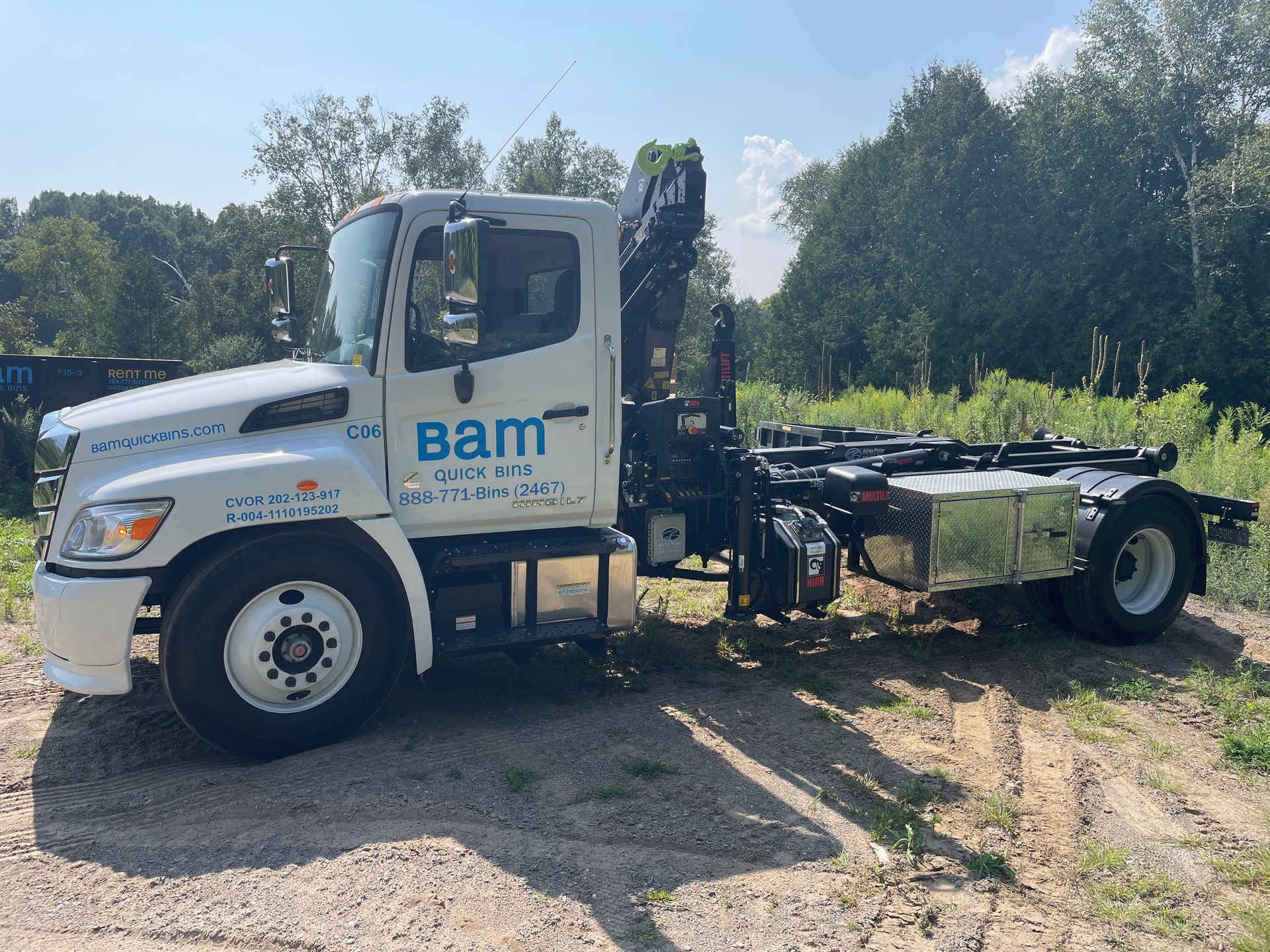
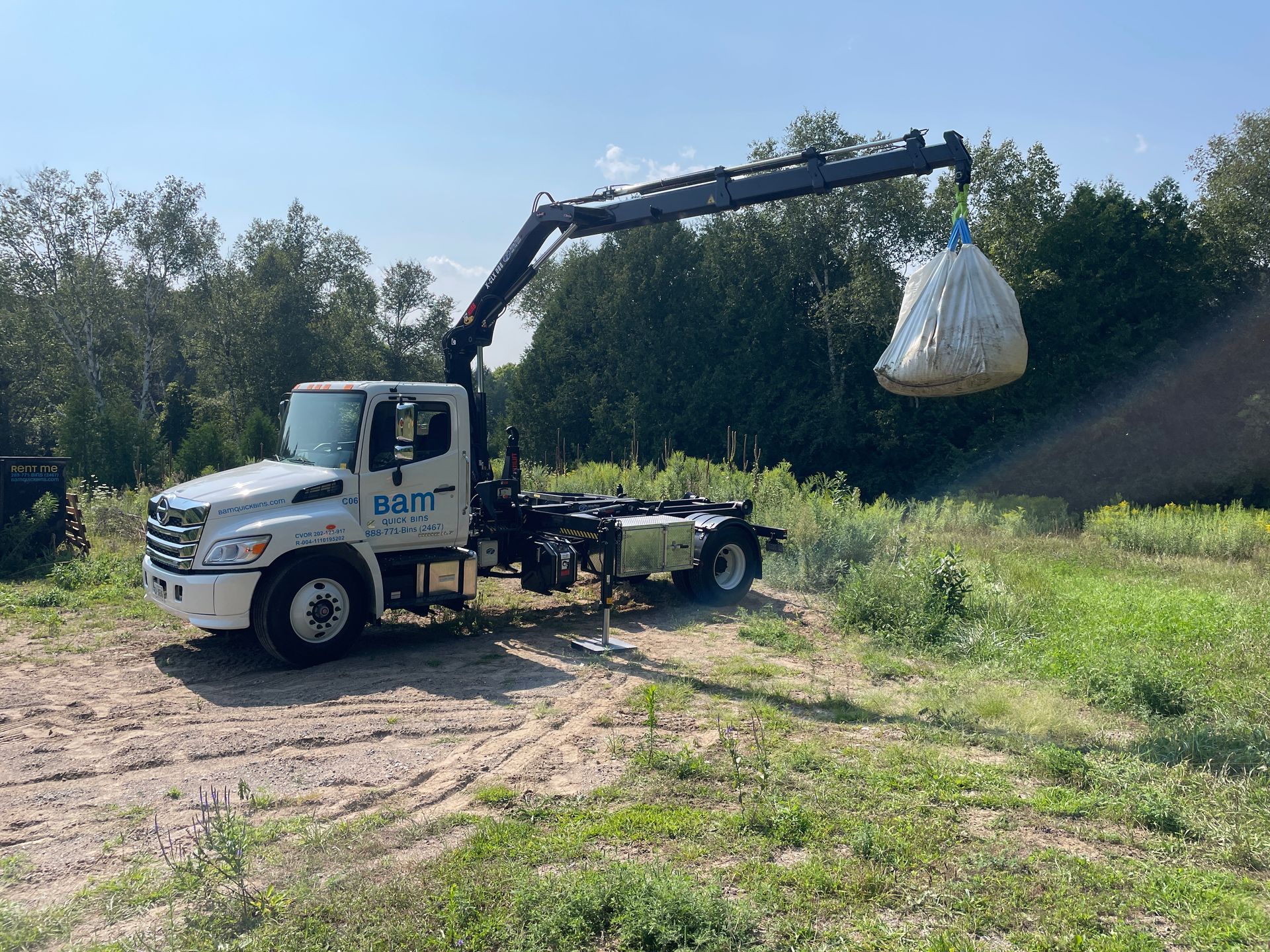
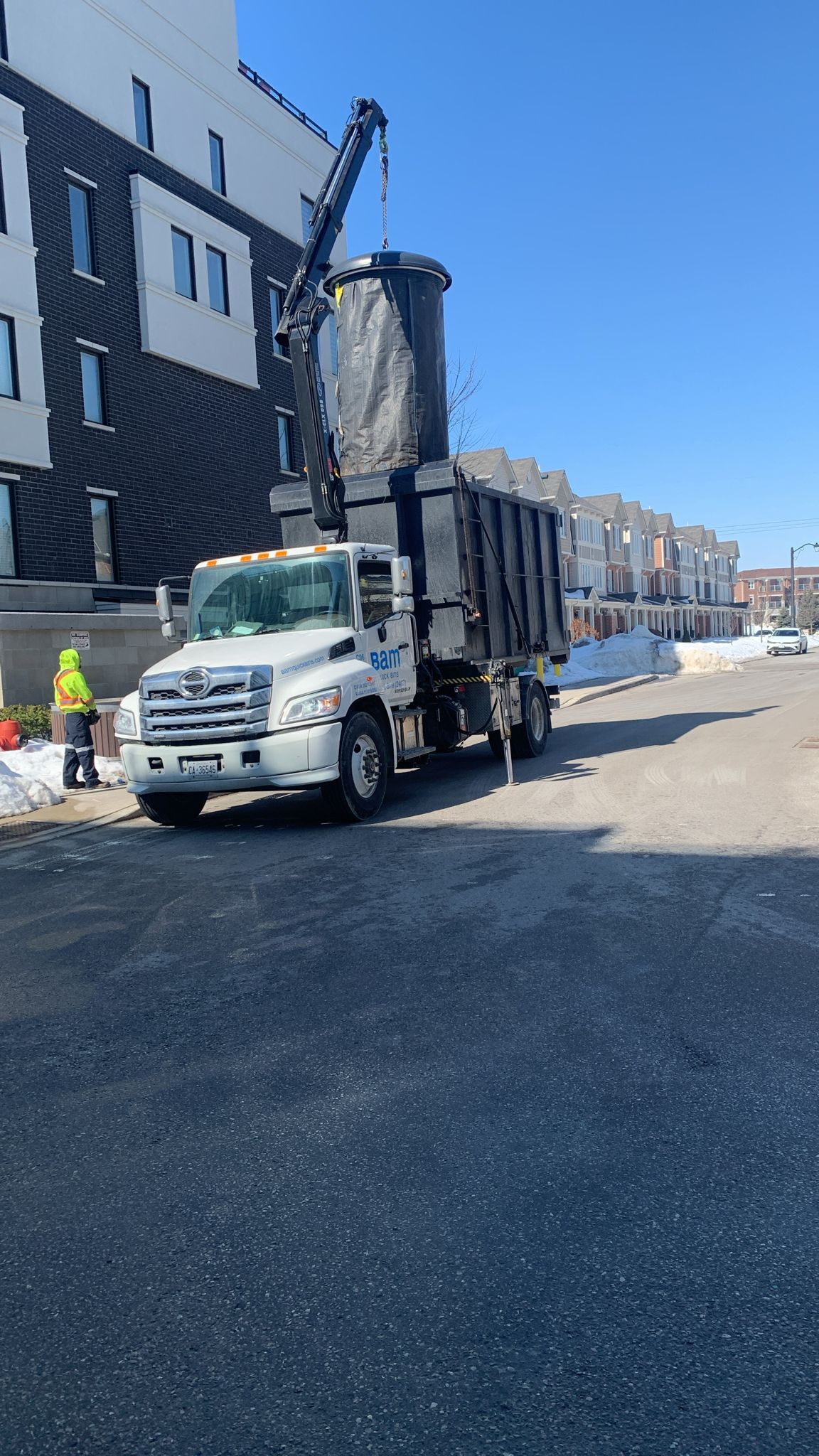
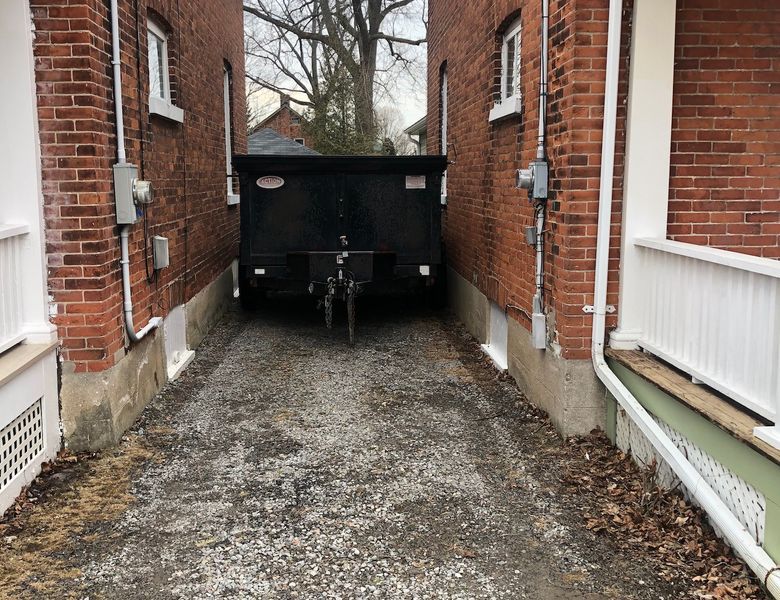
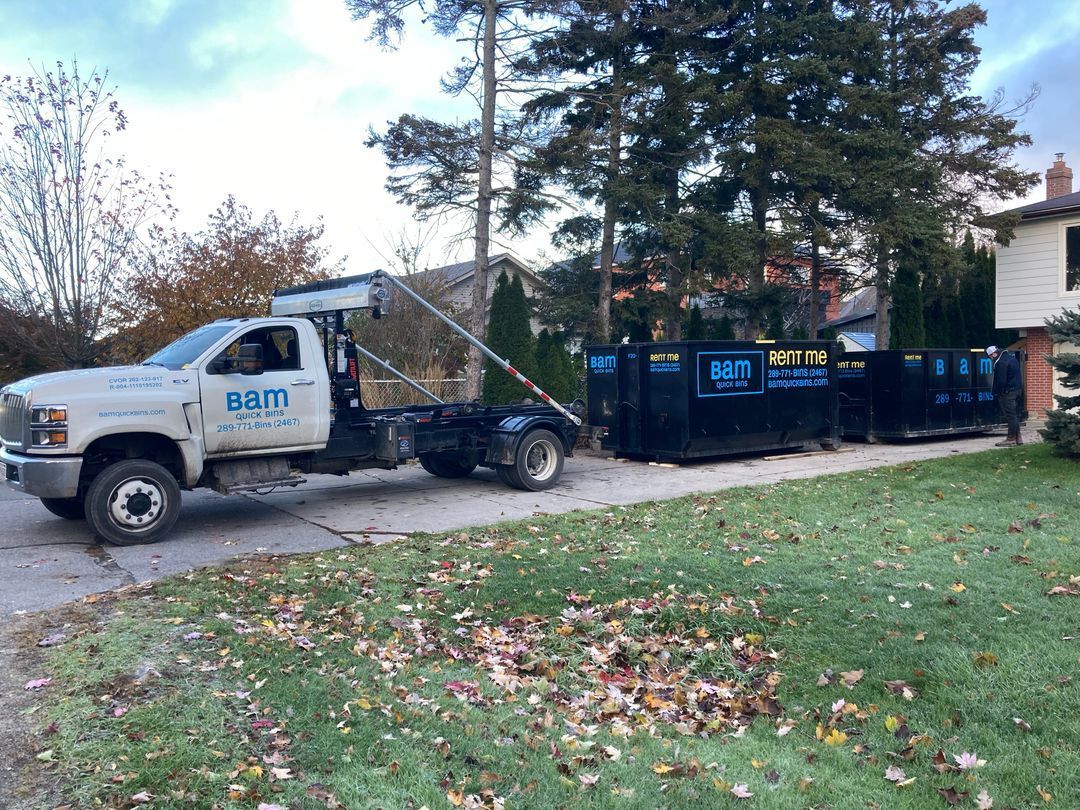
Our landscape debris bins take branches, brush, leaves, clippings, sod and soil, and nothing needs to be bagged or bundled. Every standard rental runs 5 days with 1 metric tonne of disposal included, and boards go under the bin to protect the driveway. For a job under a tonne that will not fill a bin, a Bam Bag holds leaves, small branches and garden debris and fits in a side yard.
Where we help
We deliver yard and landscape bins across our service area, including Kingston, Peterborough, Whitby and the rest of Durham Region, and Barrie through our Innisfil division. Each division page lists local prices. Tell us what the project is and roughly how much brush, soil or sod is involved, and we will tell you straight whether a bin, a bag or the curb is the right answer.