Every barbecue reaches the end eventually. The burners rust through, the firebox gets a hole you can see daylight through, and the igniter stopped clicking three summers ago. Then it sits on the patio for another year because nobody is quite sure how BBQ disposal works.
It is not complicated, but it does have an order. The propane tank goes one way, the grill goes another, and what you do with the grill depends on where you live and how much effort you want to put in. This guide walks through it: the tank, cleaning and stripping the grill, what the metal is worth, verified examples of how Ontario municipalities handle barbecues, and when a rental bin makes sense.
Fix it or toss it?
Before you haul anything, take an honest look. A lot of barbecues are thrown out for problems that cost less to fix than a new grill.
Burners, heat plates, cooking grates, and igniters are replaceable parts on most gas grills, and hardware stores carry universal versions. If the firebox and lid are solid and the problem is uneven heat or a dead igniter, a weekend of parts may get you several more seasons.
It is time to let it go when:
- The firebox or the bottom of the cook box has rusted through.
- The cart or frame is so rusted that the grill wobbles or leans.
- The gas valves or manifold are damaged, or you smell gas after the tank is connected and nothing is lit.
- The repairs would cost close to what a new grill does.
If you smell gas, close the tank valve and stop using it. Do not try to repair gas valves yourself.
Step 1: deal with the propane tank
The tank is the part that matters most, and it never goes with the grill.
Close the tank valve, disconnect the regulator, and set the cylinder upright outdoors, away from the house. Then decide where it goes. You can swap it at a cylinder exchange if you want a full one for a new grill, take it back to a propane dealer, or take it to your municipality's household hazardous waste depot if it is expired, damaged, or unwanted. Our propane tank disposal guide explains how to read the date on the collar and handle each option safely.
Propane tanks cannot go in curbside garbage, scrap piles, or rental bins, ours included. The municipal programs that collect barbecues, like Toronto's and Oshawa's, say so plainly: no propane tanks.
If your barbecue runs on natural gas, it is hooked to your home's gas line. Shut the gas off at the barbecue's valve, and have a licensed gas technician disconnect and cap the line. Do not just unscrew the hose and walk away.
Step 2: empty and clean it out
Next, get out everything that is not grill.
- Remove the grease tray and drip cup, and scrape out built-up grease. Let it harden and put it in the garbage, or follow your municipality's rules for fats and grease.
- Pull out lava rocks, ceramic briquettes, or flavourizer bars.
- For a charcoal grill or smoker, make sure the ash is completely cold. Give it a couple of days after the last fire, then bag it.
- Take the battery out of the electronic igniter. Most push-button igniters use a single AA battery that is easy to forget. It goes to a battery drop-off, not the bin.
A greasy grill is unpleasant to take apart and can be refused by some scrap yards, so this step pays off later.
Step 3: take it apart
You do not have to dismantle a barbecue to get rid of it, but breaking it down makes it easier to move, easier to fit in a car or bin, and worth more at a scrap yard if you sort the metals.
Tools that help:
- A socket set and screwdrivers.
- Penetrating oil, applied the night before to rusted bolts.
- An angle grinder or a reciprocating saw with a metal blade, for bolts that will not budge.
- Heavy gloves and safety glasses. Old grills are full of sharp, rusty edges.
Work from the top down: grates and heat plates out, then the lid, then the burners and the gas manifold, then the side shelves, then the cook box off the cart. Most grills come apart into a dozen or so pieces in under an hour, and the seized bolts are what make the difference.
As you go, sort the pieces into piles: metal, plastic, and anything else. Side shelves, handles, knobs, and wheels on many grills are plastic and go in the garbage.
What the metal is worth
Be realistic here. A typical gas barbecue is mostly thin painted steel, and steel pays very little per kilogram. One barbecue will not buy dinner.
A few parts are worth separating, though:
- Cast aluminum. Many older and mid-range grills have a cast aluminum firebox and lid. It is non-ferrous, so a magnet will not stick to it, and it is worth noticeably more than steel.
- Stainless steel. Grates, burners, and trim on better grills are often stainless. Keep it separate, since yards buy it as its own grade.
- Cast iron. Heavy grates and some burners are cast iron. It is ferrous and pays like steel, but it is dense, so it adds weight to a load.
- Brass. The occasional valve or fitting.
A fridge magnet sorts most of it in a few minutes. If you already have scrap from a garage or renovation, a stripped barbecue adds to the pile. If it is the only metal you have, the trip may cost more in fuel than the yard pays. Our guide to scrap metal recycling explains how scrap yards weigh and price metal.
Call ahead before you go. Yards set their own rules, and some will not take a grill with grease still in it, or anything that might have held gas.
How Ontario municipalities handle old barbecues
Rules vary a lot across Ontario. Some places pick barbecues up at the curb, some want a booking, and some do not collect them at all. Here are examples we checked on official municipal sites. Check the current rules, dates, and any fees on your own municipality's site before you set anything out.
Toronto collects barbecues at the curb with its oversized and metal items service. You place the barbecue beside your garbage bin on garbage day, with no propane tank. The city charges each household an annual fee for this service whether you use it or not.
Hamilton does not pick up scrap metal at the curb. Its appliances and scrap metal page lists barbecue frames among the metal items you can drop off free at the city's Community Recycling Centres, for residential loads.
Oshawa takes barbecues, with no propane tanks, through its large item collection. You book it at least two business days before your regular garbage day, and there is a limit on items per collection.
Whitby lists barbecues among the items for its large item pick-up and special collections, booked ahead. The town pauses the program every November for leaf and yard waste season, with booking dates returning in early December, so plan around that if you are clearing the patio this fall.
In the County of Simcoe, which handles waste for towns like Innisfil and Bradford, bulky collection runs year-round by appointment, with a fee for each group of items. Metal waste is on the accepted list, and there is a per-item weight limit, so a heavy grill may need to come apart first.
Kingston takes a different approach. Its special item waste disposal page says the city does not offer curbside pickup for large items, and points residents to private transfer stations or a private pickup service.
Other ways to get rid of a barbecue
If your municipality does not collect barbecues, or the next collection is weeks away, you still have options.
A grill that works, or nearly works, can often be given away. A free listing for a working barbecue, or even one that needs a burner, tends to get a reply quickly in spring.
Scrap collectors often pick up metal for free, since they earn the scrap value. They usually want the tank gone and the grill reasonably clean.
When you buy a new barbecue, ask the retailer whether they take the old one away on delivery. Some do, some do not, and it is worth asking before you pay.
Pellet grills and electric grills have a controller, a motor, or other electrical parts. Check how your municipality wants those handled before you set them out, since some programs treat electrical items separately from plain scrap metal.
Ceramic kamado-style grills are a different animal. They are heavy, there is no metal worth scrapping beyond the bands and hinges, and the ceramic body is garbage. Take the lid off first and move the pieces separately.
Can a barbecue go in a rental bin?
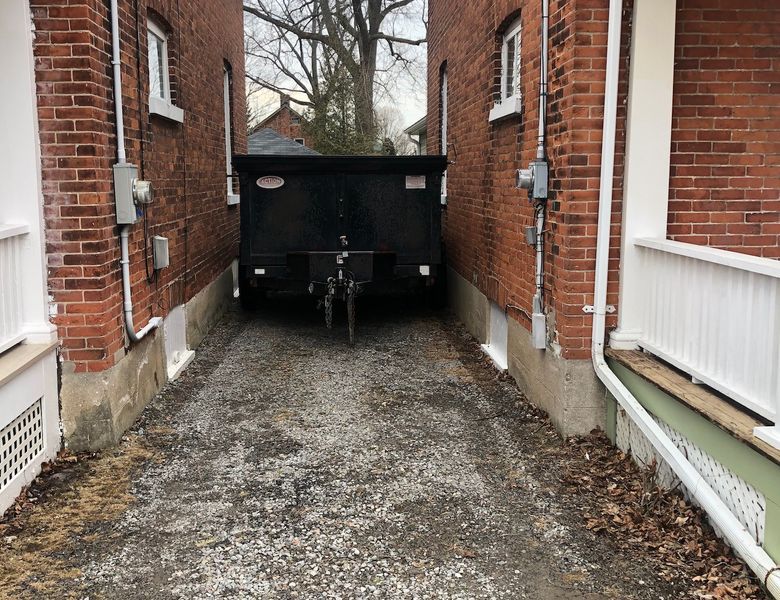
Yes, with conditions. A barbecue can go in one of our bins once the propane tank is removed. Our bins do not accept propane tanks, hazardous waste, paint, chemicals, or batteries, so pull the igniter battery too, and clean out the grease.
That said, we would not rent a bin for one barbecue. It is a few pieces of light metal that rarely justify a bin on their own. A bin makes sense when the barbecue is one item in a bigger job: a garage cleanout, a patio or deck tear-out, a cottage closing, or a move. Our garage cleanout checklist and deck removal guide are both jobs where an old grill tends to turn up.
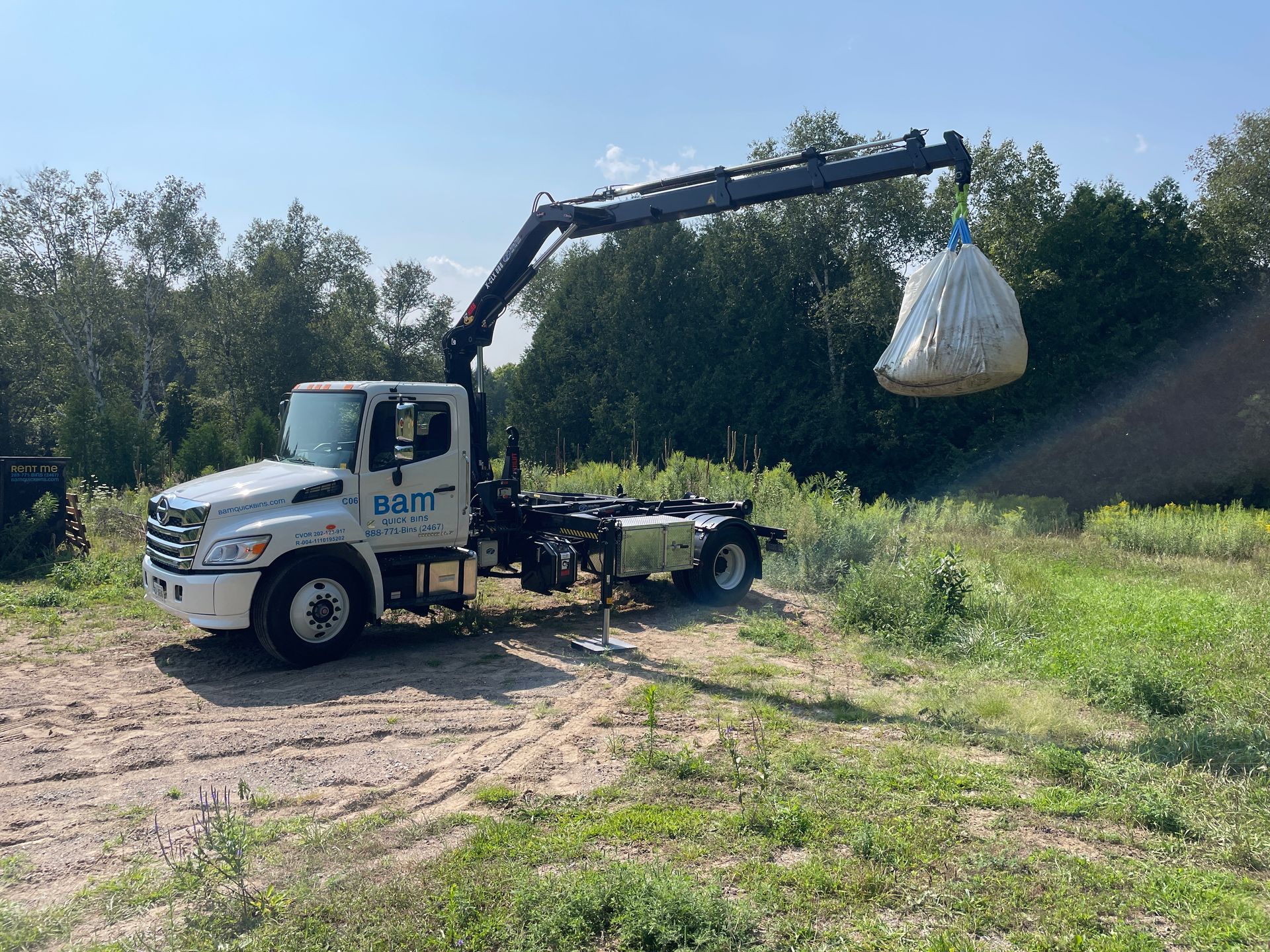
For that kind of job, our rubbish removal bins take household junk, old furniture, and metal in one load. A smaller cleanout might fit in a Bam Bag instead. And if you would rather not lift anything, our junk removal crews in places like Pickering and Hamilton can take the grill and the rest of the pile.
A quick checklist
Before the barbecue leaves your property:
- Close the tank valve, disconnect it, and set the tank aside upright, outdoors.
- If it is natural gas, have a licensed gas technician disconnect and cap the line.
- Empty the grease tray, ash, and briquettes.
- Remove the igniter battery.
- Strip it down and sort the metal if you are taking it to scrap.
- Check your municipality's collection rules, booking dates, and fees.
- Take the tank to an exchange, a dealer, or a household hazardous waste depot.
Where we help
We deliver bins and run junk removal across southern and eastern Ontario, including Toronto, Hamilton, Whitby, Oshawa, Innisfil, and Bradford. If the old barbecue is part of a bigger cleanout, tell us what else is going and we will suggest a size. Our household hazardous waste guide covers the tank, the lighter fluid, and the rest of the shelf that cannot go in a bin.