


An old toilet is about the least glamorous thing you will ever carry out of a house. It is heavy, awkward, wet in places you did not expect, and made of a material that breaks into very sharp pieces. Toilet disposal is simple enough once it is out, but the rules for where it can go change from one town to the next.
This guide covers the whole job: removing the toilet without flooding the bathroom, what to do about the wax ring and flange, getting it out of the house in one piece, and where it can go afterwards, with examples we checked on municipal sites across our service area.
If you are renovating the whole bathroom, our bathroom demolition guide covers the tub, vanity, and walls. This one stays with the toilet.
What you need
Most toilets come out with basic tools in under an hour. Gather these first:
- An adjustable wrench or a small socket set.
- A stiff putty knife or scraper.
- A large sponge, old towels, and a bucket.
- Rubber gloves, plus heavy work gloves for carrying.
- A rag or a rubber test plug sized for the drain.
- A hacksaw blade or an oscillating tool, for corroded bolts.
- Cardboard or an old blanket to set the toilet on.
- A new wax ring and closet bolts, if a new toilet goes in right away.
Step 1: shut off the water and drain the toilet
Find the shut-off valve on the wall or floor behind the toilet and turn it clockwise until it stops. Older valves sometimes refuse to close fully or start to drip when turned. If that happens, shut off the water main and plan to have the valve replaced before the new toilet goes in.
Flush and hold the handle down to drain as much of the tank as you can. Sponge out what is left in the bottom of the tank, wringing it into the bucket.
The bowl still holds water in the trap. Push most of it down the drain with a plunger, then sponge out the rest. The drier the toilet, the less mess on the walk out.
Step 2: disconnect and take it off the floor
Put a towel under the supply line and unscrew it from the bottom of the tank. A little water will run out.
If it is a two-piece toilet, take the tank off first. Undo the nuts under the tank, usually two or three, and lift the tank straight up off the bowl. This splits one heavy, awkward lift into two manageable ones, and some municipalities want the tank and bowl set out separately anyway.
Pop the plastic caps off the bolts at the base of the bowl and remove the nuts. If they are rusted solid, a little penetrating oil helps. If it does not, cut the bolts with a hacksaw blade or an oscillating tool, keeping the blade away from the porcelain.
Straddle the bowl, rock it gently side to side to break the wax seal, and lift it straight up. Set it on cardboard or an old blanket, not straight on tile.
Plug the drain immediately with a rag or a test plug. An open drain lets sewer gas into the house and invites a dropped screw or a handful of debris to fall in.
Step 3: the wax ring and the flange
With the toilet off, you are looking at the flange, the ring fitting on top of the drain pipe that the toilet bolts to, and the remains of the old wax ring.
Scrape the old wax off the flange and the floor with a putty knife. It is sticky, smelly, and impossible to clean off a glove, so scrape it straight into a garbage bag. Never reuse a wax ring. A new one is cheap, and a reused ring is a slow leak waiting to happen.
Then look at the flange itself:
- A sound flange sits flat, is screwed firmly to the floor, and has both bolt slots intact.
- A cracked plastic flange, or a broken bolt slot, can often be fixed with a repair ring or a bolt-down repair plate that goes over the old one.
- A rusted-out cast iron flange, a loose flange, or a floor that feels soft around it means a bigger repair. That is usually water damage, and it is worth calling a plumber.
One more thing to check if you are retiling. The flange should sit on top of the finished floor, not below it. New tile can raise the floor enough that the flange ends up too low, which leads to leaks. Flange extenders and spacers solve this, but plan for them before the new toilet goes in. Our tile removal guide covers what comes up with the old floor.
Carrying it out safely
A one-piece toilet is a single heavy lift. Most toilets weigh somewhere around 60 to 120 pounds, and the weight is in an awkward shape that is hard to hold close to your body.
- Take the seat off and set the tank lid aside separately. The lid is thin porcelain and breaks easily.
- Tape the bowl's openings or wrap it in an old blanket so the last few drops stay inside.
- Carry with two people if you can, and clear the path to the door first.
- Wear heavy gloves and keep it upright. Porcelain that cracks against a doorframe breaks into edges as sharp as glass.
Do not try to smash a toilet to make it fit in a garbage bag or cart. Broken porcelain is dangerous to you and to the collection crew, and most curbside programs that take toilets want them whole.
Where an old toilet can go
There are a few routes for toilet disposal in Ontario: curbside or booked collection, a municipal drop-off, porcelain recycling where it exists, reuse, or a rental bin with the rest of your renovation debris. Which ones you have depends on where you live. Here are examples we checked on official municipal sites. Programs and booking dates change, so check the current rules and any fees on your municipality's site before you set anything out.
Curbside and booked pickup examples
Toronto lists toilets among the oversized and metal items it collects at the curb. Set the toilet beside your garbage bin on garbage day. The city charges each household an annual fee for the service whether you use it or not.
Peel Region, which covers Mississauga, Brampton, and Caledon, collects up to two toilets at the curb on your regular garbage day, according to its waste sorter. A two-piece toilet has to have the tank removed and set out separately from the bowl, or it will not be collected. You can also take a toilet to a Peel Community Recycling Centre, where a disposal fee applies.
Ottawa's page on bulky waste describes dismantled toilets as bulky items, alongside sinks and furniture. Check the city's current set-out rules before you put one out.
Oshawa takes porcelain sinks and toilets through its large item collection. You book it at least two business days before your regular garbage day, with a limit on items per collection.
In Ajax and Pickering, Durham Region's furniture and large item collection picks up regular large items on garbage day without a booking, but porcelain requires an appointment.
The County of Simcoe, which handles waste for towns like Innisfil, Bradford, and Essa, takes bath fixtures in its bulky collection, which runs year-round by appointment with a fee for each group of items. There is a per-item weight limit, so a heavy one-piece toilet may be easier to drop off.
Kingston does not offer curbside pickup for large items. Its special item waste disposal page points residents to private transfer stations or a private pickup service.
Porcelain recycling, where it exists
Porcelain can be recycled, but few municipal programs do it, so do not assume yours does.
One we confirmed: the Town of Whitby's large item pick-up and special collections program recycles porcelain items like old toilets, booked ahead. Whitby pauses the program every November for leaf and yard waste season, and booking dates come back in early December, so a toilet pulled out this fall may have to wait in the garage a few weeks.
If you live elsewhere, search your municipality's waste sorting tool for "toilet" or "porcelain". If it says the toilet goes to garbage or a landfill, that is the answer for your area.
Reuse and donation
A newer toilet in good condition does not have to be waste. Habitat for Humanity lists kitchen and bath fixtures among the donations its ReStores generally accept. Call your local store before you load it up, since each one decides what it can take. A clean, working toilet can also find a taker through a free local listing, especially if you include the tank, lid, and seat.
Older toilets that use a lot of water per flush are poor candidates for reuse. Let those go.
Putting a toilet in a rental bin
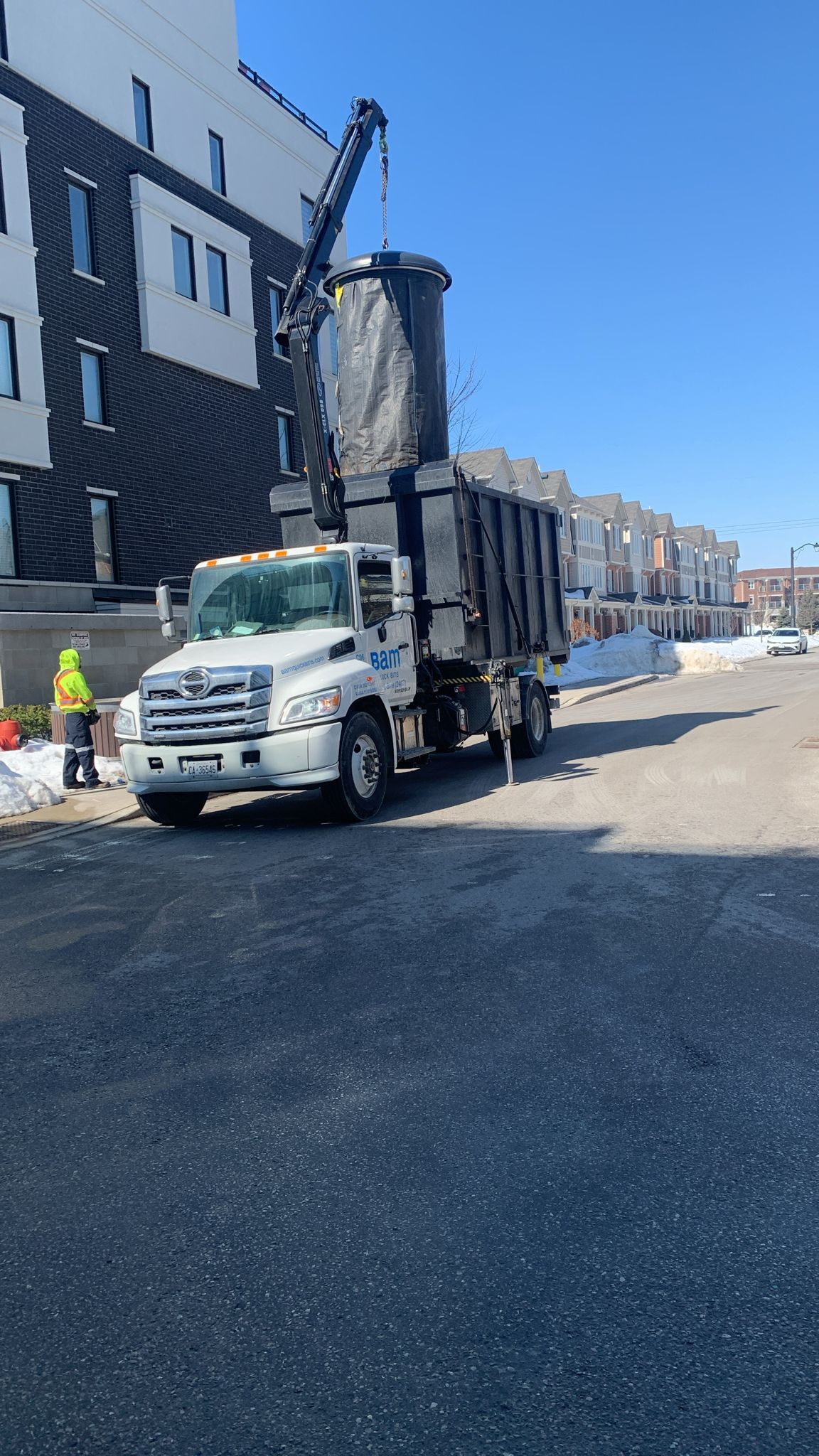
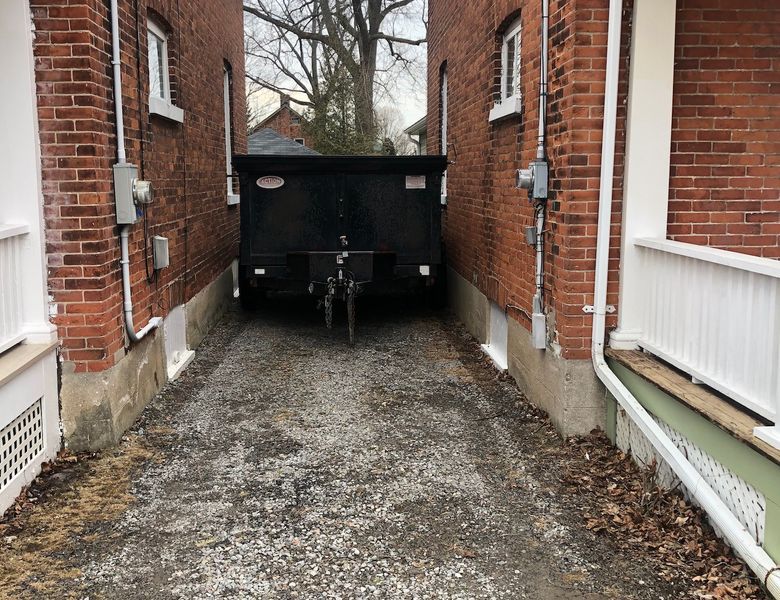
If the toilet is coming out as part of a bathroom renovation, the simplest answer is often the bin that is already in the driveway. Toilets go in our bins with the rest of the renovation debris: tile, drywall, the vanity, flooring, and fixtures.
A few tips:
- Set it in the bin rather than dropping or throwing it. It breaks into sharp pieces that make loading the rest of the bin unpleasant.
- Put it in early and low, then load lighter debris around and on top.
- Drain it first. Water adds weight and runs out the bottom of the bin.
One toilet is a small share of the 1 metric tonne of disposal included with a standard rental. A whole bathroom gut with tile, mortar, and a cast iron tub is a different story, and a 10-yard bin is usually the right size for that kind of weight. Our residential project bins arrive with boards underneath to protect the driveway. For a single bathroom refresh, a Bam Bag rated to 1 tonne is often enough.
What does not go in a bin is the same as always: paint, chemicals, and other hazardous waste. Our guide to what can and cannot go in a rental bin has the full list.
A short checklist
- Shut off the water at the valve and drain the tank and bowl.
- Disconnect the supply line.
- Take the tank off a two-piece toilet first.
- Remove the nuts, rock the bowl free, and lift it straight up.
- Plug the drain and scrape off the old wax ring.
- Check the flange and the floor around it.
- Carry it out with help, whole and upright.
- Check your municipality's rules, or put it in the renovation bin.
Where we help
We deliver bins for bathroom renovations across southern and eastern Ontario, including Vaughan, Brampton, Ajax, St. Catharines, Welland, and Guelph. If the toilet is the only thing going, our junk removal crews in places like Oshawa can take it. If the whole bathroom is coming out, tell us what is in it and we will help you pick a bin that handles the weight.