The call usually comes from someone other than the person who lives in the home. A daughter who finally saw the inside of her father's house. A landlord who received a complaint. A neighbour worried about a smell. Sometimes it comes after a fall, when paramedics had trouble reaching the person inside.
Hoarding cleanup is not like any other cleanout we support. The bin, the swaps, and the loading are the easy part. The hard part is that the person whose home it is often experiences every item leaving as a real loss, and a cleanup handled badly can leave them worse off than before. This guide is about doing it in a way that actually helps.
Hoarding is a health condition, not a tidiness problem
Hoarding disorder is recognized as a mental health condition in its own right. It is defined by persistent difficulty discarding possessions, regardless of their value, because of a strong perceived need to save them and distress at the thought of letting them go. Over time, belongings fill living spaces until rooms can no longer be used as intended.
That framing matters for anyone planning a cleanup. The person is not lazy, dirty, or stubborn. They are dealing with a condition that makes discarding genuinely distressing. Treating the situation as a messy-house problem, to be solved with a weekend and a big enough bin, misses what is actually going on.
Why forced cleanouts backfire
The instinct of many families is to clear everything at once while the person is away, on the theory that they will be relieved once it is done. Clinicians who work with hoarding generally advise against this.
A surprise or forced cleanout tends to cause intense distress, damages trust with the family members involved, and does nothing about the underlying condition. In many cases the home fills back up within months, because the behaviour that created the clutter has not changed, and now the person also feels betrayed.
The exception is a genuine emergency: a structural hazard, a fire risk that cannot wait, or a legal order with a short deadline. Even then, involving the person as much as possible, and explaining what has to happen and why, goes a long way.
Talking about it without shame
The first conversation shapes everything that follows, and the words you use matter. Avoid calling the person's belongings junk, garbage, or trash. To them, those items have value, and hearing them dismissed puts people on the defensive immediately. Use their own words for things, and listen more than you talk.
Focus on goals and safety rather than the clutter itself. "I want to make sure the firefighters could reach you" or "wouldn't it be good to use the kitchen table for dinners again?" lands very differently from "this place is a disaster." Ask what they would like to be able to do in their home, and build the plan around that.
Expect ambivalence. Many people with hoarding difficulties know the situation is a problem and still find it agonizing to let go. Both things can be true at once, and patience with that tension gets further than pressure.
Safety comes first
Before anyone starts moving things, assess the home for hazards. Severe hoarding situations can involve:
- Blocked exits and pathways, which are a serious fire risk and make it hard for emergency crews to get in.
- Heavy loads on floors, especially where paper or books are stacked to the ceiling.
- Mould from leaks or dampness that went unnoticed under the clutter.
- Pests, including mice, rats, and insects.
- Animal waste, if pets have lived in the home.
- Expired food and spoiled refrigerators.
- Sharps, broken glass, and hidden hazards inside bags and boxes.
- Electrical risks from overloaded outlets or damaged cords.
Anyone working in the home should wear sturdy gloves, closed-toe boots, and a well-fitted N95 mask at minimum. Where there is significant animal waste, human waste, or other biohazards, call a professional biohazard cleaning company for that part of the job. They have the protective equipment and disposal arrangements that a family does not.
Getting the right help
A good hoarding cleanup usually involves more people than a typical cleanout:
- The person's family doctor, who can help connect them with mental health support.
- A therapist experienced in treating hoarding, often with cognitive behavioural approaches.
- A professional organizer who works specifically with hoarding situations.
- Community supports. Several Ontario communities have hoarding support networks or response teams; your local public health unit or community mental health agency can point you to them.
- Biohazard cleaners for the hazardous parts of the job.
- Practical help with disposal: bins, swaps, and hauling.
You do not need every one of these for every situation. But the further a situation has progressed, the more a team approach helps.
Planning the work
Start small and visible. Clear a path to the exits and the stairs first; that is about safety and it is hard to argue with. Then pick one area, ideally one the person wants back, such as the kitchen table or a bathroom, and work on that.
Agree on the categories before you start. Keep, donate, recycle, and discard is a common set. Some teams add a "decide later" box with a strict limit on its size, so that hard decisions do not stop the work entirely.
Let the person make decisions wherever possible, and keep sessions short. Two or three hours is often the limit before decision-making becomes overwhelming. Progress that feels slow is still progress, and it is far more likely to last.
Have clear rules for items that need special handling: medications go to a pharmacy, hazardous products go to a depot, and documents with personal information get shredded. Our household hazardous waste guide lists what to watch for.
What cleanup day looks like
On a working day, roles help. One person sits with the homeowner and supports decisions. One or two people carry sorted items to the right place. Someone manages the staging area outside, where bags and boxes are checked one last time before they go in the bin or the donation pile.
Set up a box for found valuables and important papers, and check bags before they leave the house. Cash, jewellery, uncashed cheques, and important documents often turn up in hoarded homes, tucked inside books, envelopes, or clothing. Finding them and handing them back builds trust like nothing else.
Schedule breaks, and end each session while the person still feels in control. Wrapping up a little early, with visible progress and an agreed plan for next time, beats pushing through until everyone is exhausted.
Logistics: bins, bags, and swaps
Once decisions are flowing, disposal needs to keep up. Nothing stalls a cleanup faster than full bags piling up in the driveway with nowhere to go.
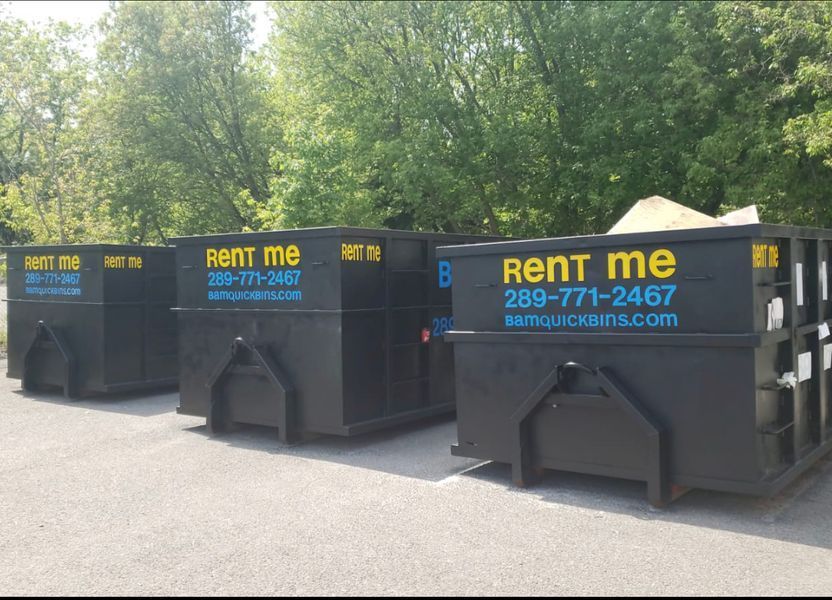
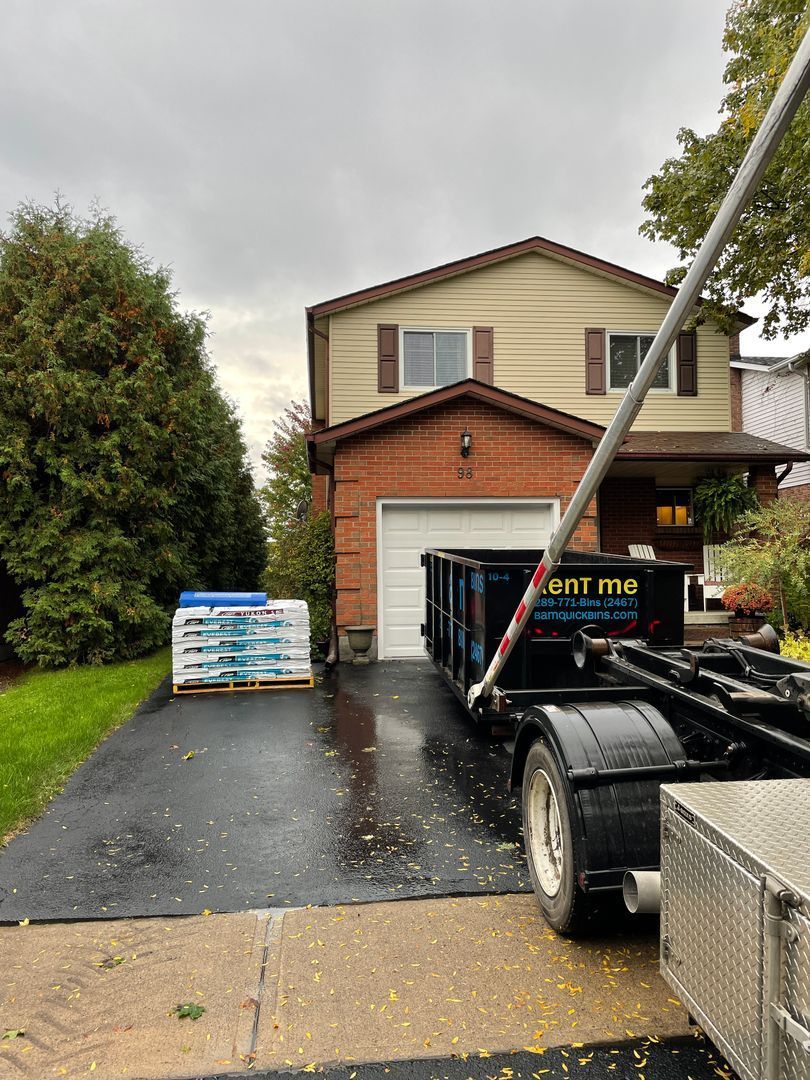
A roll-off bin is usually the practical choice. For severe situations, plan on a 20-yard bin with scheduled swaps, so an empty bin arrives as the full one leaves and the work never stops for lack of space. Our standard rental is 5 days with 1 metric tonne of disposal included, and extensions and swaps are easy to arrange. Hoarding cleanups often take longer than anyone predicts, so building in flexibility from the start avoids pressure later. Our guide to how long you can keep a rental bin covers the details.
Think about privacy too. Place the bin as discreetly as the property allows, load bags rather than loose items where you can, and keep the area tidy between sessions. Neighbours notice, and the person living in the home will feel it if the process becomes a spectacle.
For a smaller situation, or for a single room, a Bam Bag rated to 1 tonne can work well. Our junk removal service runs on the same bin-based, flat-rate model, without a crew billing by the hour while hard decisions are made.
When there is a deadline
Sometimes there is no time for a slow approach. A landlord has served notice, a municipality has issued a property standards order, or the home has to be sold or emptied after the person moves into care.
Deadlines change the pace, not the principles. Explain the deadline to the person clearly and honestly. Prioritize what must happen to meet the requirement, which is often safety and access rather than an empty house. Bring in more help to work faster, rather than cutting the person out of decisions. And if the person has moved into care or passed away, the job becomes closer to an estate clear-out, which our estate cleanout guide covers.
After the cleanup
Clearing the home is a milestone, not the finish line. Without ongoing support, many homes start to fill again. What helps:
- Continued work with a therapist or support group, if the person is willing.
- Regular, low-pressure check-ins from family, focused on the person rather than the house.
- Simple routines, like taking out recycling weekly or setting a limit on newspapers.
- Keeping cleared spaces in use, so a kitchen table is a place to eat, not an empty surface waiting to be filled.
Most of all, keep the relationship intact. The person is far more likely to accept help next time if this time was handled with respect.
Where we help
We deliver bins for sensitive cleanouts across southern and eastern Ontario, and our local junk removal pages for Toronto, Hamilton, Ottawa, and Belleville explain how the bin-based model works in each area. When you call, tell us it is a hoarding situation. We will plan discreet placement, flexible timing, and swaps that keep pace with your team, and we will not rush anyone.