
Moving is one of those jobs that looks manageable from a distance and enormous up close. Two months out, there is plenty of time. Two weeks out, there is somehow no time at all, the garage is still full, and you are wondering why you own three slow cookers.
A good moving checklist fixes that by spreading the work out and putting the steps in the right order. This one is built for Ontario households, with one big difference from most checklists: decluttering comes first, not last. Everything you get rid of before moving day is something you do not have to pack, carry, pay to move, or unpack.
Eight weeks out: decide what is making the trip
Start with a walk through every room, including the garage, basement, attic, and shed. Make a rough inventory of the big items and the general volume of everything else. This is the moment to decide what is coming with you.
Moving costs usually track the size of the load and the time it takes, so every box you do not move saves money. Sort belongings into four groups: keep, sell, donate, and toss. Be ruthless with duplicates, things that have not been used in a year or more, and anything broken that you have been meaning to fix.
If you can, get the floor plan of your new home and measure it. Knowing that your new living room fits one sofa, not two, makes the furniture decisions for you.
The declutter weekend
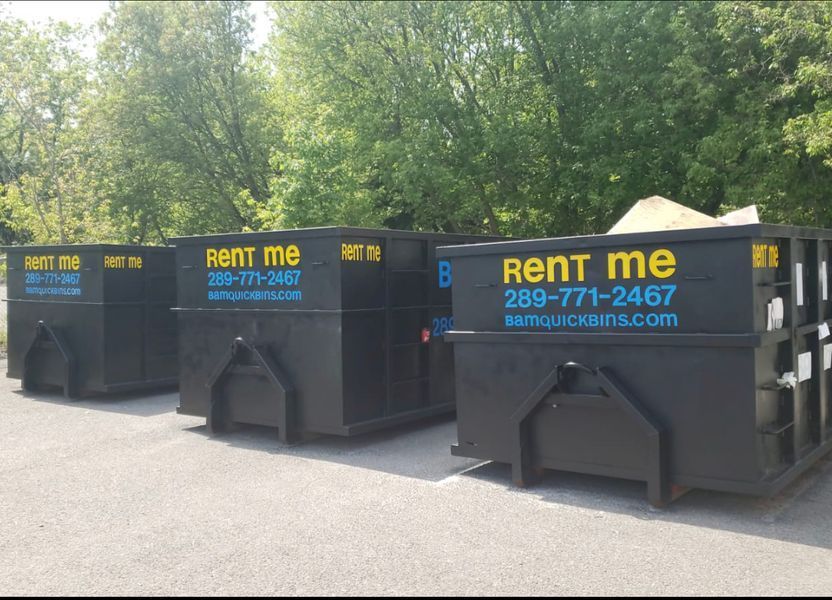
Book one weekend, six or seven weeks before the move, for the big purge. This is where a bin in the driveway earns its place. With somewhere to put the things you are getting rid of, the sorting actually moves, instead of stalling into piles in the hallway.
Work through the storage spaces first: the garage, the basement, the shed, and the attic. They hold the most stuff and the fewest sentimental decisions, so you build momentum quickly. Then move into the living spaces.
Start selling early. Listings for furniture and larger items can take weeks to find a buyer, so get them up right away. Book donation pickups early too, since popular charities can be booked out for weeks in moving season.
For a typical household purge, a 10 or 15-yard bin usually does the job. Our bin size guide helps you choose, and our spring decluttering plan has a room-by-room order of attack that works just as well before a move.
Six weeks out: book the movers
Moving season in Ontario runs heaviest from late spring through the end of summer, and the last few days of each month are the busiest of all. Book early.
Get at least two or three estimates, ideally from in-home or video walkthroughs rather than a phone guess. Ask whether the estimate is binding or can change on moving day, what the hourly rate includes, and how they handle stairs, long carries, and heavy items like pianos. Ask about their coverage for damaged items too, and read reviews.
If you are doing it yourself, reserve a rental truck now, and line up friends with the promise of pizza and gratitude.
Supplies and a packing plan
Collect supplies: sturdy boxes in several sizes, packing tape, markers, packing paper, and a few rolls of stretch wrap for furniture. Grocery and liquor stores often have free boxes, but buy new ones for heavy items like books, since a box that splits on the stairs is no bargain.
Start packing the things you use least: off-season clothes, books, decorations, guest room linens. Label every box with the room it goes to and a short list of contents. Pack heavy things in small boxes and light things in big ones. Keep a separate essentials box for the first night, which you will fill in the final days.
Four weeks out: the paperwork
Address changes are tedious, but missing one can cause headaches for months. Work through the list:
- Set up mail forwarding with Canada Post.
- Update your driver's licence and vehicle permit address through ServiceOntario. Ontario requires you to update your licence address within six days of moving, so plan to do it right away.
- Update your Ontario health card address.
- Update your address with the Canada Revenue Agency.
- Tell your bank, credit card companies, employer, and pension or investment providers.
- Update your home and auto insurance, and make sure coverage on the new home starts on the day you take possession.
- Update subscriptions, memberships, and online shopping accounts.
- Arrange school transfers and request records if you have children changing schools.
- Ask your doctor, dentist, and vet for records if you are moving out of the area.
Utilities and services
Call the utilities for both homes. Arrange to stop or transfer hydro, gas, and water at the old place, and start them at the new one, effective on your moving or possession date.
Book internet and phone installation at the new home now. In busy seasons, installation appointments can be weeks out, and moving in without internet is a special kind of stress.
Two weeks out: the countdown
Confirm everything. Call the movers to confirm the date, time, and both addresses. If either home is a condo or apartment, book the elevator and loading dock, and ask about any move-in deposit or rules; many Ontario condos require bookings well in advance.
Start eating down the freezer and pantry. Arrange childcare and pet care for moving day, so nobody is underfoot while heavy furniture is moving. Return anything you have borrowed, collect anything you have lent out, and refill prescriptions so you are not hunting for a new pharmacy in the first week.
Decide what to do with plants, propane tanks, paint, and cleaning chemicals, since most movers will not take them. Our guide to household hazardous waste explains where those items should go.
What movers won't take
Most moving companies refuse certain items, for safety or liability reasons, so plan for them separately:
- Propane tanks, gasoline, paint, solvents, and other flammable or hazardous products.
- Perishable food, especially anything frozen, for longer moves.
- Plants, which some movers decline, particularly over longer distances.
- Important documents, cash, jewellery, and irreplaceable items, which you should keep with you rather than on the truck.
Use up, give away, or properly dispose of the hazardous items before moving day, and pack the valuables in a box that rides in your own car.
Moving with kids and pets
Moving day is chaos, and chaos is hard on small children and animals. Arrange for kids to spend the day with family or friends if you can, and do the same for pets, or set them up in a quiet, closed room with water, food, and a sign on the door so movers do not open it.
At the new home, set up the kids' rooms early so familiar things are in place by bedtime. Keep pets indoors for a few days while they get used to the new space, and update their microchip and licence details with your new address.
Moving week
Defrost and clean the fridge and freezer 24 to 48 hours before the move. Pack the last boxes, and fill your essentials box with what you will need on the first night: documents, medications, phone chargers, toilet paper, a kettle, basic tools, bedding, a change of clothes, and snacks.
If you have a bin for the final clear-out, book its pickup for a day or two before closing, so the driveway is clear for the buyers and the final walkthrough. Our residential rentals work well for this, and a Bam Bag rated to 1 tonne handles a smaller final pile.
Moving day
At the old home, do a final walkthrough of every room, closet, and cupboard. Take meter readings and photos of the meters. Lock up and hand over the keys as arranged.
At the new home, put a sign on each room door so movers know where boxes go. Check items off your inventory as they come in. Set up the beds first. After a long day, a made bed is worth more than an unpacked kitchen.
After the move
Unpack the kitchen and bedrooms first, then the bathrooms, then everything else. Break down boxes as you empty them. Flattened cardboard can go out with curbside recycling a bit at a time, or into a bin if you have a lot of it. Unused packing supplies are easy to give away to friends or neighbours who are moving next.
Finish the address changes you missed. There is always one.
The leftovers problem
Even the best-planned move leaves leftovers: a mountain of cardboard, packing debris, furniture that turned out not to fit, and the odd item that broke on the truck. A bin or a bag on the driveway for a few days clears it all in one go, instead of weeks of sneaking cardboard into the recycling.
If you are helping an older parent move into a smaller home, our guide to downsizing for seniors covers the extra steps. And if furniture is the big question, our furniture disposal guide explains what sells, what donates, and what is better off in a bin.
Where we help
We deliver bins for moving purges and post-move cleanups across southern and eastern Ontario, including Ajax, Pickering, Bradford, and Kingston. For a move-out purge you would rather load at your own pace, see junk removal in Whitby or junk removal in Innisfil. Book your declutter weekend bin early in moving season. Like movers, our calendar fills up around the end of the month.