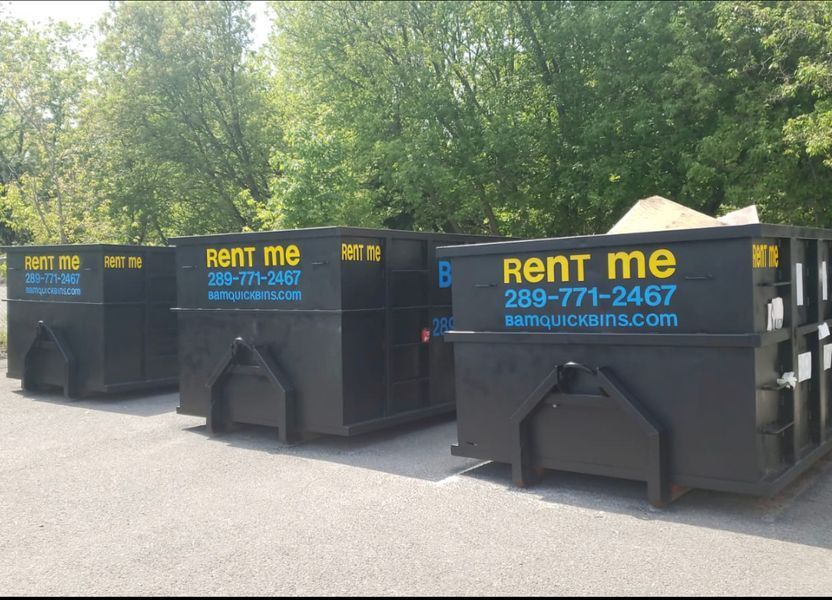
A roofing dumpster is an ordinary roll-off bin sized for the weight of the shingles, not the size of the roof. For most house tear-offs that means a 10 or 15-yard bin, even when a 20-yard would hold the volume. Asphalt shingles are so dense that the weight limit arrives long before the bin looks full, so tell us the roof size and the number of layers when you book and we will size it with you.
Roofing is the project where bin intuition fails hardest. People see a big job and want a big bin. This guide explains why that backfires, how to estimate your tear-off, how to set up the driveway for tear-off day, and where shingles go if you are not using a bin at all.
Why shingles break the volume rules
Asphalt shingles are mostly mineral granules and asphalt on a mat, and they pack down hard once they are torn off. Our material weight chart puts loose roofing shingles at roughly 0.25 to 0.45 tonnes per cubic yard. Household junk, by comparison, runs about 0.06 to 0.11 tonnes per cubic yard, so a yard of shingles can weigh several times what a yard of cleanout junk does.
Put those numbers against a standard rental and the problem is obvious. Our price includes 1 metric tonne of disposal, and at those densities that tonne is used up by roughly 2 to 4 cubic yards of loose shingles. A 10-yard bin filled to the rim with shingles would weigh somewhere between 2.5 and 4.5 tonnes. That is why every roofing job is a weight conversation first and a size conversation second.
Two-layer roofs, common on older homes, double the tear-off. If you are not sure how many layers you have, look at the edge of the roof at the eaves or a gable end, where the layers show as a stack. Roofers check this before they quote, and so should you before you book a bin.
Which roofing dumpster size fits your roof
For most residential tear-offs, the honest answer is the 10-yard bin or the 15-yard bin. A smaller bin filled with dense material is still liftable and keeps you from piling on weight you will pay for. An overloaded big bin is a problem on your driveway that nobody wants to solve.
The 20-yard bin earns its place on roofing jobs when the debris is bulky rather than dense: a re-roof that also replaces rotten sheathing, removes a deck, or clears out an attic. Plywood and framing take up space without weighing like shingles. Even then, the weight of the shingle layer sets the plan.
Our Cambridge division runs 9 and 14-yard bins plus a 20-yard, so in Waterloo Region the same logic applies one size down.
How to estimate your tear-off
Roofers measure in squares. One square is 100 square feet of roof surface, and your roofing quote will usually state the job that way. To get a rough idea of your tear-off:
- Find your roof area in squares. Your roofing quote will list it. If you are doing it yourself, measure each roof plane, multiply length by width, add them up and divide by 100.
- Multiply by the number of layers coming off.
- Add the extras: underlayment, drip edge, flashing, vents, and any sheathing being replaced.
- Convert to cubic yards with our cubic yard calculator, then check the weight against the material weight chart.
When you book, have these ready:
- The roof size in squares, from your roofer's quote or your own measurement.
- How many layers are coming off.
- Whether any sheathing, fascia or soffit is being replaced.
- Where the bin can sit, and whether the truck has a clear run to it.
- The tear-off date and how long the job should take.
You do not need to get it perfect. A rough number of squares and the layer count is enough for us to recommend a size and talk through the weight before the bin arrives. Our weight limits guide explains how the included tonne works in more detail.
What goes in a roofing dumpster
Roofing debris is welcome in our bins. Shingles, tar paper and underlayment are on the accepted list for construction bins, along with wood scrap from sheathing and fascia. Old flashing, drip edge and vents are metal, which bins take, though larger amounts are worth separating for scrap. Our guide to scrap metal recycling covers what yards accept.
What stays out: hazardous materials, cleaning chemicals, propane tanks, batteries and tires, plus any material that contains asbestos. Most asphalt shingles are routine, but Health Canada lists roofing products, siding, and cement among the older building materials that may contain asbestos. If the roof is old, unusual, or covered in cement-based shingles, hire a professional to test suspect material before tear-off. Our guide to asbestos testing in Ontario explains how.
Setting up for tear-off day
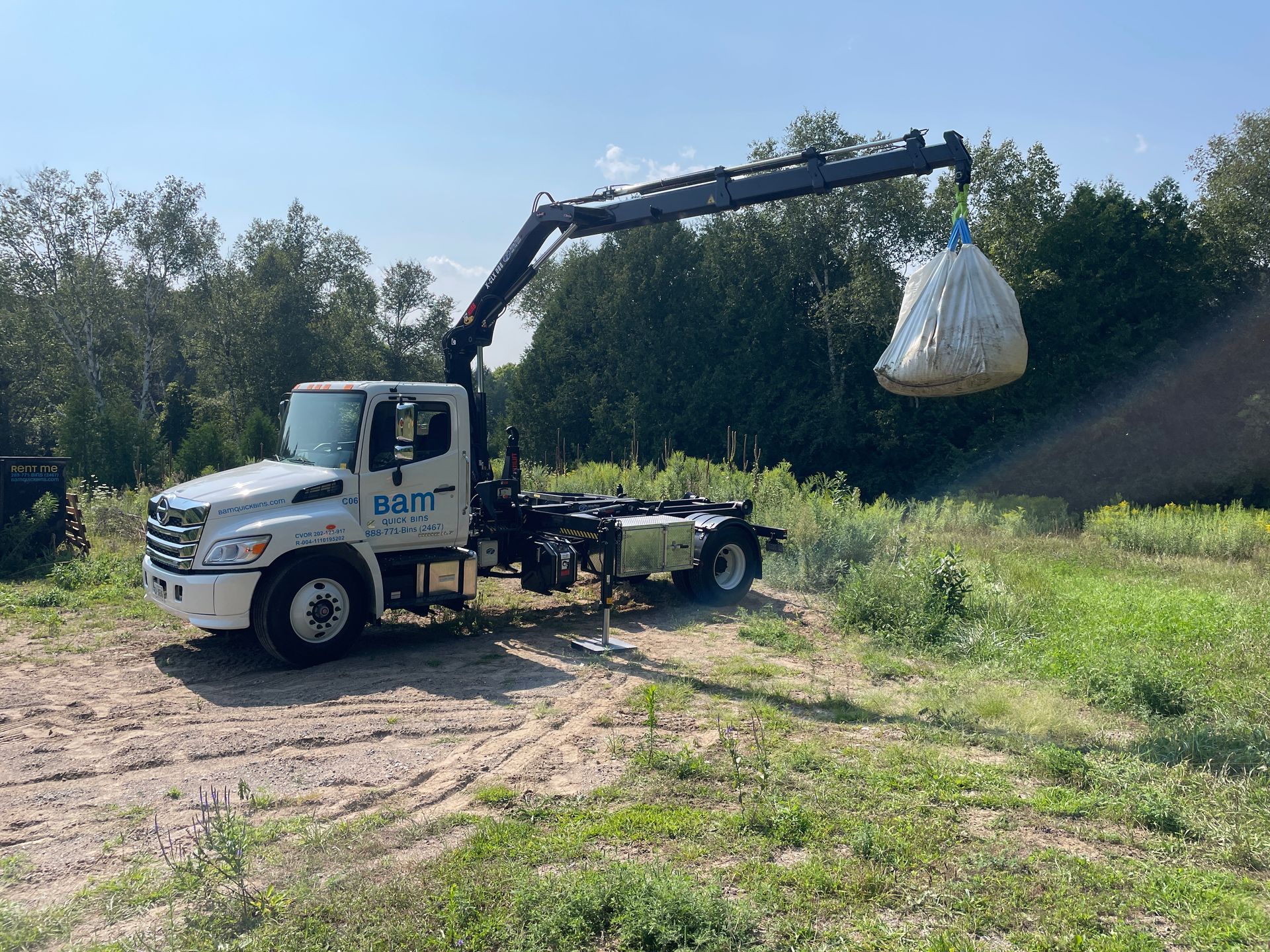
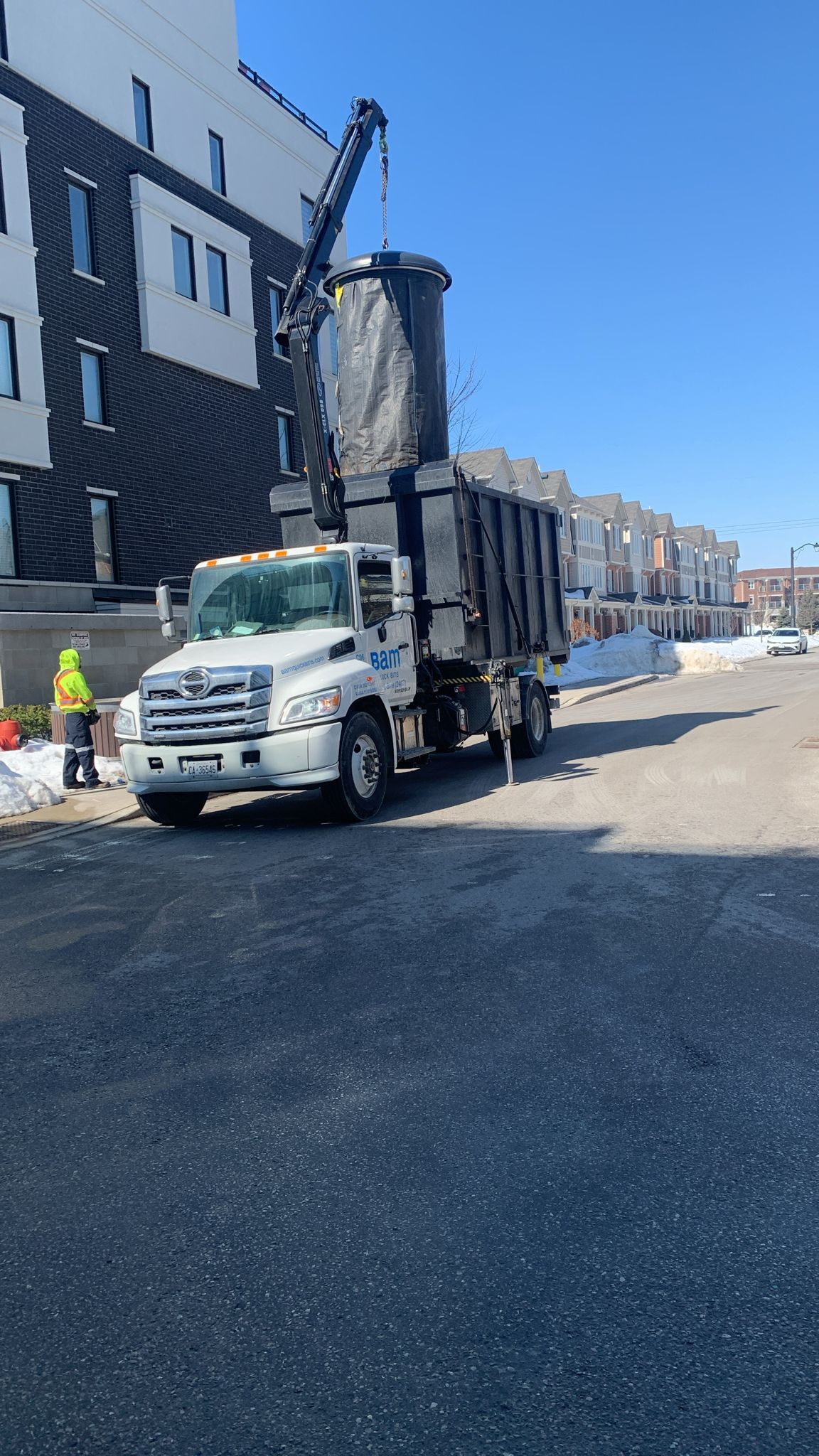
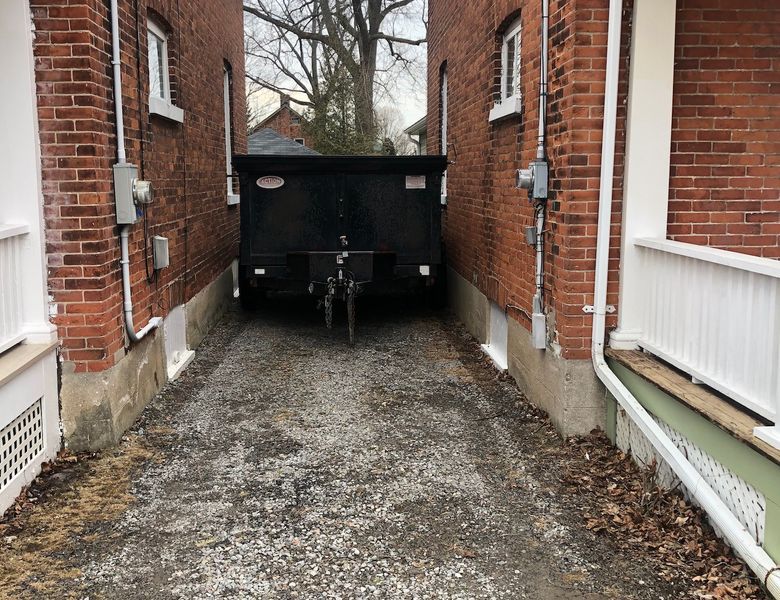
Placement is everything. Roofers want the bin tight to the eaves so shingles can go straight from the roof into the bin, with no wheelbarrow in between. Our drivers place to the metre, with boards under every bin to protect the driveway, so pick the spot where the throw is shortest.
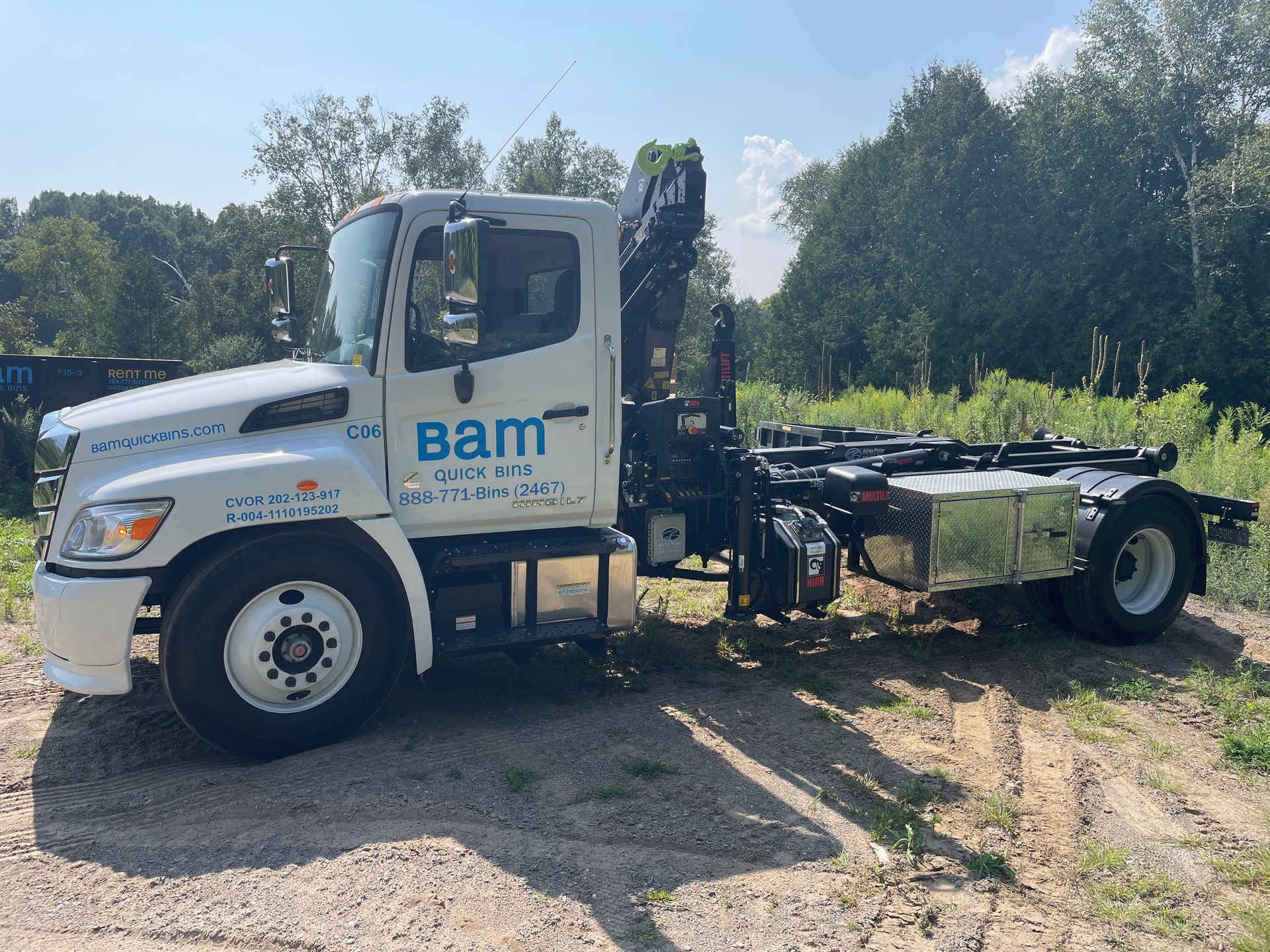
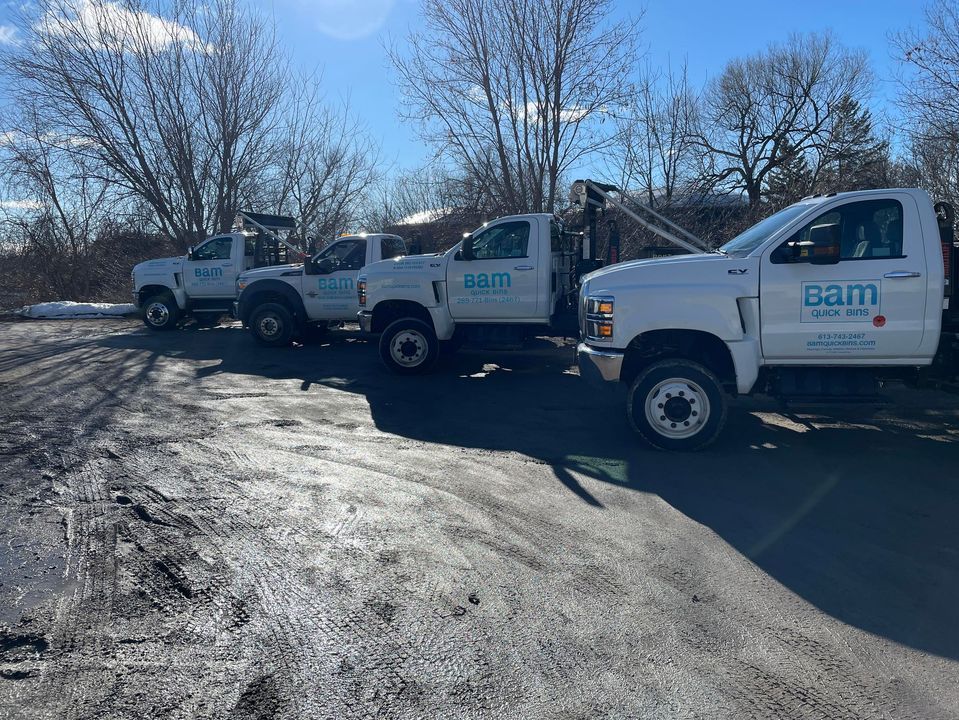
The truck needs a straight approach, room to raise its bed and clear overhead space with no low branches or wires. A standard driveway handles all three. If the only good spot is on the road, the bin needs a municipal permit first: Toronto, for example, requires a Street Occupation Permit for a disposal bin on the roadway, and Ottawa a temporary construction related encroachment permit. We can help you arrange it.
Protect the landing zone. Lay plywood over garden beds and air conditioner units, and run a tarp from the wall to the bin so stray shingles and nails land on something you can fold up. At the end of each day, run a magnetic sweeper over the lawn and driveway. Roofing nails in a tire or a bare foot are the classic souvenir of a re-roof.
Book the swap in advance. Larger roofs that need two bins run smoothest when the swap is scheduled for the middle of the job rather than called in a panic when the first bin is full and the crew is standing on a half-stripped roof.
Loading shingles the right way
How you load a roofing dumpster matters as much as which one you pick:
- Spread shingles across the whole floor of the bin instead of piling them at the end nearest the roof. An even load lifts safely.
- Keep the load level with the rim. Anything above the top edge cannot be tarped and hauled.
- Do not top up a shingle bin with heavy extras like broken concrete or soil. Those belong in a dirt and concrete bin.
- Keep tarps, ladders and tools out of the bin. Once they are under a tonne of shingles, they are gone.
If the bin is close to full by weight but not by volume, stop and call us. A quick swap costs less than an overweight load.
Common roofing dumpster mistakes
Most problems with roofing bins come from the same handful of decisions:
- Ordering the biggest bin because the roof is big. Volume is rarely the limit on a tear-off. Weight is.
- Forgetting the second layer. A two-layer roof is two tear-offs, and the bin needs to be planned that way.
- Letting the bin become the neighbourhood's. An open bin on a driveway attracts old furniture and garden waste from next door, all of it adding weight you pay for.
- Blocking the shingle delivery. New shingles often arrive by truck, sometimes onto the roof. Leave room for the delivery as well as the bin.
- Parking the bin under wires or branches. The truck needs clear space overhead to set the bin down and pick it up again.
- Throwing in heavy extras. A few wheelbarrows of broken concrete from the walkway can turn a shingle load that was on budget into an overweight one.
Weather, delays and rental days
Roofing runs on the forecast. A tear-off that was meant to take two days can stretch to five when rain stops the crew halfway. The standard rental is 5 days, and extensions are available on request, so if the forecast looks unsettled, mention it when you book and ask about an extension before you need it.
Do not leave a half-full bin open in the rain with nothing over it if the roof is still stripped above it. Cover the roof first. The bin can wait.
Shingle disposal without a bin
For a small repair, a few bundles from a shed roof or a storm-damaged patch, a bin may be more than you need. Your options are the municipal landfill or a private transfer station, and the rules vary a lot by area. Check the current rules and rates before you go.
The City of Toronto does not collect roof shingles at the curb. Its oversized items page lists shingles with construction and renovation waste, and directs residents to a drop-off depot or a private company. In Peterborough, the city landfill charges shingles at the same rate as sorted construction material and drywall, by weight, and only accepts waste generated in the City and County of Peterborough.
Remember that shingles are heavy in a car too. A trailer or pickup loaded with tear-off can be over its rating long before it looks full, which is one more reason a roofing dumpster is usually the better deal for anything beyond a patch.
Homeowner or roofing crew?
Homeowners tearing off their own roof get the same bins and the same honest sizing as the trades. Plan the bin to arrive the day before tear-off and go the day after the last shingle comes down, and keep the 5-day standard rental in mind when you schedule.
If you are stripping the roof yourself, treat it as the dangerous job it is. Use proper fall protection, keep the ladder tied off, and never throw debris down without someone on the ground keeping the drop zone clear. A torn-off section of shingles slides faster than you expect, and so does a person on loose granules.
Roofing crews doing this every week should look at our construction bin rentals. Contractors who book regularly can ask their division about contractor rates, which run on a 7-day billing period with disposal charged separately. That suits roofers well, since shingle weight changes from job to job.
What a roofing dumpster costs
The price depends on the bin size, the days you keep it, your area and, for roofing more than most jobs, the weight. Our residential prices are a 5-day rental with 1 metric tonne of disposal included, and weight over that adds to the cost. You can see current prices for every area on the pricing page, and our guide to bin rental cost walks through what moves the number.
We supply roofing jobs across the region, from Hamilton and Oshawa to Innisfil, Cobourg and Guelph. Tell us the squares and the layers when you book, and we will help you pick the bin that the truck can actually lift.