
Molok containers keep working through an Ontario winter, and so do we. The questions property managers ask us in November are nearly always the same: who clears the snow, can the crane truck still get in, what happens to the liners, and does the pickup schedule change? This guide answers each one in plain terms, using what Molok and Earth Bin publish about their containers and how we run our own servicing.
A quick note on scope first. We service Molok® and Earth Bin® semi in-ground containers across Ontario. We do not clear snow, and we will say so more than once below, because snow is the part of winter servicing that most often falls between two contracts.
What winter changes, and what it doesn't
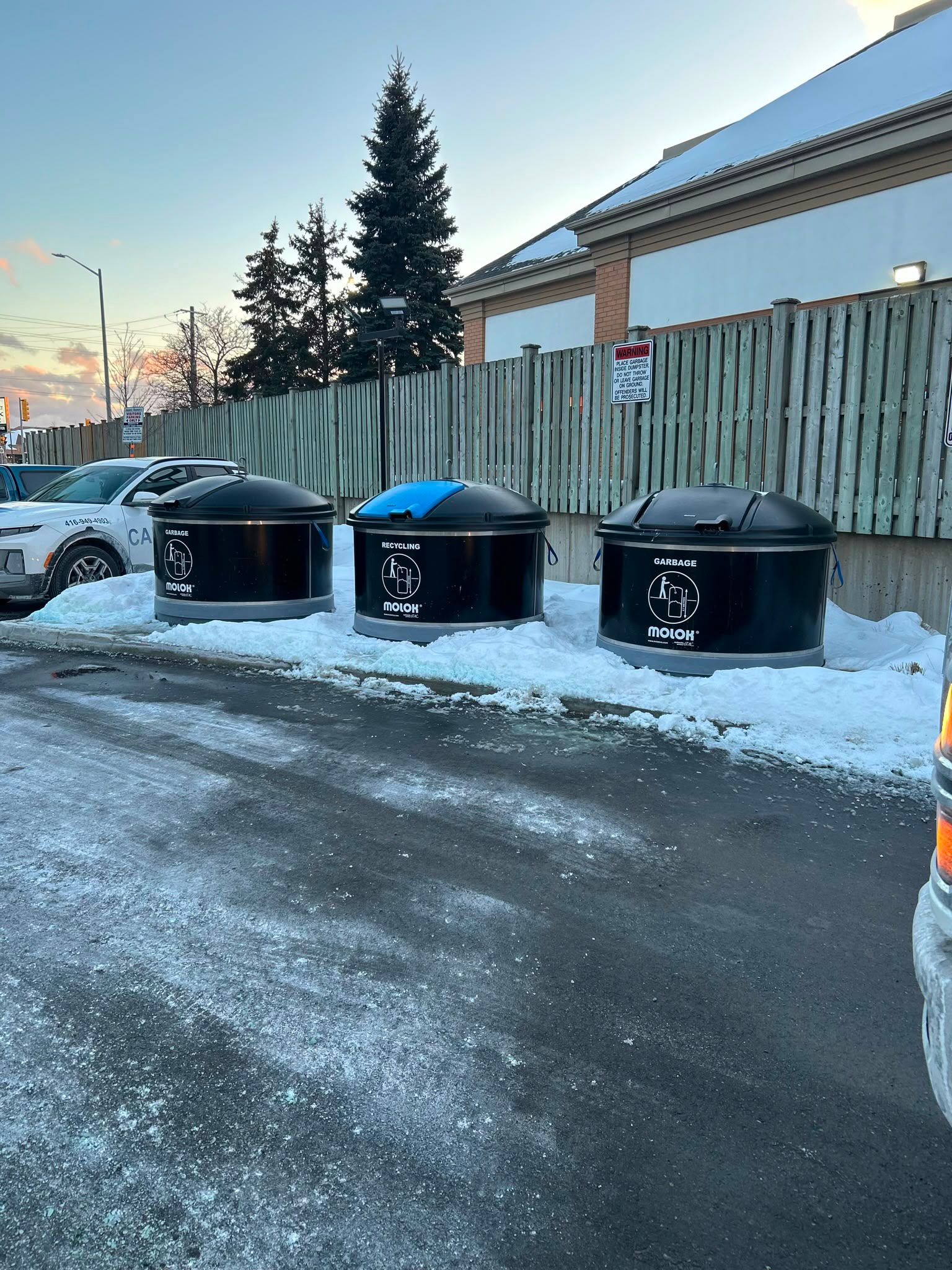
Start with the container. Molok says about 60% of each container sits below ground, and that the natural coolness of the ground slows bacterial growth and keeps odours down (Molok: 60% is underground). That part of the design does its best work in summer. In winter, the part that matters is above ground: the lid, the feed opening, the frame and the patch of pavement the truck uses.
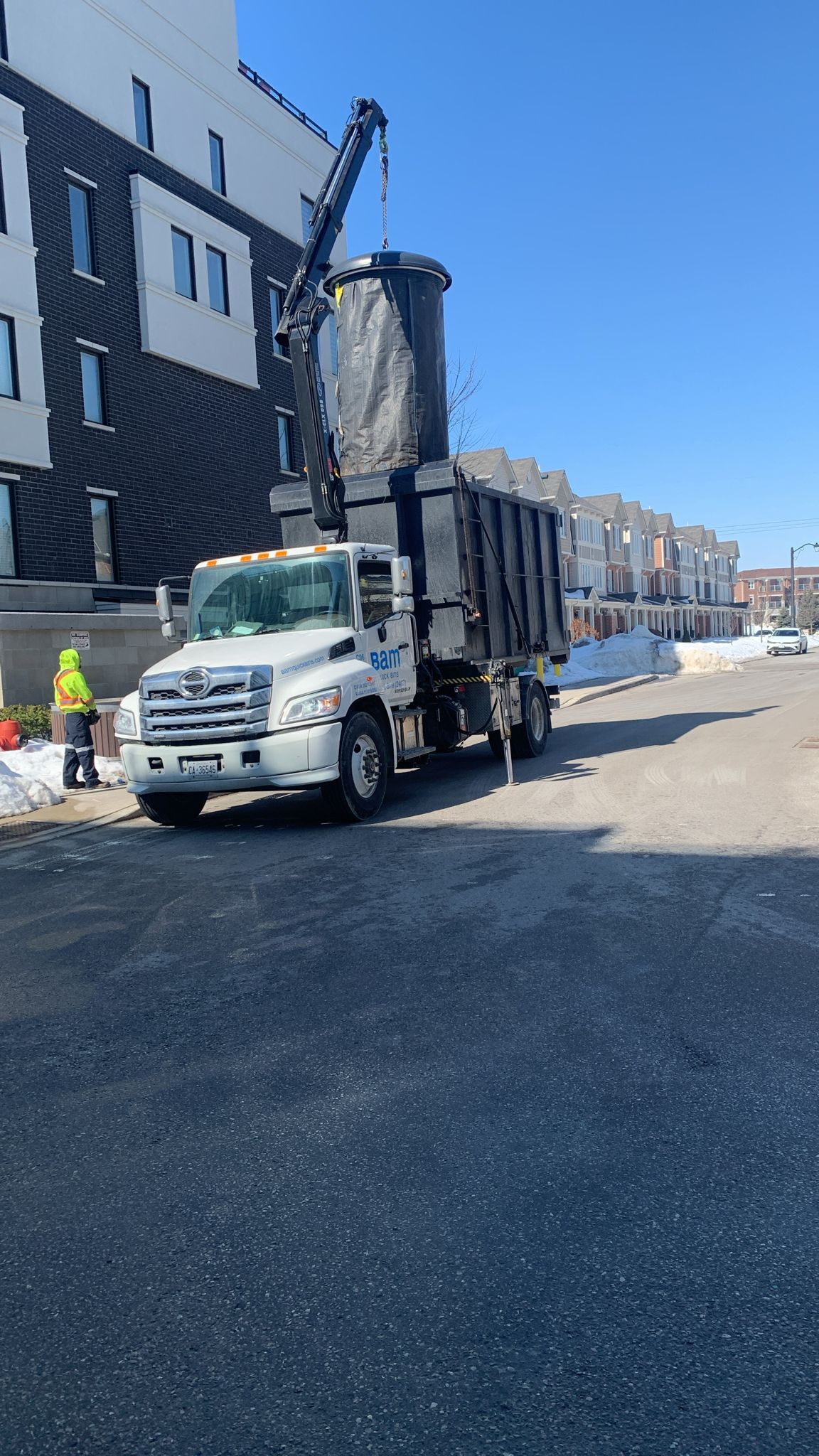
Emptying works the same way in January as it does in July. A crane truck lifts the collection bag out of the well, empties it and sets it back. A regular front-load garbage truck can't do that job in any season. Earth Bin describes its Silo™ line the same way: a round, semi-buried container with a vertical crane lift system (EarthBin: Crane lifted semi in-ground).
What changes in winter is everything around the container:
- Snow piles up on lids and around the frames.
- Plows push windrows across the area the truck needs.
- Ice forms on pads and walkways.
- Holiday weeks and cold snaps change how fast some streams fill.
None of that stops servicing. It does mean the property, its snow contractor and its servicing company should agree on who does what before the first big storm, not after it.
Snow clearing: who does what
We don't clear snow around the containers or the truck's access. The property's own crew or its snow contractor does that, so the property arranges it.
Here is what to put in the snow contract, or in the note to your superintendent:
- Clear the lids and the feed openings, so residents can open them and drop bags in.
- Clear a walking path from the building to the containers. Residents who can't reach a lid leave their bags beside it, and a bag on the ground is an open invitation to raccoons.
- Keep the truck's approach open: the driveway or laneway the truck uses, and the spot where it parks to lift.
- Don't push plowed snow onto the containers or bank it against the frames. A snowbank leaning on a lid is a lid nobody can open.
- Re-clear the entrance if the municipal plow leaves a windrow across it after you have cleared.
One practical tip: mark the containers for the plow operator, especially on a new site or with a new contractor. A frame hidden under a drift is easy to clip with a blade, and a damaged frame or lid is a repair nobody budgeted for.
Crane truck access in winter
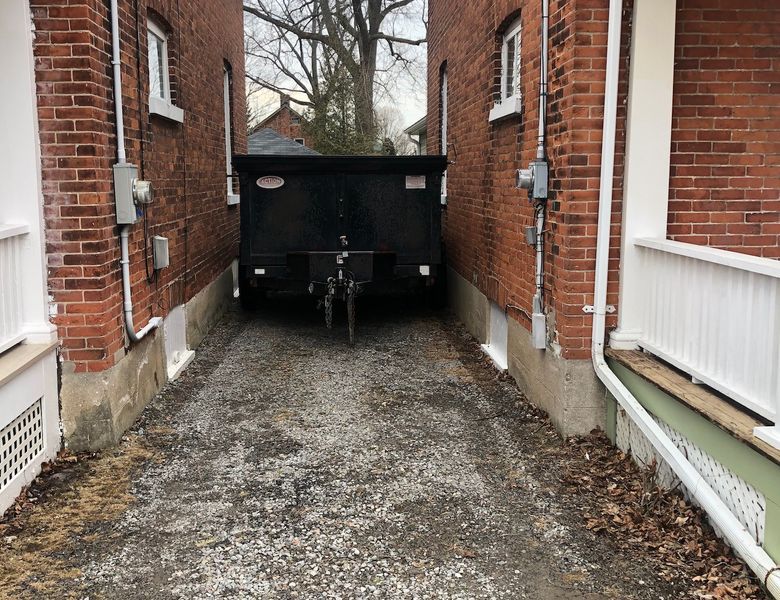
The crane truck needs the same access in winter that it needs the rest of the year. Snow is what shrinks it. A laneway that is two cars wide in October can be one car wide by February once the banks build up on both sides.
Things that block a pickup more often in winter:
- Cars parked in the access lane after a storm, when residents move vehicles to let the plow through.
- Snowbanks narrowing a turn or a gate opening.
- Gates left locked, or frozen shut.
- Ice on a slope leading to the containers.
The easiest fix is a ten-minute walk before the first snowfall. Walk the route the truck takes, from the street to the containers, with your superintendent or snow contractor. Look for the places where snow will end up: the inside of a tight turn, the end of a row of parking spots, the strip beside the containers. Decide now where the plowed snow goes instead, and write it into the contract.
If something on your site changes for the season, such as a gate code, a parking rule during snow events or a temporary fence, tell us before the pickup day. A crew can plan around a problem it knows about. It can't do much about a surprise at the gate.
Lids and feed openings
Molok's lids are lockable. Molok says all of its filling lids can be locked, and on hinged models the whole lid can be locked as well (Molok: MolokClassic). Earth Bin lists a lockable feed door with a door stay on the Silo. A closed, latched lid keeps rain and snow out of the well. Snow that gets inside melts on a mild day and adds water and weight to the bag, which nobody wants.
A few habits help residents and staff all winter:
- Brush the snow off a lid before opening it, so it doesn't slide into the well.
- Close the lid fully after every use. A lid left propped open on a snowy night fills the opening with snow by morning.
- If a lid is frozen shut, don't pry it with a shovel or a steel bar. That can bend a hinge or damage the lid. Have the property's crew deal with the ice around it, and let us know before the pickup day.
Liners and lifting bags
Property managers sometimes ask whether they need to do anything about liners for the winter. You don't. We handle the liners.
Manufacturers make different collection bags for different jobs. Molok makes lifting bags for different waste types, including cut-proof bags for glass and a separate bag model for wet waste. Earth Bin offers the 5,000 litre Silo with a soft bag or a soft bag with a liquid retention tank, and its smaller 1,300 litre model with a rigid container for organics. Which bag sits in which well, and when it needs changing, is our side of the job.
What residents can do is simple: tie garbage bags closed and keep loose liquids out of the garbage stream. That is good practice all year, and it keeps cold-weather servicing simpler for everyone.
Washing pauses in icing conditions
Container washing is part of our servicing, but it pauses in icing conditions. Spraying water on a pad, a lid or a walkway that is about to freeze creates a slip hazard for residents and for our crew, so we hold off until conditions allow.
Cold weather helps on the odour side. Molok's point about the cool ground slowing bacterial development applies all year, and in winter the air above the container is cold too. Keeping the lids closed does the rest.
If your containers are due for a wash and the forecast is turning, ask about it while the weather still allows. A container that goes into winter clean is a nicer thing to live next to until spring.
Setting the winter schedule
We can change the servicing schedule as needed for each client, including through the winter. That flexibility matters, because winter rarely looks like the rest of the year on a busy property.
A few things worth raising when you call:
- Recycling and cardboard. Molok notes that mixed waste compacts under its own weight, which raises its capacity by about 20%, and that recyclable streams do not get the same benefit. If your site sees a jump in cardboard after the holidays, the recycling well can fill up well before the garbage well does.
- Occupancy. A building where many residents travel over the holidays, or a seasonal site that goes quiet, may need fewer pickups for a few weeks.
- One-off events. A move-in week, renovations in several units or a building-wide cleanout can fill containers faster than usual.
Tell us what is changing and when, and we will adjust the pickups to match. If a container overflows or a pickup is missed, call us. Fast response to missed pickups and overflow is part of the service in every season.
A winter checklist for property managers
- Confirm in writing who clears snow around the containers, the walking path and the truck's access. It isn't us, so make sure it is someone.
- Mark the container locations for the plow operator.
- Tell the snow contractor not to bank snow against the frames or lids.
- Send us any seasonal changes to gates, codes or parking rules.
- Remind residents to brush off and close the lids, and to tie their bags.
- Review the pickup schedule for the holidays and the weeks after.
- Keep our number handy for overflow or a missed pickup: 1-888-771-2467.
Where we service semi in-ground containers
Our semi in-ground servicing covers a wider area than our bin rentals: Toronto and the GTA, Durham Region, York Region, Peel Region, Central Ontario, Kingston and Kawartha Lakes. Our city pages for Barrie, Newmarket, Oshawa, Peterborough and Kingston cover the local details.
New to these containers? Read What is a Molok bin?, our Molok guide, or the comparison of Molok bins and traditional dumpsters. To set up or change a schedule, see our semi in-ground servicing page or contact us.