If you manage apartments, townhomes, or a commercial property in Ontario, you have likely seen a Molok bin without knowing the name. These are the round, low-profile waste containers that sit mostly underground, with only a small top section visible above grade.
This guide explains what a Molok bin is, how the system works, and when semi underground waste container servicing is the right fit.
What is a Molok?
Molok (often searched as molok bin or molok garbage bins) refers to a branded family of semi-underground waste containers. Most of the container sits below ground. Waste drops in from the top. Gravity and the underground depth help compact material, so each unit holds more than a typical surface bin of the same footprint.
Molok® is a trademarked system used widely for multi-residential and commercial sites that need tidy outdoor waste areas without a full dumpster yard.
How a Molok bin works
- Fill from the top. Residents or staff drop bags into a lid or chute at ground level.
- Store below grade. The main body of the container is underground, which keeps odours down and visual clutter low.
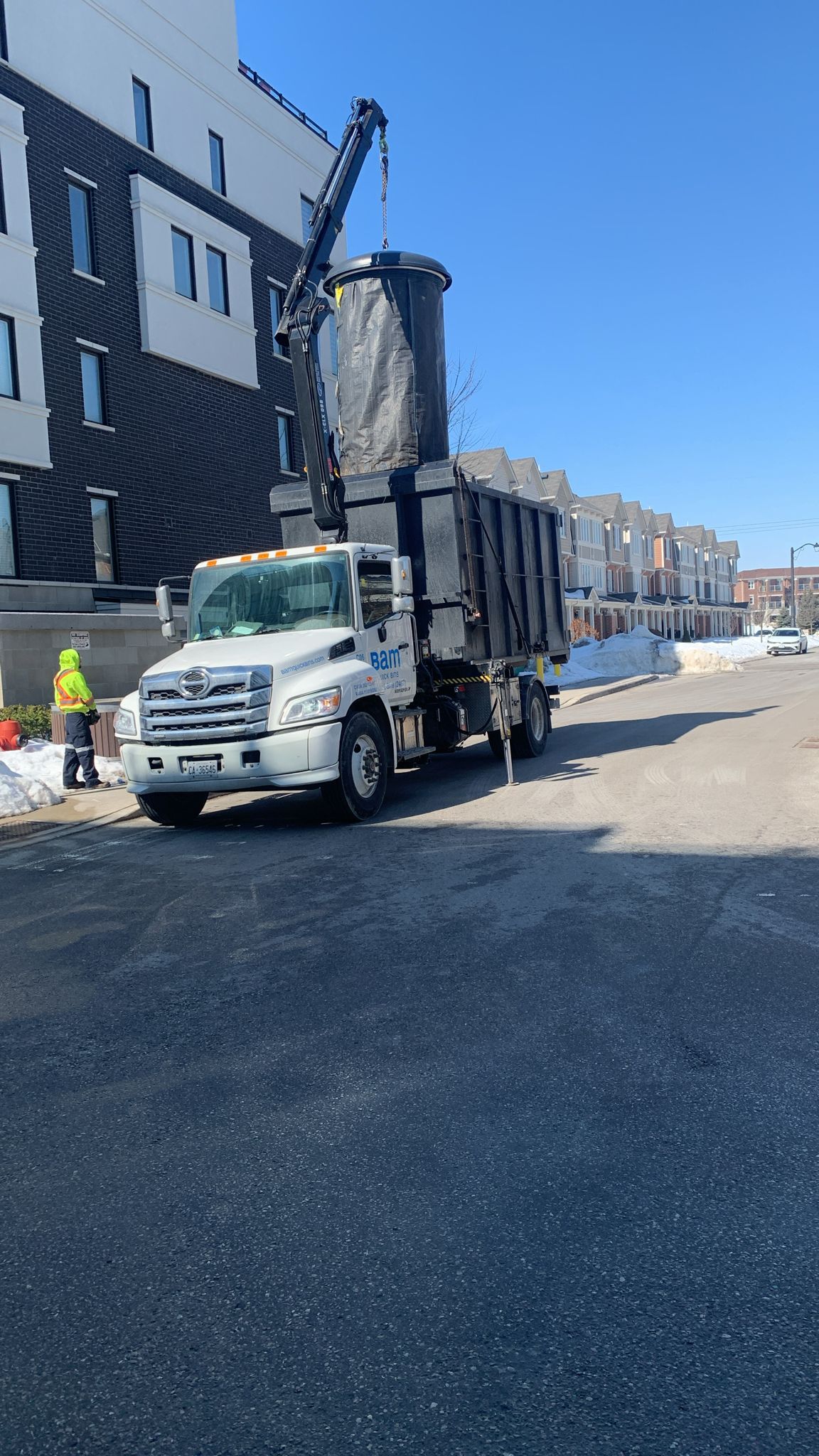
- Service with specialised equipment. A truck lifts the inner container (or liner) out for emptying, then sets it back in place.
That servicing model is different from a standard roll-off dumpster. You are not swapping an open bin on the driveway. You are emptying a fixed, semi-underground unit on a schedule.
Why property managers choose Molok bins
Property teams usually look at Molok-style systems when they want:
- Smaller outdoor footprint than a row of wheeled carts or open dumpsters
- Neater curb appeal for residents and visitors
- Higher capacity per square metre of pad space, thanks to underground volume
- Controlled access at the lid, which can reduce scavenging and mess
They are a strong fit for condominiums, apartments, townhouse blocks, and some commercial sites where space and appearance matter as much as capacity.
Molok bins vs a traditional dumpster
A rental dumpster is temporary and sits fully above ground. A Molok bin is a permanent or long-term fixture designed for ongoing site waste. Dumpsters are ideal for renovations and cleanouts. Molok units are ideal for day-to-day residential or commercial waste streams that need a clean, fixed collection point.
Bam Quick Bins handles both worlds: roll-off bin rentals for projects, and semi underground waste container servicing for Molok and similar underground systems.
Where Bam Quick Bins services Molok bins
We service Molok bins across a wide Ontario corridor. City pages include:
If your site is nearby and not listed, ask us. Coverage often extends to surrounding towns.
What to expect from Semi Underground Waste Container Servicing
A typical service visit includes scheduled emptying, safe lift-out of the container, haul-away of the waste, and reset of the unit. Frequency depends on unit size, number of units, and how busy the site is. Your property team sets the cadence with the service partner.
For a full overview of how Bam approaches this work, see our semi underground waste container servicing page.
Quick answers
Is a Molok the same as an underground garbage bin?
In everyday language, yes. People search underground garbage bins and molok garbage bins for the same idea: a container with most of its volume below grade.
Do residents need special bags?
Follow your property’s posted rules. Most household bagged waste that fits the lid opening is fine. Oversized items usually need a separate bulk or bin-rental solution.
Can Bam help if we already have Molok units on site?
Yes. We focus on servicing installed semi-underground systems for property managers, not on selling competing brands.
Ready to talk Molok servicing?
If you manage a site with Molok bins (or you are planning a semi-underground waste area), Bam Quick Bins can help with reliable emptying across Ontario.
Start with our semi underground waste container servicing overview, or open the Molok page for your city linked above. You can also book a conversation with your local team when you are ready to set or change a service schedule.