Furniture is the hardest part of almost every cleanout. It is big, it is heavy, it does not fit in the car, and it often carries memories that make letting go harder than it should be. And when you finally decide to get rid of it, the options can feel confusing: sell it, donate it, put it at the curb, or rent a bin?
The right answer depends on the piece. This guide works through furniture disposal in Ontario honestly, starting with what actually has value, then donation, municipal pickup, and the bin, with a piece-by-piece rundown and a few safety notes along the way.
Start with the honest question: is it worth anything?
The used furniture market is stronger for some pieces than others, and being realistic up front saves weeks of waiting for a buyer who never comes.
What tends to sell:
- Solid wood furniture in good condition, especially smaller pieces like side tables, chairs, and dressers.
- Mid-century modern pieces, which have a devoted following.
- Furniture from well-known quality brands.
- Outdoor furniture sets in good shape, especially in spring.
- Clean, modern sofas and chairs in neutral colours.
What tends not to sell:
- Particleboard and flat-pack furniture, which rarely survives a second move.
- Upholstered furniture with stains, tears, sagging cushions, or pet damage.
- Large, traditional dark wood sets, like full dining room suites and china cabinets, which have fallen out of fashion.
- Entertainment centres built for old tube televisions.
- Waterbeds and anything that needs special handling to move.
None of this is a judgement on the furniture's quality. It is just what buyers are looking for right now.
Sort first: four piles and a deadline
Before you list or call anyone, walk through the house with a roll of painter's tape and a marker, and give every piece a label: keep, sell, donate, or go. Doing it all in one pass forces decisions, and the tape means family members and helpers can see the plan without asking you about every chair.
Then put a date on each pile. Pieces for sale get two weeks. If they have not sold by then, they move to the donate pile or get listed for free. Donation pickups get booked right away, because the good charities fill up. Everything left on the deadline goes in the bin, no second-guessing.
The deadline is the part that matters. Without one, the sell pile sits in the garage for a year, and you end up paying to move furniture you were trying to get rid of.
Sentimental pieces
Some furniture is hard to let go of for reasons that have nothing to do with resale value: a grandparent's rocking chair, the table everyone ate at for thirty years. A few things help.
Offer it to family first, and give them a real deadline to claim it. Photograph pieces you are letting go, including any details you care about, like a carved drawer pull or a signature under a tabletop. And remember that keeping one small piece, like a single chair from the dining set, often carries the memory just as well as keeping the whole set.
Selling: how to make it actually go
If a piece is worth selling, a few habits make the difference between a quick sale and a stale listing:
- Take photos in daylight, from several angles, with the piece cleared off and the background tidy.
- List the dimensions. Buyers want to know if it will fit before they ask.
- Describe the condition honestly, including flaws. It saves time for everyone.
- Price realistically. Check similar listings, and expect to negotiate.
- Offer porch pickup, so buyers can collect without coordinating a visit.
If a piece has not sold after a couple of weeks, drop the price or list it for free. "Free, you pick up" listings move remarkably fast for anything in decent shape.
Donating: what charities accept and refuse
Donation is a great outcome for furniture in good condition. Many charities and furniture banks pick up, and the furniture goes to families who need it or to stores that fund good work.
Charities have standards, though, and it helps to know them before you call:
- Pieces should be clean, structurally sound, and free of rips, stains, and pet damage.
- Mechanisms like recliners and sofa beds should work.
- Many charities do not accept mattresses for hygiene reasons.
- Many do not accept used cribs, since older cribs may not meet current safety standards, or car seats, which have expiry dates.
- Large or heavy pieces may need a pickup appointment, and popular charities can be booked weeks out.
Ask before you load the truck, and send photos if they request them.
Curb alerts and buy-nothing groups
Local buy-nothing groups and free listings are another option for furniture that is usable but not worth selling. Post a photo, mention porch pickup, and let it go to whoever comes first. Expect some no-shows; it is part of the process.
Leaving furniture at the curb with a "free" sign works in some neighbourhoods, but be considerate. Furniture left out in the rain quickly becomes garbage, and some municipalities discourage it.
Municipal bulky item pickup
Many Ontario municipalities collect large furniture items, either on regular garbage day or by appointment. Some charge a fee, some limit how many items you can put out, and the rules vary widely from town to town. Check your municipality's waste page. Bulky pickup works well for one or two pieces, though collection dates do not always line up with a moving date or a cleanout deadline.
Condos and apartments
Furniture disposal is harder when you live above the ground floor. Most condo and apartment buildings have rules about large items, and breaking them can mean fines or a bill for removal.
Check with your property manager before moving day. You will often need to book the service elevator, sometimes with a deposit, and some buildings only allow moves during set hours. Never leave furniture in the garbage room, the loading dock, or a hallway unless the building has told you that is allowed; many buildings charge the unit owner to remove it.
If the building has no bulky item program, you need a plan to get each piece out of the building and off the property in one trip. That is where booking a bin for the day, a Bam Bag, or a removal crew pays off, since you can carry pieces straight from the elevator to the truck or container.
Bed bugs: the rule that overrides everything
If there is any chance a piece has bed bugs, do not sell it, donate it, or leave it at the curb for someone else to take home. Bed bugs spread easily and are expensive to get rid of.
Wrap infested furniture and mattresses in heavy plastic, seal it, and label it clearly so nobody takes it. Treat the home with a pest control professional before moving other furniture through the house.
Piece by piece
Sofas and sectionals: sectionals usually unclip into pieces, and sofa legs unscrew. Our guide to getting rid of a couch covers every option.
Mattresses: rarely accepted by charities, but recyclable in many areas. See our mattress disposal guide.
Dressers and bookcases: empty every drawer and shelf, and take drawers out before moving. Solid wood pieces often sell or donate well.
Dining tables and chairs: tables usually have removable legs. Matching chair sets sell better together than individually.
Recliners: heavy and awkward because of the mechanism. Working recliners in good shape can be donated; broken ones go in a bin.
Office furniture: our guide to office furniture disposal covers desks, chairs, and filing cabinets.
Outdoor furniture: metal frames can go to a scrap yard, plastic pieces usually go in a bin, and sets in good shape sell well in spring.
Pianos: a special case all their own. See our piano disposal guide.
Appliances: see our appliance disposal guide for fridges, stoves, and laundry machines.
Taking furniture apart
Breaking furniture down makes it easier to move and takes far less space in a car, a truck, or a bin. Most pieces come apart with basic tools:
- Legs on sofas, tables, and beds usually unscrew.
- Bed frames unbolt into rails, a headboard, and a footboard.
- Drawers come out of dressers and desks.
- Glass tops and mirrors should come off and be wrapped before moving.
- Flat-pack furniture comes apart the way it went together, in reverse.
Keep hardware in labelled bags if the piece is going to a new home.
Moving heavy pieces safely
Furniture injuries happen on stairs and in doorways. Measure the piece and the path before you start. Remove doors from their hinges if it buys you clearance. Use a dolly for heavy pieces, furniture sliders on smooth floors, and moving straps for awkward loads. Lift with your legs, keep the load close, and always have a second person on anything heavy.
When a bin makes sense
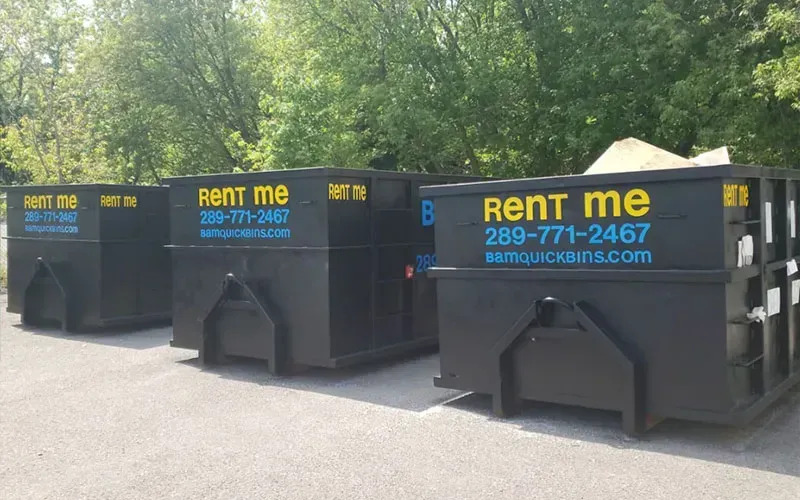
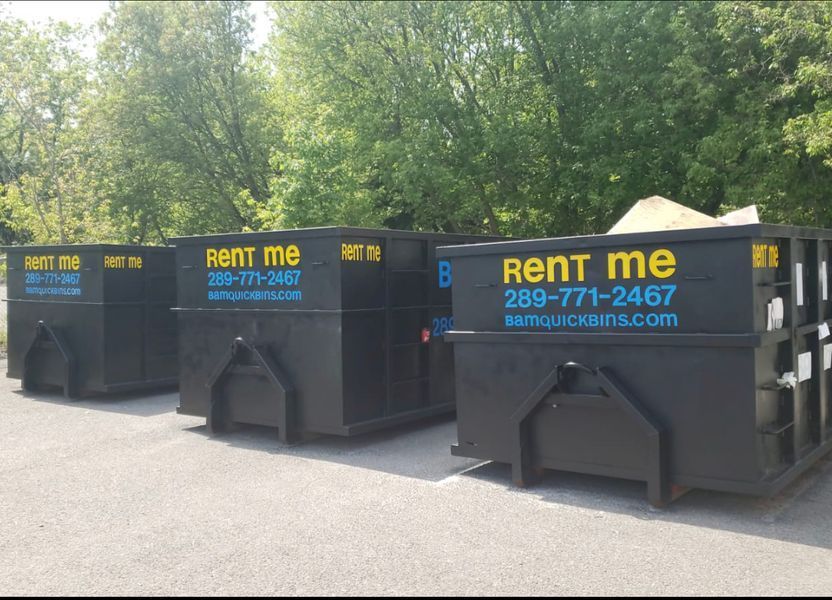
A bin is the right answer when you have more than a couple of pieces that cannot be sold or donated, especially during a move, a renovation, or an estate cleanout. A 10-yard bin swallows a sofa, a couple of chairs, a bed frame, and a dresser with room to spare. For a whole house, a 15 or 20-yard bin is usually right.
For just a few pieces, a Bam Bag rated to 1 tonne can be enough. For a bigger clear-out, our junk removal service runs on a flat-rate, bin-based model: we drop off the bin, you load it on your own schedule, and there is no crew clock running while you decide what stays.
A few loading tips make the space go further. Put the biggest, flattest pieces in first, like table tops, bed frames, and headboards, laid flat on the floor of the bin. Stand sofas on end against the back wall. Fill the gaps with drawers, cushions, and small pieces. Bulky furniture packed this way takes up far less room than the same furniture tossed in whole.
Timing it around a move
Most furniture disposal happens during a move, and the order matters. Start about six weeks out. List anything for sale first, since selling takes the longest. Book charity pickups next, because they are often scheduled weeks ahead. Set up municipal bulky pickup if your town offers it.
Book the bin for the last week, when the remaining pieces are clear and you are packing up the rest. That way the bin catches everything that did not sell or get picked up, plus the general clutter that every move turns up. Our moving checklist lays out the whole timeline.
Where we help
We help with furniture disposal across southern and eastern Ontario, with local junk removal pages for Toronto, North York, Mississauga, Oakville, and Vaughan. Tell us roughly what is going, and we will tell you whether a bag, a 10-yard bin, or something bigger fits the job.