
A four-bedroom house that has held one family for forty years does not fit into a two-bedroom condo, and everyone involved knows it. What nobody knows at the start is how to get from one to the other without arguments, exhaustion, or a frantic final weekend. Downsizing for seniors is a logistics project wrapped around a lifetime of memories, and it goes best when you respect both halves.
We see the end of these projects all the time, when the bin arrives for whatever remains. The families who finish calmly almost always did the same few things early. This guide lays them out.
Start earlier than feels necessary
The most common regret we hear is "we should have started sooner." Three to six months is a comfortable runway for a full house. That sounds like a lot until you realize how many decisions a home holds, and how tiring those decisions are, especially for an older parent.
Decision fatigue is real. Most people can make good choices about belongings for an hour or two at a stretch before everything starts to feel equally important or equally pointless. Short, regular sessions beat marathon weekends. Two hours on a Tuesday morning, when energy is high, does more than an entire Saturday that ends in tears.
Starting early also protects the parent's say in the matter. When the moving date is a month away and the house is still full, families start making decisions for their parents instead of with them. That is when resentment creeps in.
Let the new floor plan decide
The single most useful tool in downsizing is the floor plan of the new home. Get it from the condo developer, the retirement residence, or the listing, and measure the rooms yourself if you can.
Then work backwards. The new living room fits one sofa, one chair, and a small table. The bedroom fits a queen bed and one dresser. The kitchen has a third of the cupboard space. Suddenly the question is not "do you want to keep this?", which invites a yes for almost everything, but "which of these fits?", which has an answer.
Some families tape the outline of the new rooms on the floor of the old house, so their parent can see exactly how much space the favourite armchair takes up. It sounds fussy. It settles more debates than any amount of talking.
Do not forget the small spaces: closets, bathroom cabinets, the storage locker if there is one. A lifetime of linens, tools, and holiday decorations needs to fit somewhere, and in most condos that somewhere is very small.
The conversations that make or break it
How you talk about the stuff matters as much as what happens to it. A few approaches help:
Let your parent lead. It is their home and their life. Your role is to help them decide, not to decide for them.
Ask what they use, not what they want. "When did you last use the fondue set?" gets a more honest answer than "do you want to keep the fondue set?"
Listen to the stories. Many objects matter because of what they remember, not what they are. Taking a photo of the item and writing down its story can let someone part with the thing while keeping the memory.
Pick your battles. If your mother wants to keep forty years of National Geographic, and they fit in the new place, let them go to the new place. Save your energy for the decisions that actually affect the move.
Agree on a rule for disagreements between siblings before they happen. Taking turns choosing items, or letting the parent make the final call, keeps one crystal bowl from becoming a family feud.
What family actually wants (and doesn't)
Here is a gentle truth that surprises a lot of parents: adult children usually want far less than expected. The formal china, the dining room suite, the collection of figurines, and the heavy wooden bedroom set often hold no appeal for kids who live in smaller homes with different tastes.
What family does tend to want is smaller and more personal: photographs, letters, a piece of jewellery, a recipe box, a tool that belonged to a grandparent, a single painting. Ask everyone early, ideally with photos so out-of-town relatives can choose, and set a date by which claimed items must be picked up. Unclaimed items after that date move to the sell or donate pile without further discussion.
Selling and donating: honest expectations
The resale market for traditional furniture is soft. Solid but old-fashioned pieces like china cabinets, dark wood dining sets, and upholstered armchairs often sell for very little, if they sell at all. That can feel insulting after decades of care, so it helps to know it going in.
What does sell: mid-century modern furniture, quality tools, collectibles with a real following, good jewellery, and anything a specialist dealer recognizes. For a large household with plenty of saleable items, an estate sale company may be worth a call; they typically handle pricing and the sale for a share of the proceeds.
Donation is the next best home. Many charities pick up furniture and household goods in good condition, though they have standards: no stains, tears, or broken parts, and many will not accept mattresses or upholstered items with pet damage. Book pickups well ahead, because popular charities are often booked weeks out.
Our guide to furniture disposal goes deeper on what sells, what donates, and what is better off in a bin.
Photos, papers, and the irreplaceable
Some items deserve their own careful process.
Photographs are the one category families almost never regret keeping. Do not throw them away during the rush. Box them, move them, and sort or digitize them later when there is time. Scanning services can convert prints, slides, and home movies into digital files that every family member can share.
Paperwork needs a careful sort. Keep a folder of essentials that moves with your parent: the will, power of attorney documents, insurance policies, property records, pension and banking information, and medical records. For tax records, the Canada Revenue Agency generally expects you to keep records for six years from the end of the tax year they relate to. Older financial papers can usually be shredded, and shredding services make quick work of decades of statements. Anything with account numbers or identity details should be shredded, never tossed whole.
Who does the heavy lifting
Decide early who handles the physical work, because it should not be your parent. Attics, crawl spaces, and basement storage rooms are where falls happen: steep stairs, poor lighting, and boxes heavier than they look. Younger family members, or hired help, should do the climbing and carrying, while your parent makes decisions from a comfortable chair in a well-lit room. Bring boxes to them rather than the other way around.
For furniture, use a dolly and furniture sliders, and do not attempt a solid wood dresser or a chest freezer with two people and good intentions. Movers and junk crews do this every day. Spending a little on help for the heavy pieces is cheaper than a strained back, and far cheaper than a fall.
The move itself
Moving an older parent is different from moving anyone else. Professional senior move managers exist for exactly this: they help plan the layout of the new home, coordinate movers, and set everything up so it feels like home on the first night.
Whether you hire help or do it yourself, one rule helps enormously: set up the new place before your parent arrives, if you can. Make the bed with familiar sheets. Hang a few favourite pictures. Put the kettle and their favourite mug where they will look for them. Arriving to a home that already feels like theirs makes the transition far gentler.
The final clear-out
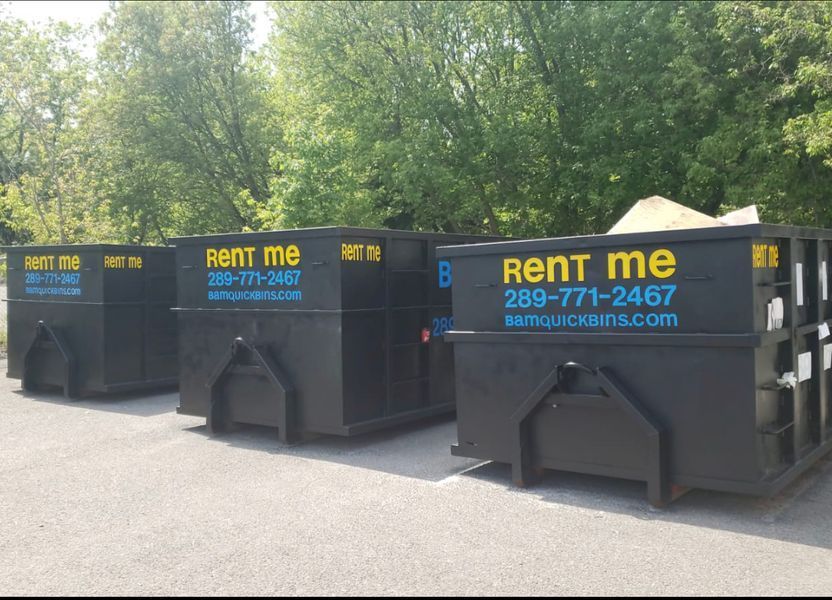
After family has taken their pieces, the sale is done, and donations have gone, there is always a remainder. Broken furniture, worn-out mattresses, decades of basement accumulation, garden tools nobody wants, and the contents of the garage. This is where a bin earns its place.
Many families schedule the final clear-out after their parent has moved, so they do not have to watch the house being emptied. That is a kindness worth considering. A full house remainder usually calls for a 15 or 20-yard bin, and our residential rentals include boards under the bin to protect the driveway and a standard 5-day rental, with extensions when the job needs them. For a smaller remainder, a Bam Bag rated to 1 tonne can be enough.
If the house is being cleared after a death rather than a move, our estate cleanout guide covers the extra steps, and our moving checklist covers the timeline for any household move.
Look after yourselves too
Downsizing is grief work, even when everyone agrees it is the right move. Your parent is leaving the house where they raised children, nursed a spouse, or hosted every holiday. Adult children are often saying goodbye to their childhood home at the same time.
Take breaks. Celebrate progress, like a cleared room or a donation run. Let emotions happen without trying to fix them. And remember that the goal is not a perfect process. It is a parent who arrives safely in their new home with the things that matter most.
Where we help
We deliver bins for downsizing clear-outs across southern and eastern Ontario, including many of the towns where people choose to retire. Our junk removal pages for Cobourg, Peterborough, and Kingston explain the load-at-your-own-pace approach, and we deliver to Port Hope, Brighton, and Picton too. Call your local division and tell us it is a downsizing move. We will plan the delivery around your family's timeline, not ours.