


Buy a century home in Port Hope, Hamilton, or the older streets of Cambridge, and sooner or later you will stand in a room and stare at the walls. They are cracked in places, bulging in one corner, and they sound different when you knock on them. They are plaster walls, and the question every owner eventually asks is the same: keep them, cover them, or tear them out?
There is no single right answer, but there are clear trade-offs. This guide walks through how plaster walls were built, what goes wrong with them, your three real options, and the part almost nobody plans for: how much the stuff weighs when it comes down.
How to tell plaster from drywall
If your house was built before the 1950s, the walls are very likely plaster. After that, drywall took over. A few quick tests settle it:
- Knock on the wall. Plaster sounds solid and dull. Drywall between studs sounds hollow.
- Push a thumbtack in. It slides into drywall easily and barely dents plaster.
- Take off an outlet cover and look at the edge of the wall around the box. Plaster walls are usually thicker, often around an inch, with visible layers.
- Look for curved corners and coved ceilings. Those were easy with plaster and rare with drywall.
Some homes from the 1930s to the 1950s have rock lath, also called gypsum lath: panels of gypsum board covered with a thinner coat of plaster. It is a halfway point between old plaster and modern drywall, and it behaves a bit like both.
How plaster and lath were built
Traditional plaster walls were built in layers. First, thin strips of wood called lath were nailed horizontally across the studs with small gaps between them. Then a plasterer applied a first coat, the scratch coat, which pushed through the gaps and curled over the back of the lath. Those curls, called keys, are what hold the wall on. A second coat, the brown coat, built up thickness and flatness. A thin, smooth finish coat went on top.
Early plaster was often lime-based and sometimes mixed with horsehair or other fibres to help it bind. Later plaster used gypsum, which set faster. Either way, the result is a hard, dense wall that is much heavier than drywall.
Why people love it
Plaster has real advantages. It is excellent at dampening sound, which is why old houses can feel quieter room to room. It is solid enough that pictures and shelves feel anchored. It resists fire better than you might expect. And it carries the character of the house, from the soft curves of hand-finished corners to the plaster mouldings in some older living rooms.
Many owners decide to keep their plaster for exactly these reasons, and they are not wrong to.
The problems you will see
Plaster walls show their age in predictable ways:
- Hairline cracks across walls and ceilings are normal and mostly cosmetic.
- Diagonal cracks running from the corners of doors and windows usually come from the house settling over the decades.
- Bulging or soft spots, where the wall moves when you press on it, mean the keys have broken and the plaster has separated from the lath.
- Water stains and crumbling plaster point to leaks, past or present.
- Patchwork, where earlier owners repaired holes with whatever they had, often leaves uneven surfaces.
The first two are usually fine to repair. The third needs attention before a piece of ceiling comes down on its own.
Option 1: Repair the plaster
Repair is the least disruptive option and keeps everything people like about plaster.
Loose plaster can often be reattached to the lath with plaster washers, small perforated discs driven in with screws, or with adhesive injection systems designed for the job. Cracks are cut out slightly, taped with fibreglass mesh, and filled with setting-type joint compound, which bonds better and shrinks less than premixed compound. Walls with many cracks can be skim coated, where a thin layer of compound goes over the whole surface for a smooth, even finish.
Repair is skilled work, but it is mostly clean and it does not generate much waste. For walls that are sound overall, it is often the best value.
Option 2: Cover it with drywall
When plaster is cracked everywhere but still firmly attached, many owners laminate thin drywall right over it. A sheet of quarter-inch or three-eighths drywall is screwed through the plaster into the studs, then taped and finished as usual.
This is faster and far less messy than removal, and it keeps much of the sound-dampening benefit, since the plaster stays in the wall. The catch is thickness. The wall gets thicker, so electrical boxes need extenders, and window and door trim may need adjusting to sit flush. Plan those details before you start.
Option 3: Tear it out
Sometimes removal is the right call. Common reasons include rewiring the house, adding insulation to exterior walls, moving walls in a layout change, or plaster that is damaged beyond sensible repair.
Removal opens the walls completely, which makes wiring, plumbing, and insulation work far easier. It is also dusty, heavy, labour-intensive work, and it is the option that turns a renovation into a demolition project.
Veneer plaster: the option people miss
If you love the hard, solid feel of plaster but the old walls are too far gone to save, there is a middle ground between repair and drywall that many homeowners never hear about: veneer plaster.
A veneer plaster system starts with special gypsum panels, often called blueboard, screwed to the studs much like drywall. A plasterer then trowels one or two thin coats of veneer plaster over the whole surface. The result is a hard, smooth wall that resists dents better than standard drywall, with a finish much closer to traditional plaster, and without the long drying times of the old three-coat method.
It costs more than drywall, and you need a plasterer who knows the system, which can take some finding. For a heritage home where the walls matter, or a busy household where drywall gets dinged, it is worth pricing.
Whichever finish you choose, the demolition is the same: the old plaster and lath come out first, and that is the heavy part of the job.
The weight nobody plans for
Here is what surprises almost everyone: plaster and lath come off the wall many times heavier than the same area of drywall. It is dense rubble, and it adds up faster than the pile suggests.
We see it every time a plaster job goes into a bin. In our experience, the walls and ceiling of one ordinary bedroom can go past the 1 metric tonne of disposal included in a standard rental on their own, long before the bin looks full. Every house is different, so treat this as a rough guide and do your own estimate before you book.
That is why plaster removal needs a disposal plan built around weight rather than volume. A plaster job usually means a smaller bin filled with dense rubble, more than one load, or both. Tell us it is plaster when you book, and read our guide to dumpster weight limits before you start. The cubic yard calculator helps estimate volume, but for plaster, weight decides.
Before you swing a hammer
Older walls hide more than plaster. Check these before demolition:
- Asbestos. Health Canada lists plaster, drywall, and spackling among the older materials that may contain it. Test before you remove anything. Our guide to asbestos testing explains how.
- Lead paint. Health Canada says your home probably contains lead-based paint if it was built before 1960, and the exterior of a home built between 1960 and 1990 may have it too. Keep children and pregnant women away from the work, consider hiring an expert, and never use sanders, heat guns, or torches to strip it, since that creates toxic dust and fumes.
- Knob-and-tube wiring. ESA says this wiring method was used in homes from the early 1900s to the 1940s, and it recommends having a Licensed Electrical Contractor assess a home that has it. Opening walls is a good time to deal with it, but get that assessment before anyone pulls wires.
- Insulation. Exterior walls in old houses are often empty, or filled with something unexpected, including vermiculite in some cases.
How to remove plaster without wrecking the house
If removal is the plan, do it methodically:
- Seal the room with plastic sheeting, cover floors, and shut off and cover heating vents.
- Remove trim, outlet covers, and fixtures, and switch off power to the room.
- Mist the wall lightly with water to keep dust down.
- Break the plaster off the lath in manageable pieces with a hammer and a flat bar, working from the top down.
- Shovel the rubble into heavy contractor bags, filling them only halfway so they can be lifted safely.
- Pry the lath strips off the studs, pull the nails, and bundle the lath.
Wear a well-fitted respirator, eye protection, and gloves throughout. Plaster dust is fine and gets everywhere.
Rock lath: the in-between case
Homes from roughly the 1930s to the 1950s often have rock lath instead of wood lath: gypsum panels nailed to the studs, with a thinner coat of plaster on top. It is lighter than traditional plaster and lath, though still heavier than modern drywall, and it comes down in larger pieces.
Rock lath often repairs well, since the panels themselves are sound and cracks tend to follow the seams between them. If you are removing it, the work is similar but faster: break the plaster face, then pry the gypsum panels off the studs. Treat the testing advice the same way, since plaster and drywall finishes from that era are on Health Canada's list of materials that may contain asbestos.
Sizing the bin
Plaster rubble is heavy and compact. Lath is light but bulky. Both can go in the same bin, but the rubble decides how much you can load. For a single room, a 10-yard bin filled carefully is often the right choice. For a whole floor, plan on multiple loads or scheduled swaps through our construction bin rentals.
Where we help
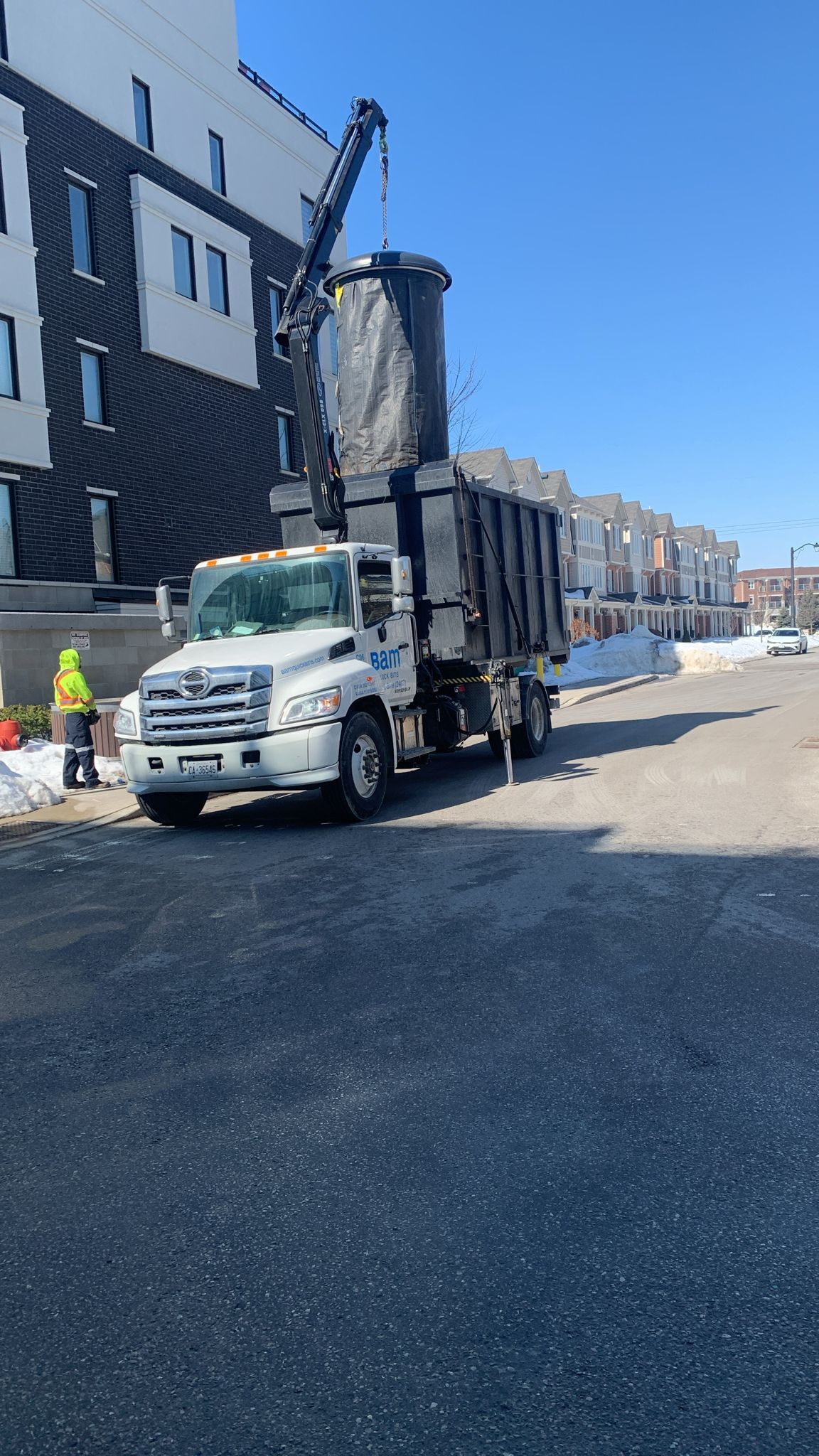
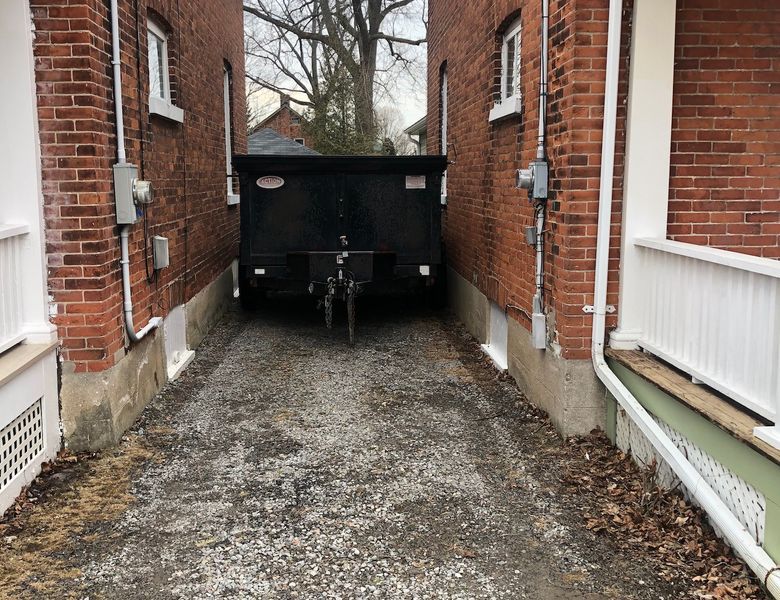
We deliver bins for plaster removal and old-house renovations across southern and eastern Ontario, including Port Hope, Cobourg, Hamilton, Paris, Almonte, and Elora. Call us with the size of the rooms you are opening up, and we will help you plan loads that the truck can actually lift.