Ontario storms have become harder to ignore. The derecho that tore through the province in May 2022 flattened trees from Ottawa to the Kawarthas and left some communities, Uxbridge among them, under a state of emergency. Ice storms snap limbs across entire neighbourhoods. Spring and summer windstorms bring down trees and fences with very little warning.
When the wind dies down, the cleanup begins, and it is one of the riskier jobs a homeowner ever takes on. Storm damage cleanup mixes chainsaws, damaged trees under tension, and sometimes live power lines. This guide covers how to do it safely, what to document, how to sort the debris, and when to hand the job to a professional.
Safety first: power lines
Treat every downed power line as live. Stay at least 10 metres away from it, about the length of a school bus, and keep everyone else back too. Electricity can travel through the ground around a downed line, and through branches, fences, and puddles touching it.
Call your local electrical utility to report the line, and call 911 if it is sparking, on fire, or in a dangerous spot. Never try to move a line yourself, even with a stick, and never cut or move a tree that is touching or tangled in wires. Utility crews deal with those.
If a line falls on your vehicle while you are inside, stay in the vehicle unless there is a fire, and call for help.
Generators: the hidden danger after a storm
Long power outages often follow big storms, and portable generators come out of every garage on the street. They are also one of the most dangerous parts of storm recovery. Generators produce carbon monoxide, an odourless gas that can kill quickly.
Never run a generator indoors, in a garage, in a basement, or on a covered porch, even with the door open. Set it up outside, well away from windows, doors, and vents, so exhaust cannot drift back into the house. Make sure your carbon monoxide alarms work and have fresh batteries. Never plug a generator into a wall outlet to power the house; that can send electricity back into the lines and endanger utility crews working to restore power. If you want to run household circuits, have a licensed electrician install a proper transfer switch.
Check the house
Once the area is safe, walk around the house and look for damage:
- Trees or large limbs on the roof or against walls.
- Missing or lifted shingles, damaged flashing, and dented eavestroughs.
- Broken windows and damaged siding.
- Water coming in anywhere.
If a tree has hit the house, call your insurer and a certified arborist. Removing a tree resting on a structure is skilled work, because the tree's weight may be holding something together, or about to make it worse. Do not climb onto a damaged roof yourself. A temporary tarp over a hole can stop water damage, but only put one up if you can do it safely from a ladder.
Document everything for insurance
Before you clean anything up, take photos and video of all the damage, from several angles, including the trees and debris in place. Keep receipts for emergency repairs, tarps, generator fuel, and cleanup help.
Coverage varies a lot by policy, so call your insurer early and ask what is included. Damage a fallen tree causes to your house is commonly covered. The cost of removing a tree that fell without damaging anything may not be. Knowing this before you start helps you decide what to do yourself and what to hire out.
Chainsaw safety
If you are cutting up fallen trees and limbs yourself, take chainsaw safety seriously. Storm work is more dangerous than ordinary cutting.
Wear the right gear: a helmet with a face shield and hearing protection, chainsaw chaps or protective pants, sturdy gloves, and steel-toed boots. Keep the chain sharp and the saw in good condition.
Watch for kickback, when the tip of the bar catches and the saw jumps back toward you. Never cut with the tip, and never cut above shoulder height. Keep both hands on the saw and your footing solid.
Never work alone. Have someone nearby who can call for help.
Most importantly, understand tension. Storm-damaged trees are often bent, twisted, or pinned under other trees, which stores enormous energy in the wood. A branch bent under tension, sometimes called a spring pole, can whip violently when cut. If you cannot tell which way a piece of wood will move when you cut it, leave it for a professional.
Hanging limbs and leaning trees
Broken limbs caught high in a tree, sometimes called widowmakers, can fall without warning. Do not work underneath them. Trees that are leaning, cracked, or partly uprooted after a storm can fall later, especially in the next wind.
These are jobs for a certified arborist, who has the training and equipment to bring dangerous trees down safely. Many arborists are swamped after a major storm, so call early and be patient.
Trees on the property line and city trees
Storms do not respect property lines, and a lot of post-storm stress comes from trees that are not entirely yours.
A tree whose trunk grows on the boundary between two properties is jointly owned under Ontario's Forestry Act, and injuring or destroying one without the other owner's consent is an offence. If a storm leaves a boundary tree split or leaning, talk to your neighbour before anyone starts cutting, and agree on who hires the arborist.
When a neighbour's tree lands on your property, the usual first call is to your own insurer, whichever side of the fence the tree grew on. Who ultimately pays depends on your policy and the circumstances, such as whether the tree was obviously dead or dangerous beforehand, so document everything and let the insurers sort it out.
Trees on the boulevard or in a park usually belong to the municipality. Report damaged city trees rather than cutting them yourself, and keep well clear of any that are tangled in wires. Many municipalities also have bylaws protecting large private trees, though many allow emergency work on a tree that is an immediate hazard. If a damaged tree is not an emergency, check before you take it down.
Sorting the debris
Storm cleanup produces several kinds of debris, and sorting it as you go makes disposal much easier:
- Branches and brush. These are bulky but light. Many municipalities run special storm debris collections or open depots after major storms.
- Logs and larger wood. Cut to firewood length if you burn wood. Firewood should be seasoned before use, and it should not be moved long distances, because invasive pests like the emerald ash borer travel in firewood. The federal government regulates moving firewood out of certain areas.
- Stumps. These usually need a stump grinder rather than a bin.
- Building materials. Shingles, siding, broken fencing, and damaged sheds go in a separate pile from yard waste.
Municipal storm cleanup programs
After a significant storm, many Ontario municipalities announce special arrangements, such as extra curbside brush collection, free drop-off at yard waste depots, or extended hours. Check your municipality's website and social media in the days after a storm. Using those programs for brush and branches can save you a lot of effort and expense.
Bins for storm cleanup
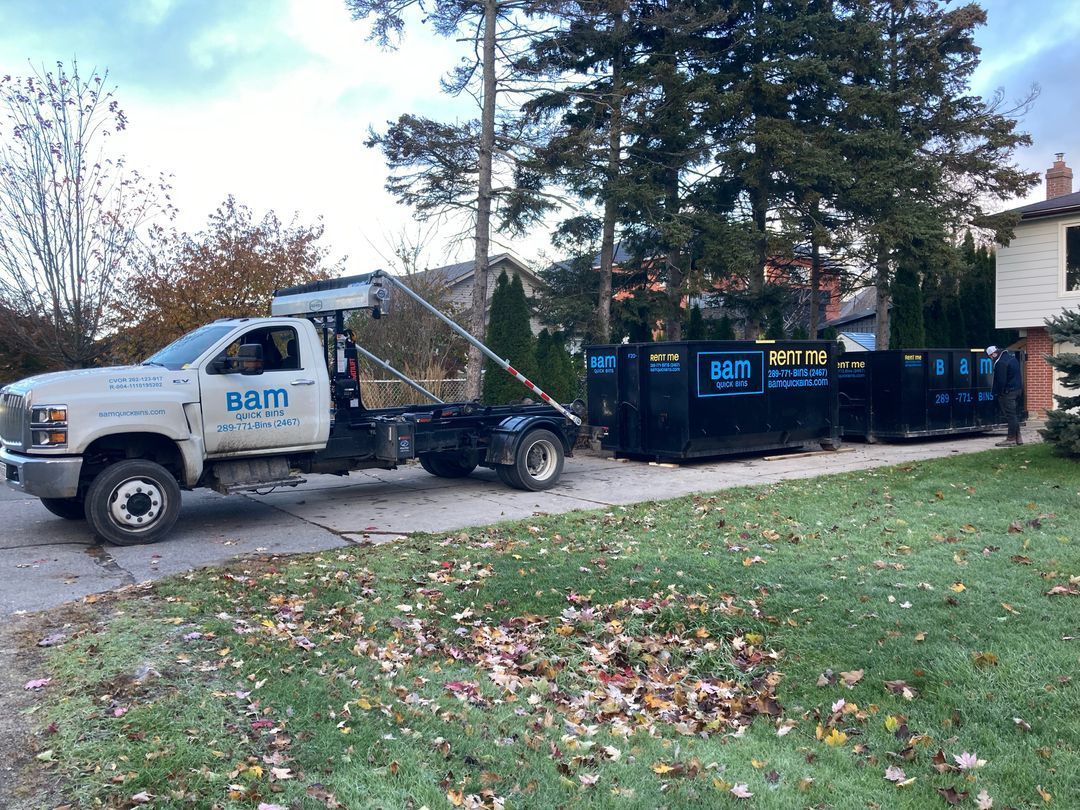
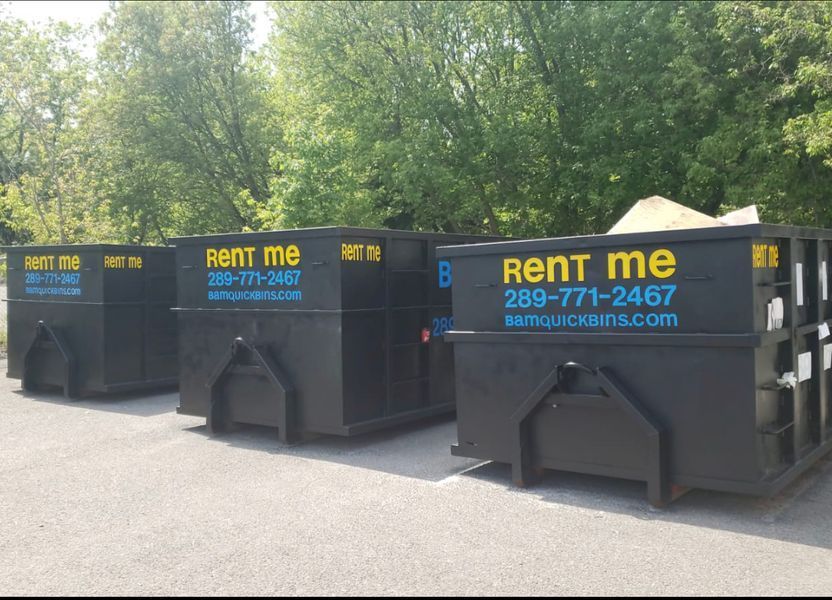
When the cleanup is bigger than curbside collection can handle, a bin keeps it manageable. Branches, brush, and yard waste are all accepted in our bins, and our landscape debris service is set up for exactly this kind of job. Cut branches to lengths that lie flat in the bin, and load the heavier pieces first.
Watch the weight with logs and large limbs. Green wood is heavy, and a bin full of trunk sections can exceed the 1 metric tonne included with a standard rental. Brush and branches, on the other hand, are light and bulky. Our guide to dumpster weight limits explains how to plan a mixed load.
Damaged roofing and building materials can go in a bin too. Shingles are heavy, so our guide to shingle disposal is worth a read if the storm took part of your roof.
After a big storm, demand for bins spikes across a whole region, so book as soon as you know what you need, and make sure there is a clear path for the truck through any debris.
Working with neighbours
Storms do not respect property lines. A tree from one yard lands in another, or a shared fence comes down. Talk to your neighbours early, take photos together, and let your insurers sort out responsibility rather than arguing over the fence line. Neighbours who help each other clear debris usually finish faster and on better terms.
Getting your yard ready for the next one
A little preparation before storm season reduces the damage when the next one hits:
- Have large trees near the house inspected, and remove dead or cracked limbs before wind does it for you.
- Trim branches that overhang the roof or reach toward power lines. Hire a professional for anything near the lines.
- Secure or store outdoor furniture, trampolines, and anything else the wind can pick up.
- Keep eavestroughs and downspouts clear so heavy rain drains away from the house.
- Know where your water shut-off and electrical panel are, and keep a flashlight with them.
After the cleanup
Once the debris is gone, take a look at the trees that survived. A storm can leave hidden damage, like cracked limbs or loosened roots, that becomes a hazard in the next wind. Having an arborist inspect large trees close to the house can prevent the next storm from doing more damage. Replanting is worth considering too; trees take years to grow, and the sooner they go in, the better.
Fall is a good time for preventive work as well. Our fall yard cleanup guide covers pruning and clearing before winter storms arrive.
Where we help
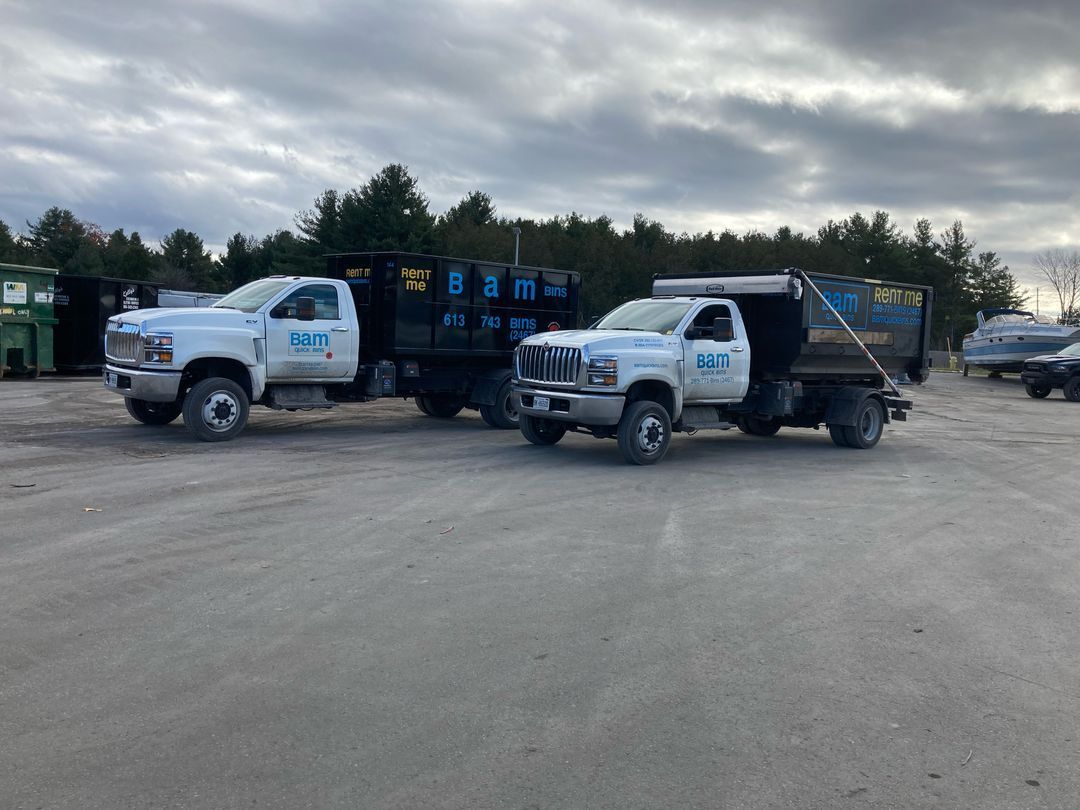
We deliver bins for storm cleanups across southern and eastern Ontario, including Ottawa, Peterborough, Uxbridge, and Lakefield. If a storm has left you with more debris than you can handle, our residential rentals and landscape debris bins are ready once the area is safe to work in.