

A fall yard cleanup in Ontario comes down to five jobs, done roughly in this order: deal with the leaves, cut back the garden, prune dead wood and clear any storm debris, take down whatever outdoor structure did not survive another summer, and shut the yard down for winter. Most yards get through all of it in one or two weekends between mid-October and the first hard freeze.
The routine material, meaning leaves and small branches, goes to your municipality's seasonal yard waste collection. The heavy and bulky material is what a bin is for. This guide walks through each job, what to keep, what to cut, what not to burn, and a weekend plan that gets the yard ready for snow.
When to do your fall yard cleanup
Wait until most of the leaves are down. Raking once in late October beats raking three times starting in September, and the trees around you decide the date more than the calendar does. Maples and birches usually finish well before oaks, which can hang on to their leaves into November.
The other end of the window is the weather. Frozen ground makes digging and edging miserable, and leaves buried under the first snow turn into a wet mat by spring. Aim to finish before the ground freezes.
There is one more deadline worth checking now: your town's last yard waste collection of the season. In Toronto, for example, the city collects yard waste every other week from around mid-March to mid-November. Your municipality will have its own schedule, so look it up before you plan the weekend, because after the last pickup the bags sit in the garage until spring.
Start with the leaves, and keep some
You do not have to bag every leaf. Toronto's own yard waste page suggests leaving fallen leaves and branches on the lawn in the fall, because they shelter native pollinating insects over the winter and feed the soil. It also suggests holding off on spring cleanup until temperatures stay above 10 degrees, day and night, for at least a week.
That said, a thick, wet layer of whole leaves sitting on grass all winter can smother it. A middle path works for most yards:
- Run the mower over the lawn a couple of times with the bag off. Chopped leaves settle between the grass blades and break down quickly.
- Rake the heavy drifts into garden beds and around shrubs, where they act as free mulch.
- Bag whatever is left for municipal collection.
If you do bag, use what your town accepts. Toronto, for one, takes yard waste in kraft paper bags or rigid open containers and will not collect it in plastic bags.
The last few lawn jobs
Keep mowing until the grass stops growing, which in most of southern Ontario is somewhere around early November. Drop the mower a notch for the last cut or two. Grass left long over winter tends to flop over and mat down under snow, and short grass dries out faster in spring.
Early fall, while the soil is still warm, is the usual window for overseeding thin patches. By late October that window is closing in most years, so if your lawn needs seed, make a note for next September rather than throwing it on frozen ground.
Fill holes and ruts now, before the freeze-thaw cycle makes them worse. A wheelbarrow of topsoil goes a long way. And walk the lawn for anything that will hide under snow and wreck a snowblower or a plow blade in January: hose ends, stakes, edging, toys, and rocks kicked out of beds.
Cut back the garden, selectively
Fall is when people tend to over-clean garden beds. Some things should go, and some are better left standing.
Pull out spent annuals and vegetable plants, especially anything that had disease or pests this year, so problems do not overwinter in the bed. Empty and store clay or ceramic pots, which can crack when wet soil freezes in them. Cut back perennials whose foliage turns to mush, like hostas.
Leave the sturdy stuff. Seed heads on coneflowers and grasses feed birds, and hollow stems give insects somewhere to spend the winter. They also hold snow, which insulates the roots.
Invasive plants are the exception to the compost rule. Toronto asks residents to bag invasive species such as dog-strangling vine, garlic mustard, buckthorn, and Japanese knotweed as garbage, not yard waste, so they do not spread. Check how your own municipality wants them handled.
Trees, shrubs, and storm wood
Fall is a good time to take out dead, broken, and rubbing branches, because you can still see which ones did not leaf out this year. Heavy shaping of most trees and shrubs is usually better left until late winter, when they are dormant. Go easy on spring-flowering shrubs like lilac and forsythia, which have already set next year's buds, so a fall haircut cuts off the flowers.
For trees growing too close to a power line, Ontario's Electrical Safety Authority says to call a certified utility arborist or your local hydro utility and ask them to prune it. Leave any limb too big to cut safely from the ground to a certified arborist. Our guide to storm damage cleanup covers what to do when a storm brings the wood down for you.
Municipal collection has size limits on branches, and they vary. Toronto's limits are a good example of how tight they can be: no wood thicker than 7.5 centimetres, bundles tied with natural twine, no longer than 1.2 metres, and no heavier than 20 kilograms. For anything bigger, the city points residents to a private company. That is where a bin earns its spot: whole shrubs, thick limbs, and a summer's worth of deadfall go in as they are, with no bundling.
Season-end demolition
Fall is when outdoor structures come down. The rotten fence section, the shed with a sagging roof, the planter boxes gone soft, the playset the kids outgrew, the deck you promised to replace: all of it makes far more debris than leaves do, and none of it fits in a paper bag.
Our guides to shed removal and deck removal walk through those jobs step by step. Do the demolition early in the weekend while you have the energy, and before the bin fills with lighter material that could have gone on top.
A lot of old outdoor lumber is pressure-treated. It can go in the bin, but Health Canada's advice on treated wood is to never burn it, indoors or outdoors, and never use it as mulch.
Sod, soil, and garden tear-outs
Cool fall weather is good for re-grading, filling low spots, and cutting new beds, and those projects produce heavy material. Toronto's curbside yard waste program does not take sod or soil at all, and other towns set their own limits.
Sod and soil are dense, so they hit weight before they fill space. A modest pile can approach the 1 metric tonne of disposal included with a standard rental. Tell us what you are digging up when you book. A bin that is mostly soil may be better handled as a clean-fill load through our dirt and concrete service, and our material weight chart gives rough weights for planning.
Shut the yard down for winter
These jobs make no debris, but they are part of the same weekend and they prevent spring repairs:
- Disconnect, drain, and coil garden hoses. Shut off the indoor valve to each outdoor tap, then open the tap outside so the line drains.
- Clean out gutters and downspouts once most of the leaves are down. Gutter debris can go in with your yard waste.
- Rake leaves and mulch back from the foundation and away from window wells.
- Clean and store patio furniture, cushions, and the barbecue cover.
- Run the mower dry or add stabilizer to the fuel before you put it away.
Do not burn it
A burn pile looks like the cheap option. In most of southern Ontario it is not an option at all. The Ontario Fire Code does not allow open-air burning unless it has been approved, or unless it is a small, supervised fire for cooking food. Local fire departments give that approval, and some issue burn permits under the rule. Toronto is blunt about leaves: the city's open air burning page says it is never permissible to burn leaves or rubbish.
Check with your local fire department before you strike a match, and never burn treated wood anywhere.
Bags, a Bam Bag, or a bin?
Match the container to the cleanup.
- Municipal yard waste bags handle leaves, garden trimmings, and small bundled branches, on your town's schedule and within its limits.
- A Bam Bag suits a medium cleanup: leaves, small branches, grass clippings, and garden debris that would take weeks of curbside pickups. It is rated to 1 tonne and can sit on the driveway until you are ready.
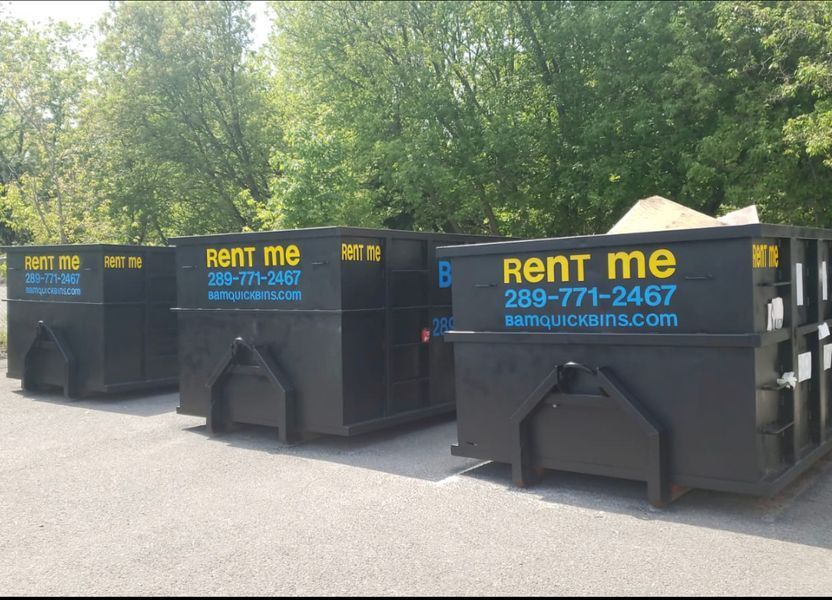
- A roll-off bin is the answer when the cleanup includes a structure, thick wood, sod, or a garage purge on top of the yard. Our landscape debris bins take branches, brush, sod, soil, and old landscaping materials.
For a typical yard plus a garage clean-out, a 10-yard bin is usually enough, and a 15-yard covers a yard with a shed or fence coming down. The bin size guide compares them by project.
One warning if the garage is part of the plan: old fertilizer, pesticides, paint, gasoline, and propane cylinders do not go in a bag or a bin. Toronto's household hazardous waste list includes every one of them. Take them to your municipality's household hazardous waste drop-off instead. Our household hazardous waste guide and garage cleanout checklist cover that side.
How to load yard debris into a bin
Yard waste is awkward. Branches spring back, brush is mostly air, and bagged leaves take up room fast. A few habits get much more into the same bin:
- Cut branches into lengths that lie flat, and lay them in one direction rather than tossing them in crosswise.
- Put heavy, flat material on the bottom: lumber, sod, pavers. Brush and bagged leaves go on top.
- Cut brush down with loppers before it goes in. Whole shrubs with their branches spread out fill a bin with air.
- Do not climb into the bin to stomp the load down. A twisted ankle on loose branches is not worth the extra space.
- Empty bagged leaves loose into gaps if the bin is getting full; the bags themselves trap air.
A one-weekend fall yard cleanup plan
Here is the order that works for most yards.
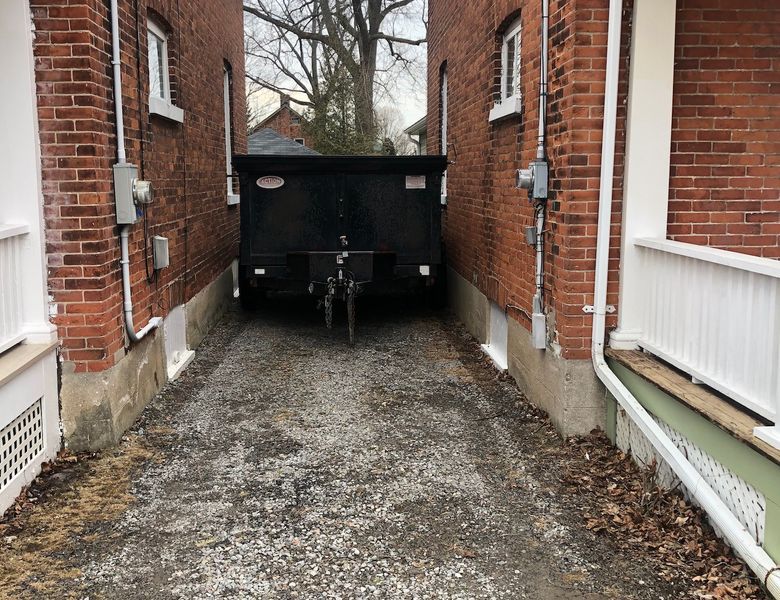
Friday evening: walk the yard with a notepad and list every job, including the ones you have been putting off. If you are renting a bin, decide where it will sit and make sure the spot is clear.
Saturday morning: big wood and structures first, while you are fresh. Cut branches into lengths that lie flat, take down the fence section or shed, and load the heavy, flat pieces into the bottom of the bin.
Saturday afternoon: leaves. Mulch-mow the lawn, rake the drifts into beds, and bag what is left for municipal collection.
Sunday: garden beds, then the shutdown list, then the garage sweep. Load the lighter material on top and keep everything level with the rim of the bin, not heaped above it.
After that, call us to pick up the bin, put the last yard waste bags out on collection day, and the yard is ready for snow.
Where we help
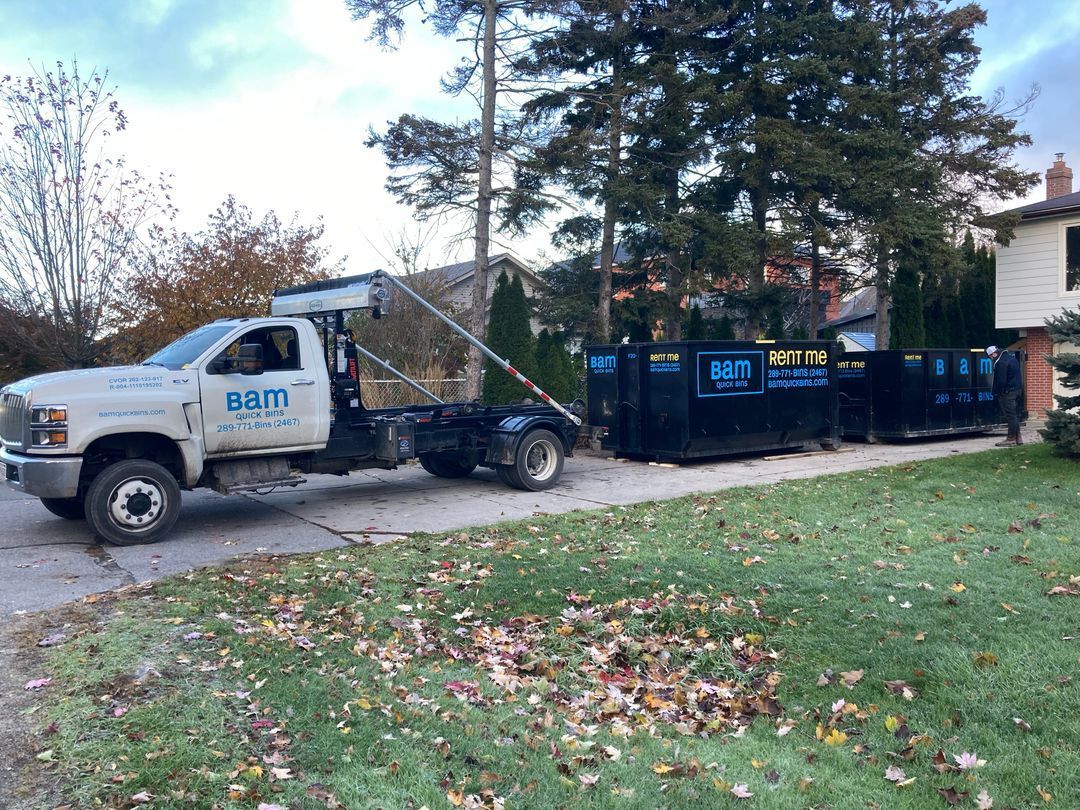
We deliver bins and Bam Bags for fall yard cleanups across southern and eastern Ontario, from Uxbridge and Waterdown to Peterborough, Lindsay, and Cambridge. Find your town on our service areas page, and check local rates on our pricing page.