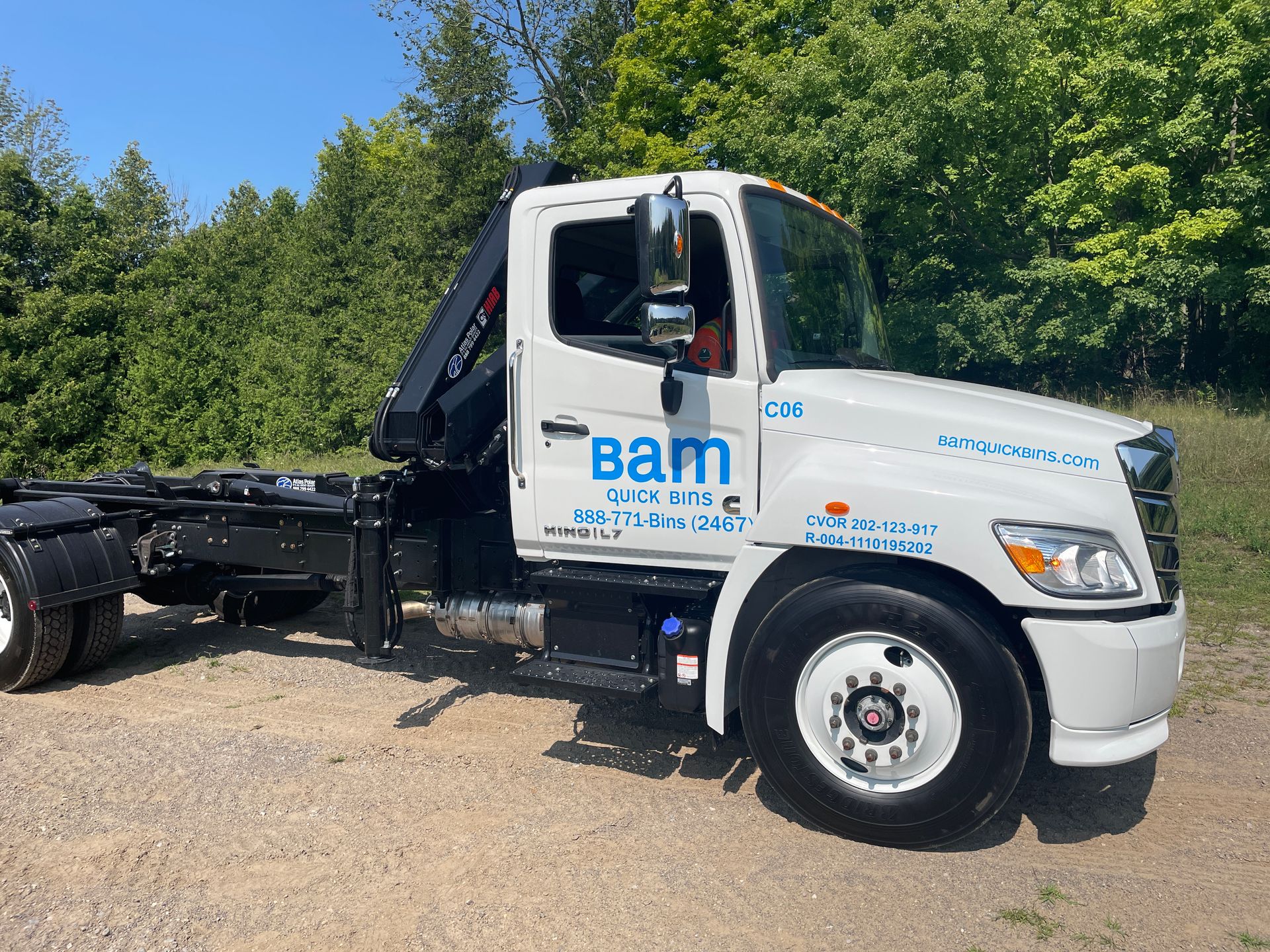
Roll-off is one of those industry words everyone uses and nobody explains. It describes how the bin gets on and off the truck, and that one design detail shapes the whole rental experience.
The roll-off mechanism
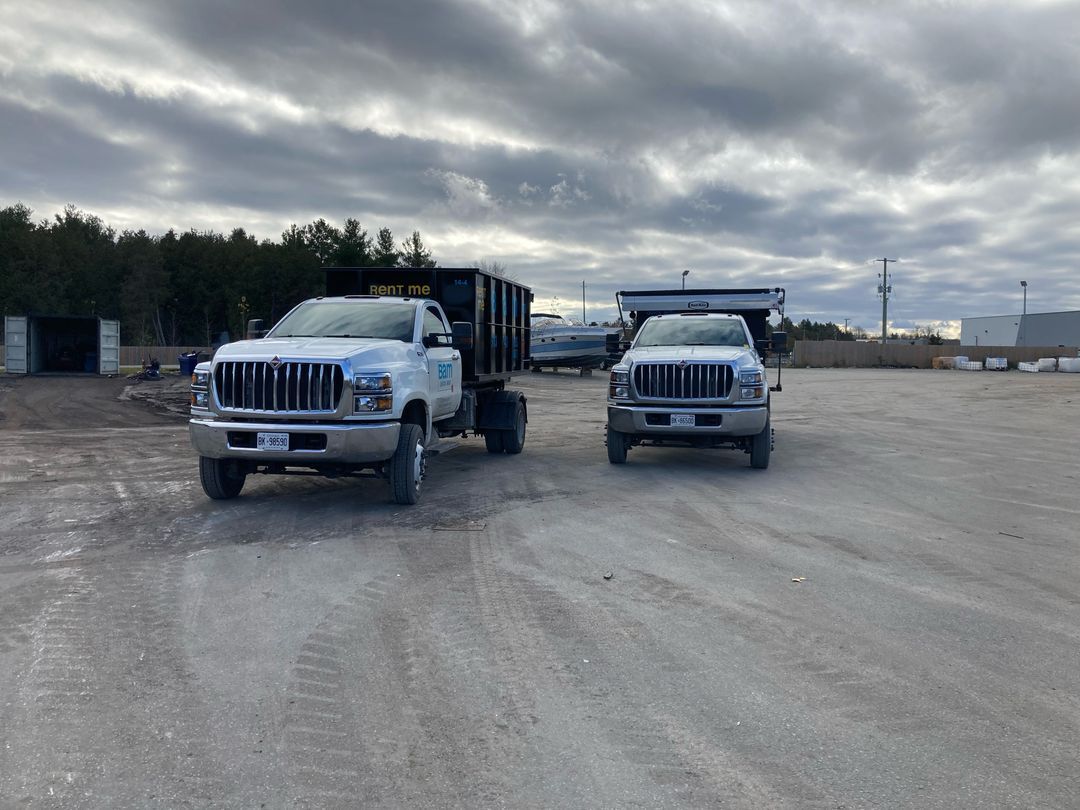
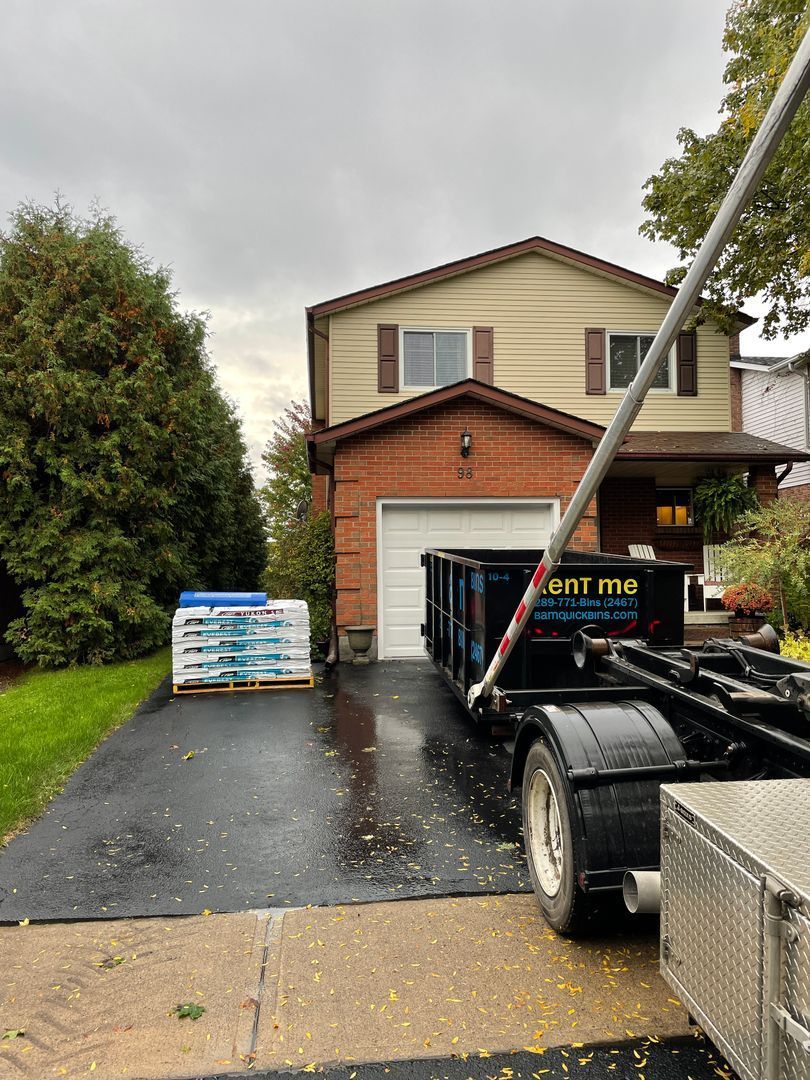
A roll-off dumpster is an open-top steel container with rollers on its underside. The truck carries a tilting rail bed: it backs up, tilts the bed, and the bin rolls smoothly down into position. Pickup is the reverse: a cable winches the bin back up the rails. No crane, no lifting arms over your house, no slamming.
Why that matters at your house
Precise placement. Because the bin rolls off along a line, the driver can set it exactly where you asked: tight to the garage, clear of the basketball net, on the parking pad. Boards go underneath first, so the rollers and weight never touch bare asphalt or interlock.
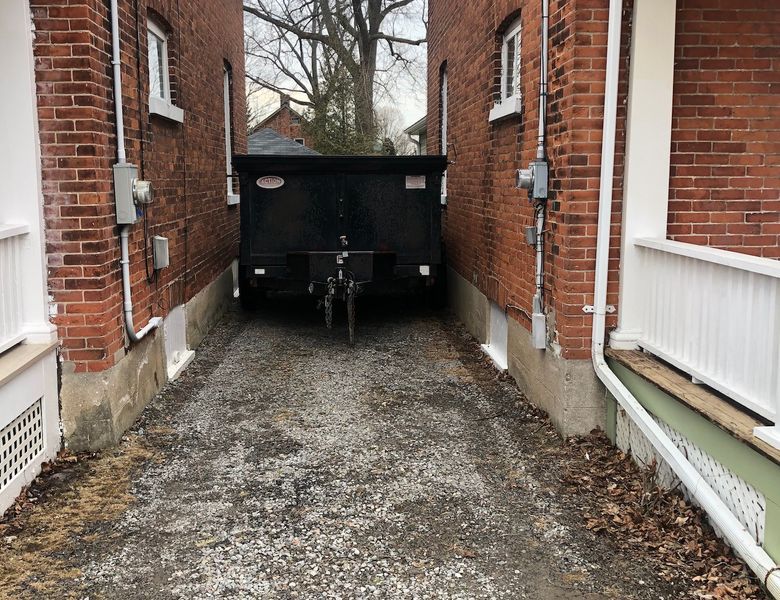
Driveway-friendly delivery. The truck needs a straight-ish approach and some overhead clearance, but it does not need to swing anything sideways. That is why roll-offs work on ordinary residential driveways from East York to Fergus.
Fast swaps. Winch the full bin up, roll an empty one down. On renovation sites we often do both in one visit, which is how crews keep working without a disposal gap.
Roll-off vs other bins
A roll-off is a temporary project bin. The lidded containers behind restaurants are front-load dumpsters, emptied in place on a route; that is our commercial dumpster program. Semi in-ground Molok containers are permanent fixtures emptied by crane, which we cover in our Molok guide. If you are clearing a basement or tearing out a kitchen, the roll-off is your tool.
Sizes and booking
Our roll-offs come in 10, 15, and 20-yard sizes, with the differences explained in our bin size guide. The standard rental is 5 days with 1 metric tonne of disposal included, and you can see the full roll-off service here or find your town's local page under service areas.