

Spring in Ontario means melting snow, saturated ground, and heavy rain, and for a lot of homeowners it means walking downstairs to find water where the floor used to be. A failed sump pump, a sewer backup, or water pushing through the foundation can turn a finished basement into a soggy mess in a few hours.
Flooded basement cleanup is a race against time, but it is a race you win by doing things in the right order. Rushing in without thinking about electricity, insurance, or what to save makes everything worse. This guide walks through the first 72 hours step by step, from making the space safe to getting the wet debris out of the house.
First, make it safe
Before anyone wades in, deal with the hazards you cannot see.
Electricity and water are the biggest danger. Health Canada's flood cleanup advice is to put your own safety first: shut off the power to the flooded area at the breaker box, and ask your local electrical utility for help if needed. If reaching the panel means wading through water that has reached outlets, baseboard heaters, or appliances, do not go in; call the utility instead. Wear rubber boots whenever you stand in water, and keep extension cords out of it.
If you smell gas, leave the house and call your gas utility from outside.
If the water came from a sewer backup, treat it as contaminated. Health Canada warns of a very real danger of infection from breathing the air in a sewage-contaminated area and from handling the water and materials, and says children, pregnant women, and people with breathing problems should never handle them. Wear rubber boots, waterproof gloves, eye protection, and an N95 mask, keep children and pets out of the basement entirely, and contact your local public health department if you suspect sewage.
Watch for structural warning signs too: cracked or bowing walls, sagging ceilings, or floors that feel soft. If anything looks wrong, get it checked before you spend hours working underneath it.
Call your insurer before you throw anything out
It is tempting to start hauling soaked carpet upstairs immediately, but a few minutes with your insurance company first can save you a lot of money.
Call your insurer as early as possible and ask what they need. Before you remove anything, photograph and video the water level, the damage, and the affected belongings. Make a list of damaged items as you go. Keep receipts for anything you spend on pumps, fans, dehumidifiers, or emergency help.
Ask specifically whether they want you to keep samples, such as a piece of carpet, or to hold damaged items until an adjuster sees them. Some insurers are happy with photos; others want to see certain things.
It is also worth knowing what you are covered for. The Financial Consumer Agency of Canada notes that home insurance policies may not cover floods or sewer backup, though you may be able to buy extra coverage for flood damage. If you are not sure what your policy includes, now is the time to ask.
Get the water out
Once it is safe, remove the standing water. Health Canada's order of work is pumps or pails first, then a wet/dry shop vacuum for what is left. Submersible pumps, wet/dry vacuums, and dehumidifiers can all be rented.
If your sump pump failed, find out why before you rely on it again. Common culprits are a tripped breaker, a stuck float switch, a clogged intake, or a power outage during the storm.
For deep flooding, a water damage restoration company can help pump the space out and start the drying. Health Canada's guide to moisture and mould also puts sewage, chemical, or biological contamination of flood water on its list of situations that call for a qualified professional.
The 48-hour clock
Health Canada says mould can begin to grow within 48 hours, and that your house and furnishings are less likely to grow mould if they are dried within that window. That is the single most important number in flooded basement cleanup. Everything you do after the water is out is about getting wet materials either dried or removed before that clock runs out.
That is why speed matters more than perfection. A basement that is opened up and drying within two days is in far better shape than one where soaked carpet and drywall sat for a week while everyone waited.
Where the water came from
The source of the water decides how much of the basement has to go.
Clean water from a burst supply line or a leaking water heater is the best case. Caught quickly, more of what it touched can be dried and saved, though it does not stay clean for long once it sits in carpet and drywall.
An overflowing washing machine or dishwasher carries some contamination. Porous materials it soaks, like carpet pad and the bottom of the drywall, usually come out.
Sewage, or flood water that came in from outside, is the worst case. Health Canada says household items contaminated by sewage, or wet for a long time, may have to be bagged, tagged, and thrown out according to local rules, and that a more thorough disinfection is needed than for clean water.
If you are not sure which you are dealing with, treat it as the worse case. Replacing a carpet costs far less than living with what can grow in one.
What to tear out
Some materials cannot be saved once they are soaked, especially if the water was dirty. Health Canada's list of what to throw out covers insulation, drywall, carpets, particleboard furniture, mattresses, box springs, pillows, cushions, and stuffed toys that were exposed to flood water and cannot be dried, and it says soaked flooring should be removed. In practice, plan to remove:
- Carpet underpad. It acts like a sponge and almost never dries properly.
- Carpet, if the water was from a sewer backup or sat for more than a day or two. Clean-water carpet dried quickly can sometimes be saved, but often it is not worth the risk.
- Drywall that got wet. The usual approach is a flood cut: cut the drywall in a straight line above the highest water mark and remove everything below it. Health Canada says to remove finished walls completely if the water was several feet high, took many days to drain, or the space stayed very humid for a long time.
- Insulation behind wet drywall. Wet fibreglass loses its value, and wet insulation keeps the wall from drying.
- Baseboards and trim made of particleboard or MDF, which swell and crumble.
- Particleboard furniture, cardboard boxes, and anything stored in them that soaked through.
- Mattresses, upholstered furniture, and soft toys that were saturated, especially in sewage.
Bag smaller items and stage larger debris near the door you will use to carry it out. Keep a running list and photos for the insurer as items go.
What can often be saved
Not everything is lost. These are often salvageable with prompt cleaning and drying:
- Solid wood furniture. Dry it slowly, away from direct heat, to reduce warping.
- Metal and plastic items, including plastic storage bins and their contents if the lids held.
- Concrete floors and walls, once cleaned and dried.
- Wood studs, if they are opened up and dried thoroughly.
Wet photographs and important papers deserve special care. The Canadian Conservation Institute warns that water softens the gelatin on prints so they stick to each other and to anything touching them, that flood water embeds dirt in that softened layer, and that photographs left wet feed mould. Separate them as soon as you can, lay them out face up without stacking, and ask a conservator for help with anything irreplaceable.
Drying out properly
With the water gone and the soaked materials out, the job becomes drying. Run dehumidifiers continuously and empty them often; Health Canada suggests keeping indoor relative humidity between 30 and 50 per cent. Use fans to keep air moving across wet surfaces, and open doors and windows if the weather outside is dry and mild. Open up wall cavities so air can reach the studs. Keep the basement warm if you can, since warm air holds more moisture for the dehumidifiers to pull out.
A moisture meter, available at most hardware stores, takes the guesswork out of knowing when things are dry. Do not close up walls or lay new flooring until studs and concrete read dry. Depending on how wet things got, that can take days or weeks.
Cleaning and disinfecting
Once materials are removed, clean every hard surface the water touched with an unscented soap or detergent solution, as Health Canada recommends, then dry it quickly. Health Canada also says bleach is not necessary to clean up mould. Sewage calls for a more thorough disinfection, which is worth discussing with your public health department or a restoration company. If you do use other cleaners, never mix them: Health Canada warns that bleach combined with ammonia or acids can produce toxic gases. Keep the space ventilated while you work, and wear gloves, goggles, and an N95 mask.
The disposal problem: wet means heavy
This is the part people do not see coming. Soaked carpet, underpad, drywall, and insulation weigh far more than the same materials dry. Drywall soaks up water, carpet and pad hold a surprising amount of it, and a basement's worth of wet debris adds up quickly.
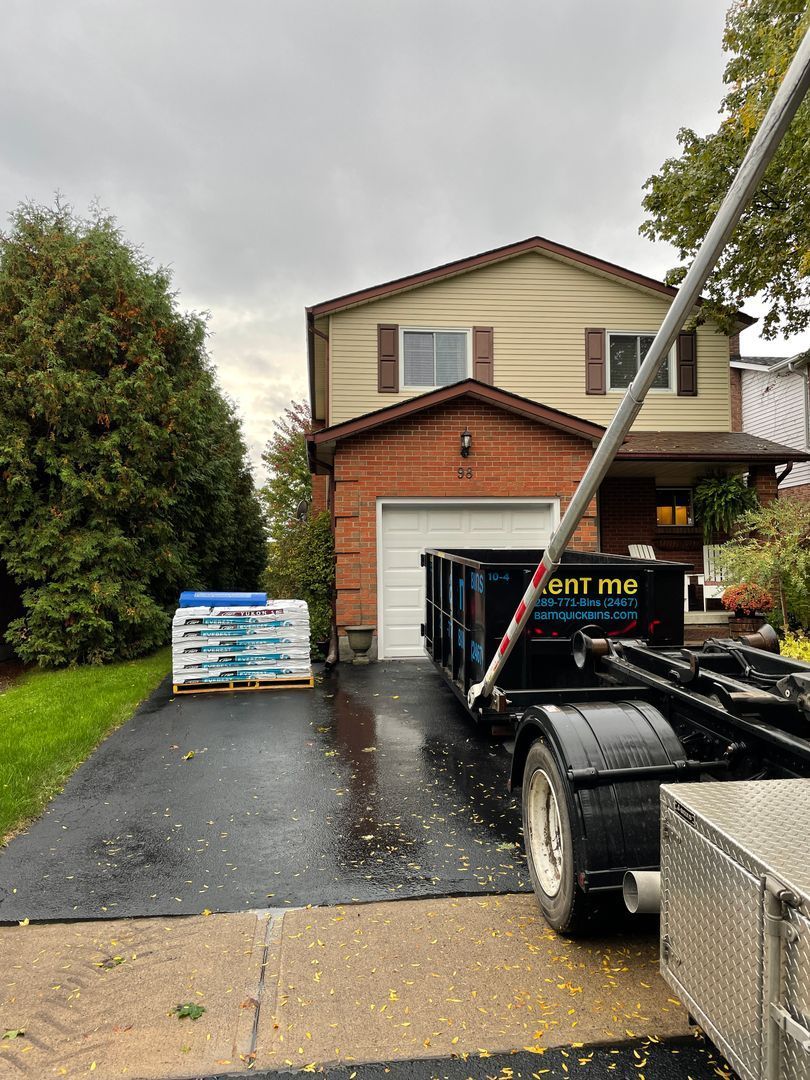
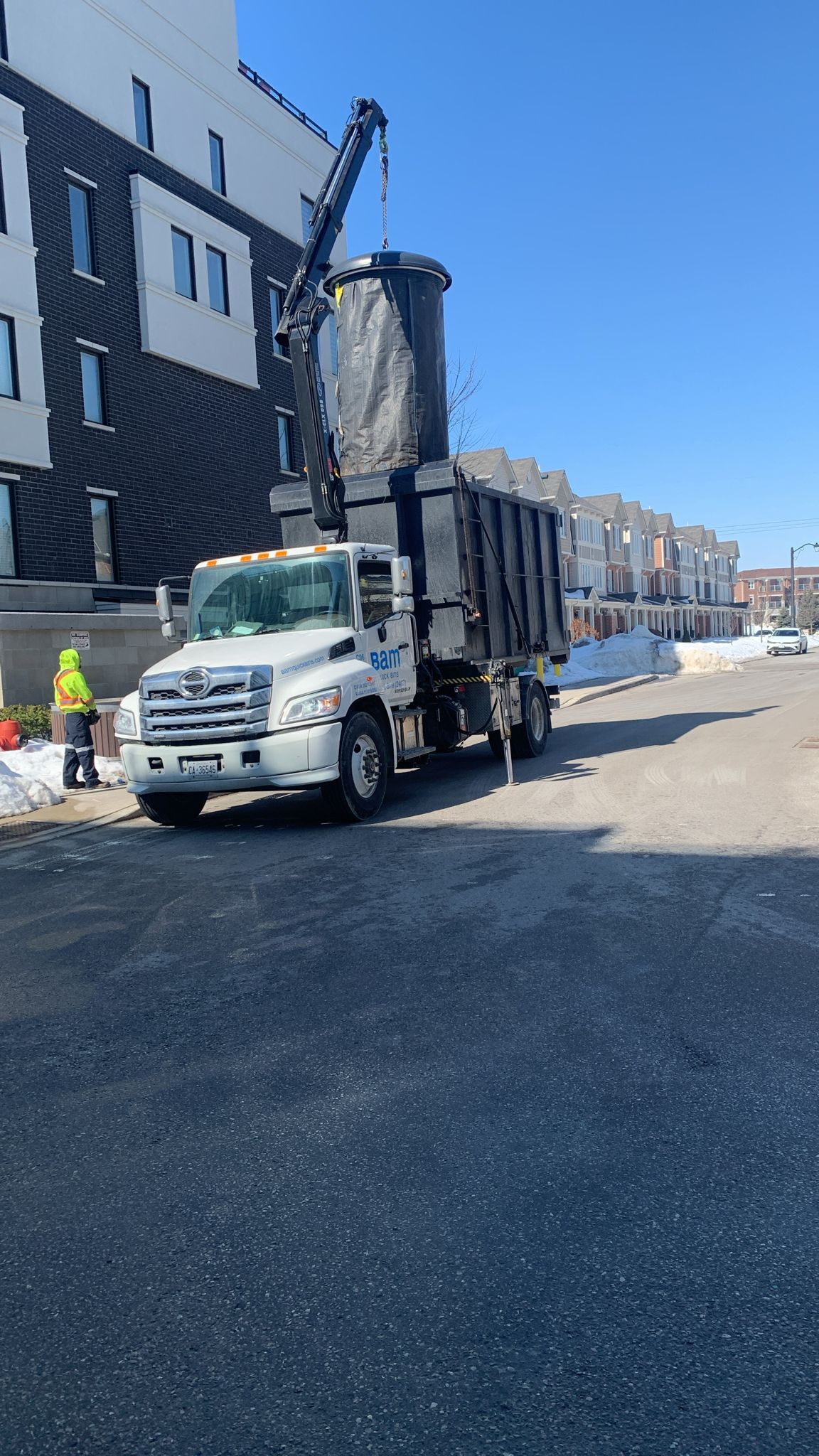
That matters when you rent a bin. Our standard rental includes 1 metric tonne of disposal, and a flooded basement can pass that faster than the bin's volume suggests. Tell us it is flood debris when you book, and we will help you size the bin or plan more than one load. Our guide to dumpster weight limits explains why.
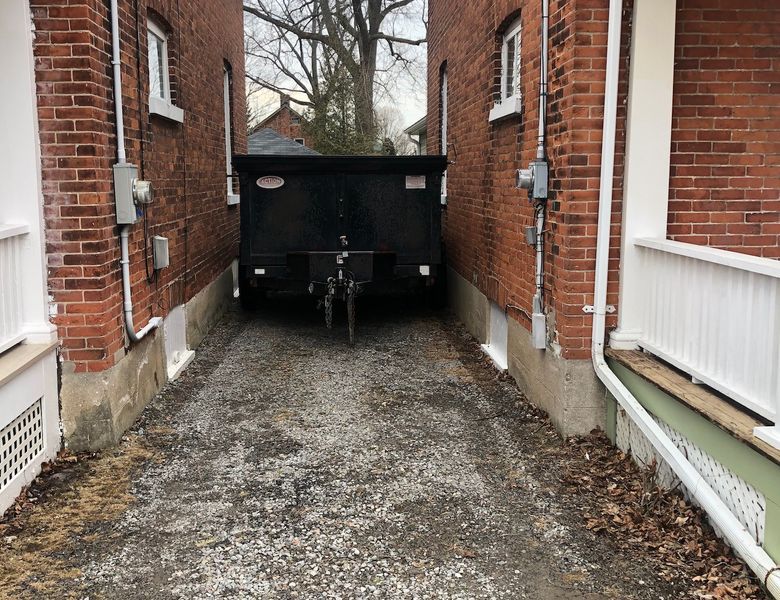
Speed matters here too. Because of the mould clock, you want the bin arriving as soon as the insurer has what they need. Our guide to getting a bin fast covers how to get the earliest delivery window. If you have a walkout basement, ask for the bin to be placed close to that door; it cuts out dozens of trips up the stairs.
For the full tear-out process on flooring, our carpet removal guide explains how to pull up carpet, pad, and tack strip quickly. Our residential rentals come in 10, 15, and 20-yard sizes.
Preventing the next one
Once the basement is dry and rebuilt, a few upgrades can stop this from happening again:
- A backwater valve. Toronto explains that it closes the sewer line during heavy rain to keep water from backing up into your home; while it is closed, toilets, sinks, and appliances will not drain, so an alarm helps.
- A sump pump with a battery backup, so it keeps running during the power outages that often come with storms.
- Downspouts that drain well away from the foundation. Mississauga asks for at least 4 to 6 feet, about 1.2 to 1.8 metres, onto lawn, garden, or a rain barrel.
- Grading that slopes away from the foundation on all sides.
- Window well covers on below-grade windows.
Some Ontario municipalities help pay for this work. Toronto's Basement Flooding Protection Subsidy Program covers backwater valves, sump pumps with battery backup, and related work, and Mississauga runs a basement flooding prevention rebate. Toronto also lists installing a backwater valve among the jobs that need a building permit. Check your own city's website before you hire a plumber.
Where we help
We deliver bins for flood cleanups across southern and eastern Ontario, including Ottawa, Toronto, Hamilton, Burlington, and Barrie. If your basement has flooded, call your local division, tell us it is flood debris, and we will do our best to get a bin to you while the clock is still on your side.