Most hot tubs have a happy first decade and a long, quiet retirement. The heater fails, the jets stop working, the cover gets waterlogged, and eventually the tub becomes a large, heavy piece of deck furniture that nobody uses. At some point, someone has to deal with it.
Hot tub removal is a bigger job than it looks, but it is very manageable with a plan. This guide covers your options, how to drain the tub responsibly, why the electrical disconnect matters, how to cut a tub down into pieces you can actually carry, and where every part ends up.
First decide: sell, give away, or remove?
If the tub still works, or nearly works, someone may want it. Working hot tubs have a steady used market, and buyers often arrange the move themselves. List it with honest details: the age, the size, what works, what does not, and how accessible it is. "Free to whoever moves it" gets a surprising number of replies for tubs in reasonable shape.
If the tub is broken, cracked, or simply too old to be worth fixing, removal is the answer. The rest of this guide is for you.
Hire it out or do it yourself?
Hot tub removal companies will disconnect, cut up, and haul away a tub, usually in a few hours. That is worth considering if access is tight, the tub is set deep into a deck, or you are not comfortable with a saw.
Doing it yourself is realistic for most people. With two people, a reciprocating saw, and a bin in the driveway, a typical tub comes apart in a day. The savings can be significant, and there is a certain satisfaction in it.
Tools you'll need
Gather these before you start:
- A reciprocating saw with several long demolition blades, since fibreglass dulls them quickly.
- A cordless drill or impact driver with a selection of bits for the skirt panels and frame.
- A pry bar and a hammer.
- A garden hose, and ideally a small submersible pump for draining.
- A large tarp to catch foam crumbs.
- Heavy work gloves, safety glasses, a dust mask, and long sleeves.
- A dolly or hand truck for moving heavy sections and equipment.
How long it takes
Draining usually takes a few hours, longer with just a garden hose. The electrician's disconnect is typically a short visit. The actual teardown, with two people working steadily, takes most of a day for a typical tub, a bit longer if it is set into a deck or tucked under a gazebo. Plan the bin delivery for the morning of teardown day so you can load as you go rather than stacking pieces in the yard.
Drain it responsibly
Start by switching off the power at the breaker. Then plan the draining.
Hot tub water is treated with chlorine or bromine, and many municipalities restrict draining pool and spa water into storm sewers, ditches, or onto neighbouring properties, because the chemicals can harm streams and wildlife. Check your municipality's rules. A common approach is to stop adding sanitizer for several days beforehand so chemical levels drop, then drain slowly onto your own lawn, away from storm drains and neighbours.
Most tubs have a drain spigot near the base, which you can connect to a garden hose. It is slow. A small submersible pump speeds things up considerably. Once it is mostly empty, sponge or wet-vac the last of the water out of the footwell.
Disconnect the power properly
Most full-size hot tubs run on a 240-volt circuit, hardwired through a GFCI disconnect box mounted near the tub. Switching off the breaker is the first step, but removing the wiring is a job for a licensed electrician. They will disconnect the tub, then either cap the circuit safely or remove it entirely, depending on your plans for the space.
Smaller plug-and-play tubs that run on a standard 120-volt outlet are simpler: unplug them and you are done.
Never start cutting a tub until the power is verified off and disconnected. Pumps, heaters, and control boxes all hold wiring, and a saw blade finds it.
How much a hot tub weighs
Empty hot tubs typically weigh somewhere around 500 to 1,000 pounds, depending on size and construction. Smaller two-person tubs come in lighter; large seven or eight-person tubs come in heavier. Filled with water and people, a tub can weigh several tons, which is why they sit on concrete pads or reinforced decks.
Moving an empty tub whole takes four or more strong people, a set of heavy-duty dollies or a spa cart, and a clear path to a trailer. For most homeowners, cutting it into pieces is far safer and easier.
Taking it apart
Work from the outside in:
- Remove the cover. Old covers are heavy with absorbed water and go straight to the bin.
- Take off the skirt panels around the base. They are usually screwed on and may be wood or synthetic.
- With the skirting off, you can see the equipment: pumps, the heater, and the control pack. Disconnect and remove them.
- Cut the plumbing lines.
- Cut the shell into sections with a reciprocating saw and a long demolition blade. Most tubs are acrylic over fibreglass, with a thick layer of spray foam insulation underneath.
- Cut the wooden frame and base into manageable pieces.
The foam is the messy part. It breaks into crumbs that blow everywhere, so lay a tarp under the work area. Wear long sleeves, gloves, safety glasses, and a dust mask, since cutting fibreglass releases fine, itchy dust.
Chemicals, the cover, and the steps
Three leftovers catch people out at the end of a hot tub removal.
The chemicals. Half-used containers of chlorine or bromine, pH increaser and decreaser, and test strips tend to live in a deck box beside the tub. Sanitizers are strong oxidizers, and they must never be mixed or stored with other chemicals, especially acidic ones like pH decreaser. Keep everything in its original container with the lid closed, and take it to a household hazardous waste depot. None of it can go in a bin, and our household hazardous waste guide explains where it goes.
The cover. An old cover is foam wrapped in vinyl, and once the foam has soaked up water it can weigh several times what it did new. If it is too heavy to lift, cut it into pieces with a utility knife and let them drain before loading.
The steps and accessories. Plastic steps, cover lifters, and side tables are easy to sell or give away if they are in good shape, since people who already own a hot tub often need replacements.
What goes where
A hot tub breaks down into a few streams:
- The shell, foam, cover, skirt panels, and frame go in a bin.
- Pumps, motors, and the heater contain copper and steel and are worth taking to a scrap yard. Our guide to scrap metal recycling explains what scrap yards pay for.
- The concrete pad can stay as a base for a patio or shed, or come out and go in a clean-fill bin.
- Pavers or patio stones under the tub can often be reused elsewhere in the yard.
Sizing the bin
A typical cut-up hot tub fits in a 10-yard bin with room to spare, and the weight sits comfortably within the 1 metric tonne included with a standard rental. If you are also removing a surrounding deck, a gazebo, or the concrete pad, size up or plan a second bin. Our deck removal guide covers that part of the job, and our guide to concrete disposal explains how clean-fill bins work for the pad.
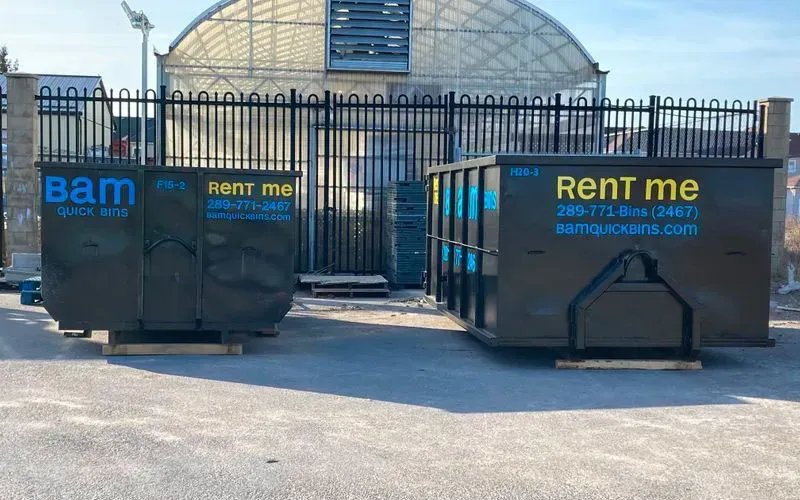
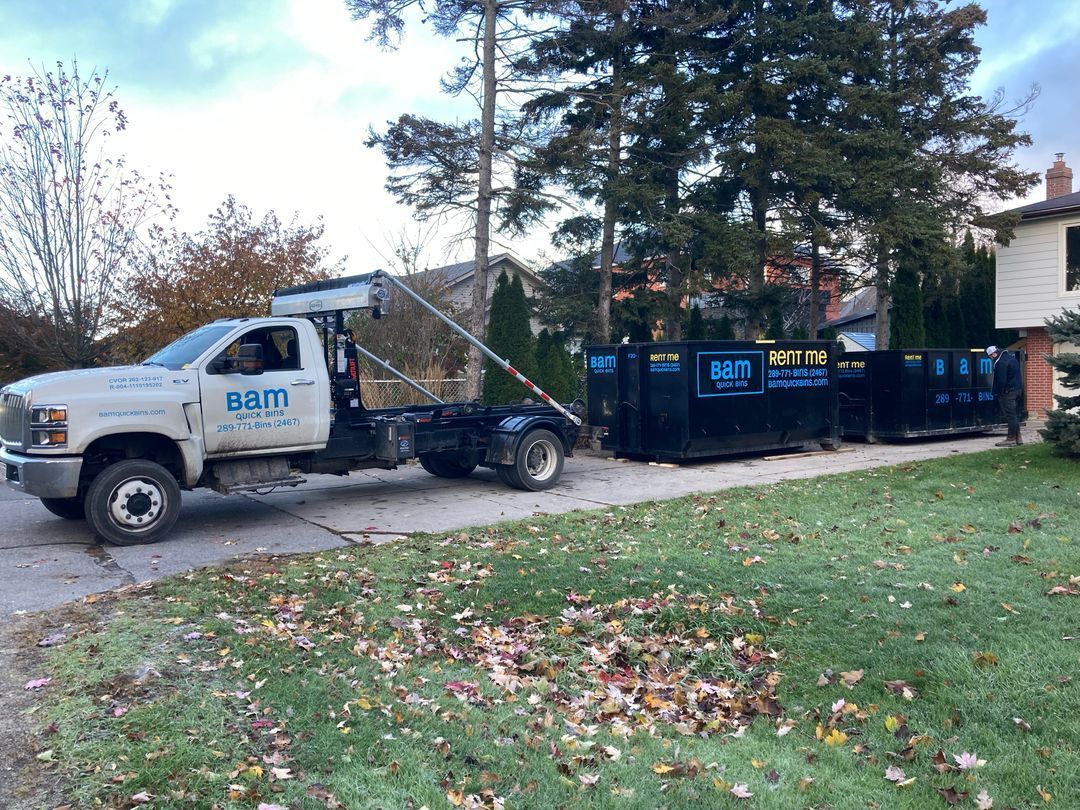
Our residential rentals come in 10, 15, and 20-yard sizes, with boards under the bin to protect your driveway. Have the bin placed as close to the backyard as the truck can safely reach, since you will be carrying awkward, sharp-edged pieces.
Working around decks and gazebos
Tubs set into a deck are harder to remove than freestanding ones. You may need to remove deck boards or framing around the tub to free it, or cut the tub down in place and lift pieces out. Gazebos and privacy screens built around tubs can block the way out, so plan your route before you start cutting.
Protect your lawn and gardens along the carry path with plywood sheets. Heavy, awkward pieces carried across soft grass leave ruts.
Safety tips worth repeating
- Confirm the power is off and disconnected before any cutting.
- Wear eye protection, gloves, and long sleeves throughout.
- Watch for sharp edges on cut acrylic and fibreglass.
- Lift with your legs and get help with heavy sections.
- Do not drain treated water into storm drains or onto your neighbour's property.
What affects the cost
There are a few pieces to budget for when you do the removal yourself: the electrician's visit to disconnect the tub, the bin rental, saw blades, and possibly a pump rental for draining. A trip to the scrap yard with the pumps and heater may put a little money back in your pocket.
Hiring a removal company bundles all of that into one price, and it is worth comparing quotes against the do-it-yourself total. The factors that push a removal quote up are the same ones that make the job harder for you: tight access, a tub built into a deck, stairs between the tub and the street, and a concrete pad that also needs to come out.
Reclaiming the space
Once the tub is gone, you have a level pad and a blank spot in the yard. Many people turn it into a patio seating area, extend the deck, add a garden, or put up a shed. If the concrete pad is in good shape, it makes an excellent base for any of them.
Where we help
We deliver bins for hot tub removals across southern and eastern Ontario, including Innisfil, Alcona, Oakville, Ancaster, and Peterborough. Tell us it is a hot tub when you book, and whether the deck or pad is coming out too, and we will help you pick the right bin.