Hiring someone to haul away your junk sounds simple until you call three companies and get three different answers. One quotes by the truckload, one by the item, and one will not give a number until someone comes to look. The prices are all over the map, and it is hard to tell which one is the good deal and which one will surprise you on the day.
This guide explains how to choose a junk removal company: how the different pricing models work, what a fair quote should include, the questions to ask before you book, the red flags, and when a bin you load yourself is the better choice. In the interest of honesty, we should say up front that we run a bin-based service, so we have a stake in that last part. We have tried to make the rest useful whoever you end up hiring.
The four ways junk removal is priced
Almost every junk removal company in Ontario uses one of four pricing models, and understanding them makes quotes much easier to compare.
By volume. This is the most common model for crew-based companies. The price depends on how much of the truck your junk fills, usually quoted in fractions like a quarter or half a truck. The crew estimates the volume by eye when they arrive. It is fair in principle, but the estimate is subjective, and heavy items like concrete or shingles often carry surcharges on top.
By the item. Common for single pieces like a couch, a mattress, or a fridge. It is simple and works well for one or two things, but it adds up fast if you are clearing a whole room.
By the hour. Some companies charge for the crew's time plus the truck. It can be cheap for a fast, well-organized job and expensive for a slow one, and you have little control over the pace.
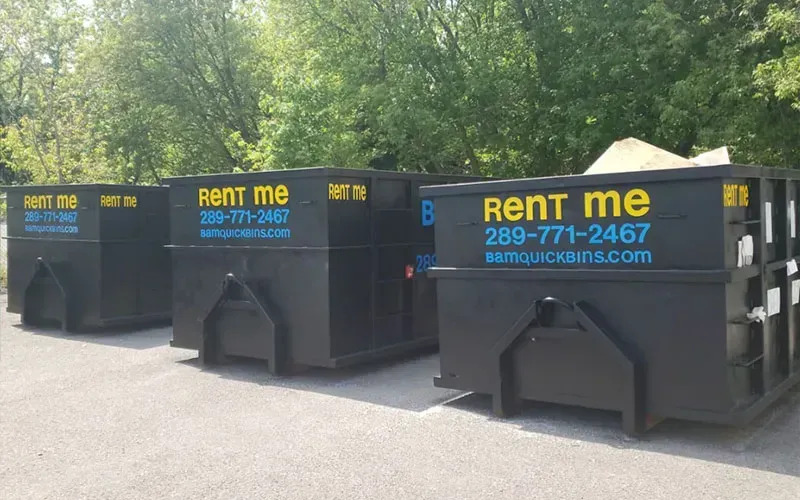
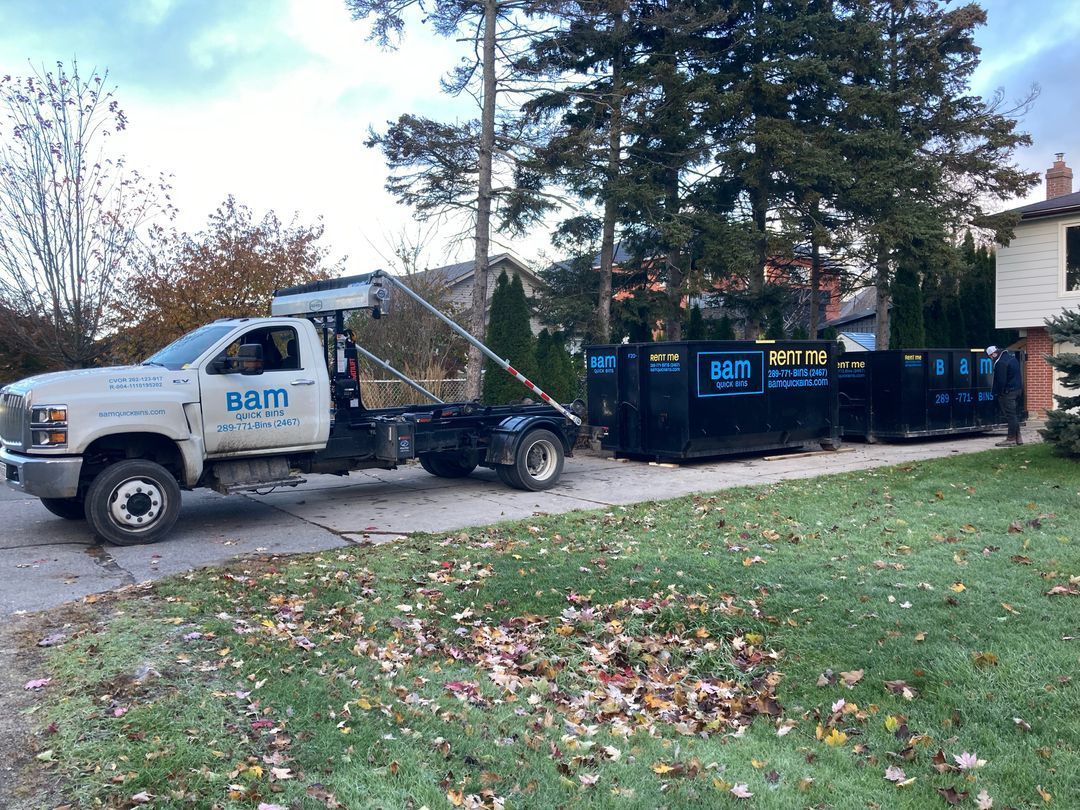
By the bin. A bin-based service drops off a container, you load it on your own schedule, and one flat rate covers delivery, the rental period, the haul, and disposal up to a weight allowance. Our junk removal service works this way, with a 5-day standard rental and 1 metric tonne of disposal included.
None of these models is a scam. Each suits different jobs, which is why the next sections matter.
What a fair quote includes
Whatever the model, ask for the quote in writing, and make sure it covers:
- What is included: labour, the truck or bin, and disposal fees.
- Surcharges, if any, for mattresses, appliances with refrigerant, tires, or heavy materials.
- Extra charges for stairs, long carries, or taking furniture apart.
- The minimum charge, if there is one.
- HST, so the number you compare is the number you pay.
- The cancellation and rescheduling policy.
Then ask one direct question: if the pile is what I described, is this the final price? A company that is confident in its pricing will say yes, or explain exactly what would change it.
Sending photos helps. Most companies can give a much firmer estimate from a few clear pictures of the pile than from a description over the phone.
Items that cost extra almost everywhere
Some items carry surcharges with most haulers, crew or bin, because they need separate handling or weigh far more than they look. Knowing them in advance takes the surprise out of a quote.
Mattresses and box springs often go to separate recycling streams. Tires and appliances with refrigerant, like fridges, freezers, and air conditioners, need specialized handling before they can be processed. Heavy materials, like concrete, brick, shingles, soil, and tile, fill a truck or bin by weight long before they fill it by volume.
None of this is a trick. Ask how each company handles these items, and compare the answers along with the headline price.
If you are comparing bin companies
Bin rentals have their own set of questions, and the answers vary more than you might expect:
- How many days does the standard rental include, and how much weight is included in the price?
- Do you protect the driveway? We put boards under every bin, but not every company does.
- What can't go in the bin, and what happens if a banned item turns up at pickup?
- How do I book the pickup, and can the rental be extended if the job runs long?
- What does the truck need to place the bin, in terms of space, overhead clearance, and a firm surface?
A company that answers these clearly on the first call is usually just as clear on pickup day.
Questions to ask before you book
A short phone call tells you a lot about a company. These questions are worth asking every time:
- What can't you take? A reputable company will tell you straight away that paint, propane tanks, chemicals, and other hazardous items need their own route. Our household hazardous waste guide covers where those go.
- Where does it all go? Listen for specifics: donation partners, recycling, licensed transfer stations.
- What is the arrival window, and will you call ahead?
- Do you protect floors and door frames, and do you sweep up afterward?
- Are you a member of any industry association? Membership is not a guarantee, but it shows a company is engaged with the rules. We belong to Waste to Resource Ontario, the province's waste and recycling industry association.
Insurance and the WSIB clearance
Junk removal is physical work, done in your home, on your stairs, with heavy objects. Two kinds of coverage matter.
Liability insurance covers damage to your property, like a gouged floor, a cracked door frame, or a scraped car. Ask whether the company carries it, and ask for a certificate if the job is large.
Workplace injury coverage is the other half. In Ontario, most businesses with workers have to register with the WSIB, and a WSIB clearance shows that a business is registered and up to date on its premiums. A clearance is valid for up to 90 days, so ask for a current one. For businesses and property managers, it matters for another reason: a clearance protects the business that hires a contractor from being held liable for that contractor's unpaid premiums.
One nuance is worth knowing. A sole operator with no employees, working outside construction, may not be required to register with the WSIB, so a missing clearance is not automatically a red flag for a one-person outfit. In that case, ask what insurance covers injuries on your property.
Reading reviews properly
Star ratings tell you less than the reviews themselves. Read the recent ones first, since companies change. Look for specifics: the crew arrived on time, the final price matched the quote, they were careful with the stairs. Vague praise tells you little.
Pay attention to how the company responds to complaints. Every business gets an unhappy customer now and then; a calm, specific reply that tries to fix the problem is a good sign. A pattern of the same complaint, like surprise charges on the day, is a much bigger warning than one angry review.
Finally, check the basics. A real business has a name, a working phone number, a website with clear policies, and a way to reach someone after the job is done.
Red flags
Walk away, or at least slow down, if you see any of these:
- No written quote, or a phone quote that grows once the crew sees the pile.
- Cash only, with no receipt and no business name on the paperwork.
- Pressure to decide on the spot, or pricing that is good for today only.
- Vague answers about disposal, like "we take care of it."
- Willingness to take anything, including paint, propane, and chemicals, with no questions asked.
- A price far below everyone else's.
The last two are linked. Disposal fees are a real cost for every hauler. A company that charges far less than the rest of the market, and takes items that licensed facilities refuse, is often a company that is not paying for proper disposal.
Why illegal dumping is your problem too
Illegal dumping is not just an environmental problem. It can come back to the person who paid for the haul. Loads dumped on rural roads and in ravines often contain mail, documents, or other items with a name and address in them, and municipal bylaw officers do follow those leads. Rules and penalties vary by municipality, but at the very least it is an unpleasant conversation.
Protect yourself by hiring a company that can tell you where its loads go, keeping your receipt, and removing anything with personal information before the junk leaves. Shred old documents, and wipe or remove the drives from computers and phones. Our guide to e-waste disposal explains how to handle electronics.
Crew-based or bin-based?
Both models have a place, and the honest answer depends on the job.
A crew makes the most sense when you have one or two heavy items you cannot lift, when mobility or health makes carrying things difficult, when you need everything gone within the hour, or when there is nowhere to put a bin.
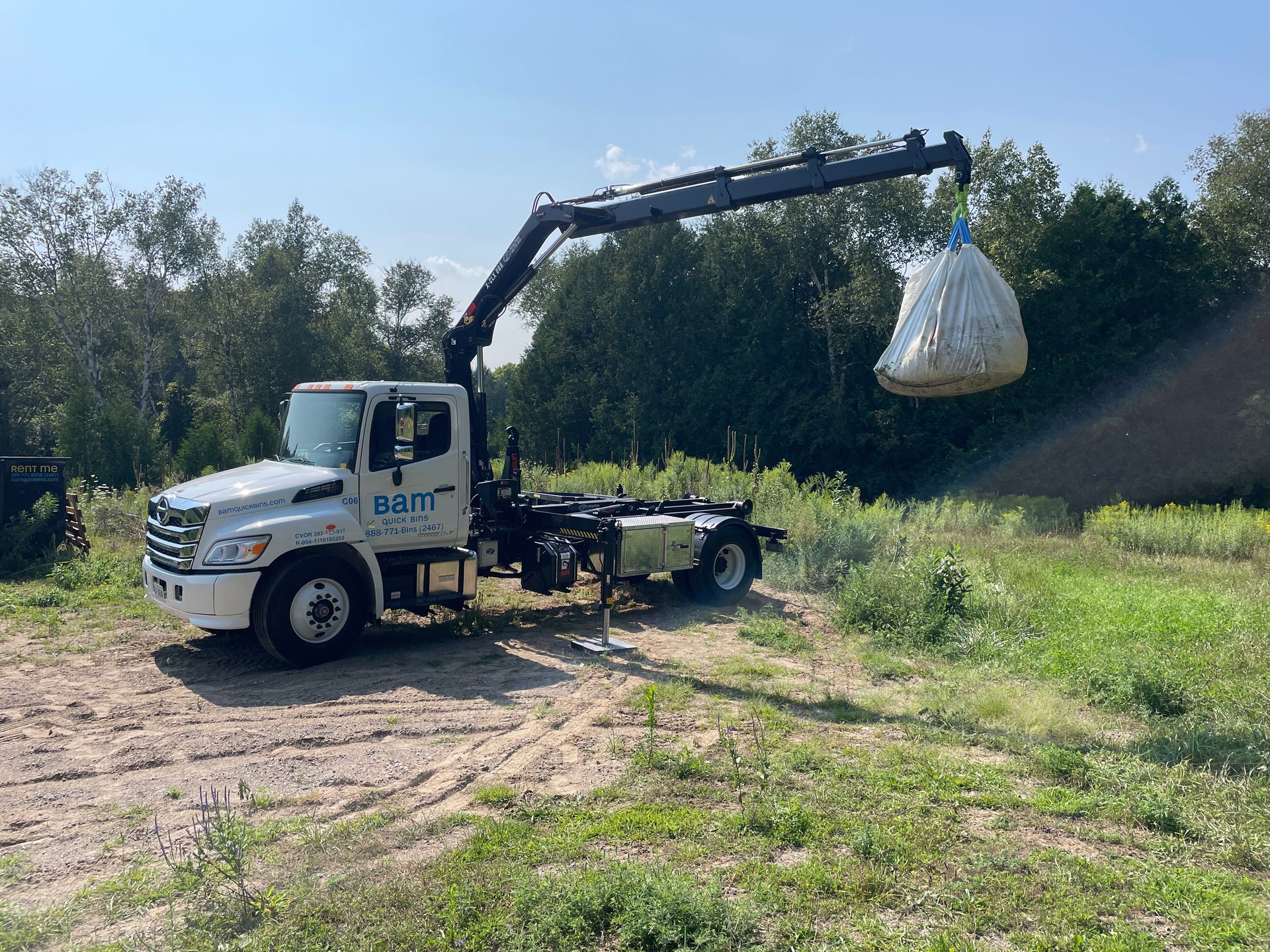
A bin makes the most sense for larger jobs: whole-house cleanouts, estates, moves, and renovations, where sorting takes time and the volume is high. You load at your own pace, there is no clock running, and the flat rate does not change because you took an extra afternoon. For smaller jobs, a Bam Bag rated to 1 tonne covers the gap below a full bin.
The trade-off is that a bin needs somewhere to sit and someone to load it. If you have neither, a crew is the right call. Our comparison of junk removal vs dumpster rental goes deeper on the decision, and our guide to junk removal costs explains what drives the price either way.
Getting the most from whoever you hire
A little preparation saves money with any company.
Pull out donations, sale items, and anything hazardous before the haul. Separate valuable metals if you plan to scrap them. Break down furniture that comes apart easily.
With a crew, gather everything in one place near the door and clear a path. Time on site is money, and crews that do not have to hunt through the basement finish faster.
With a bin, plan the loading order. Flat, heavy items go on the bottom, bulky pieces next, and loose bags fill the gaps. Our guide to where the junk goes explains what happens after pickup.
Where we help
Our bin-based junk removal runs across southern and eastern Ontario. In the Quinte area, see junk removal in Belleville; around the Kawarthas, junk removal in Peterborough; and in Northumberland, junk removal in Cobourg. Farther afield we cover Ottawa and Barrhaven, Toronto and Mississauga, Hamilton and Dundas, and Kitchener. Tell us what you are clearing and where the bin can sit, and we will tell you honestly whether a bin, a Bam Bag, or a crew is the better fit for your job.