Most businesses think about their commercial garbage bin exactly twice: the day they sign for it, and the day it overflows into the parking lot with a health inspection coming up on Thursday. Everything in between is supposed to be invisible. When the bin is sized right, emptied on the right schedule, and placed where the truck can actually reach it, it is.
This guide walks through how commercial garbage bin service works in Ontario, what drives the monthly cost, and the questions worth asking before you commit to a multi-year contract. We run a commercial program ourselves, so you will see our numbers near the end, but most of this applies no matter who empties your bin.
How a commercial bin differs from a rental bin
A roll-off rental is a project tool. It shows up for a renovation or a cleanout, sits for a few days, and leaves full. A commercial garbage bin is the opposite: a fixture that stays put for years, gets emptied on a schedule, and handles the waste your business produces every single week.
That changes what matters. With a rental, you care about size and rental length. With a commercial bin, you care about three things that compound over time: how often it gets emptied, how secure it stays between pickups, and what the contract says when your volume changes.
A bin that is slightly too small costs you an extra service every so often. A contract that is slightly wrong costs you every month for five years. The second problem is the expensive one, and it is also the easier one to avoid.
Sizing starts with one honest week of garbage
The most common sizing mistake is guessing. The second most common is sizing for your worst week instead of your typical one.
Before you call anyone, spend one normal week watching what leaves your building. Count the bags. Note how much is cardboard, how much is food waste, and how much is general garbage. If you already have a bin, look inside it the night before pickup. Is it half full? Overflowing? Full of air because nobody broke down the boxes?
A few patterns show up again and again across business types:
- Restaurants produce dense, wet, smelly waste, which pushes them toward more frequent pickups rather than bigger bins. Nobody wants a week of food scraps sitting in July heat.
- Retail produces mountains of cardboard. Break it down and a big share of that volume disappears; leave boxes whole and you pay to haul air.
- Offices are lighter than people expect, except during moves and renovations, which call for a temporary roll-off rather than a bigger permanent bin.
- Apartment buildings swing hard around the first of the month, when tenants move and furniture appears beside the bin overnight.
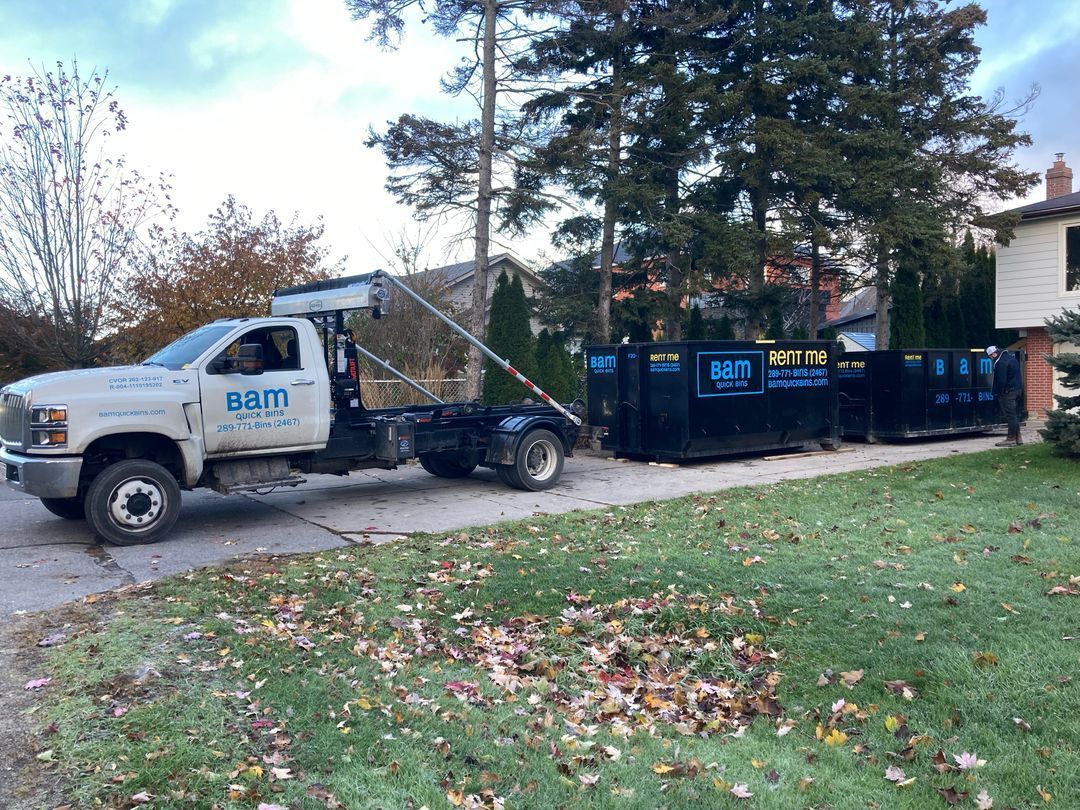
Our commercial bins are 10-yard containers with lids. For context, a 10-yard bin holds roughly three to four pickup-truck loads of loose garbage. Plenty of small and mid-size businesses find that one bin on the right schedule covers them. Larger operations usually add a second bin or another pickup rather than jumping to a giant container that sits half empty between services.
Pickup frequency decides your bill
Here is the part that surprises people: on most commercial contracts, the bin itself is the cheap part. The service is where the money goes. Every time a truck empties your bin, there is a charge for the visit and a charge for disposing of what was inside.
So the goal is not the biggest bin or the most pickups. It is the smallest number of services that keeps the bin from overflowing. A bin emptied weekly that is always half full could probably be emptied every second week. A bin that overflows every Friday needs either one more pickup or less air inside it.
Two habits move that number more than anything else. First, break down cardboard. Flattened boxes take a fraction of the space. Second, keep the lid closed and the bin reserved for your own waste, so neighbours and passersby are not filling the capacity you pay for.
Review your schedule after the first two or three months. Volume settles once staff get used to a new system, and a decent provider will adjust frequency rather than hold you to a pattern that no longer fits.
Lids and locks matter more than you'd think
An open commercial bin is an invitation. Raccoons and gulls tear bags apart. People driving past toss in mattresses and half-empty paint cans. Rain soaks the load and makes it heavier, which matters when disposal is charged by weight.
A lid fixes most of that. It keeps animals out, keeps rain off, and makes illegal dumping a little less tempting. For businesses with a real dumping problem, ask about locking options. A lid that staff can open and strangers cannot is the simplest way to stop paying for other people's garbage.
Lids also help with smell, which for restaurants and grocers is a neighbour-relations issue as much as a comfort one. Combined with a sensible schedule, a closed bin keeps odour and flies under control. If you have ever opened a bin into a writhing mess, our guide to keeping maggots out of garbage bins covers both the cleanup and the prevention.
Placement: what the truck needs
Every commercial bin needs a home the truck can reach easily, every time. That sounds obvious until a new parking layout, a February snowbank, or a parked delivery van blocks access on pickup day.
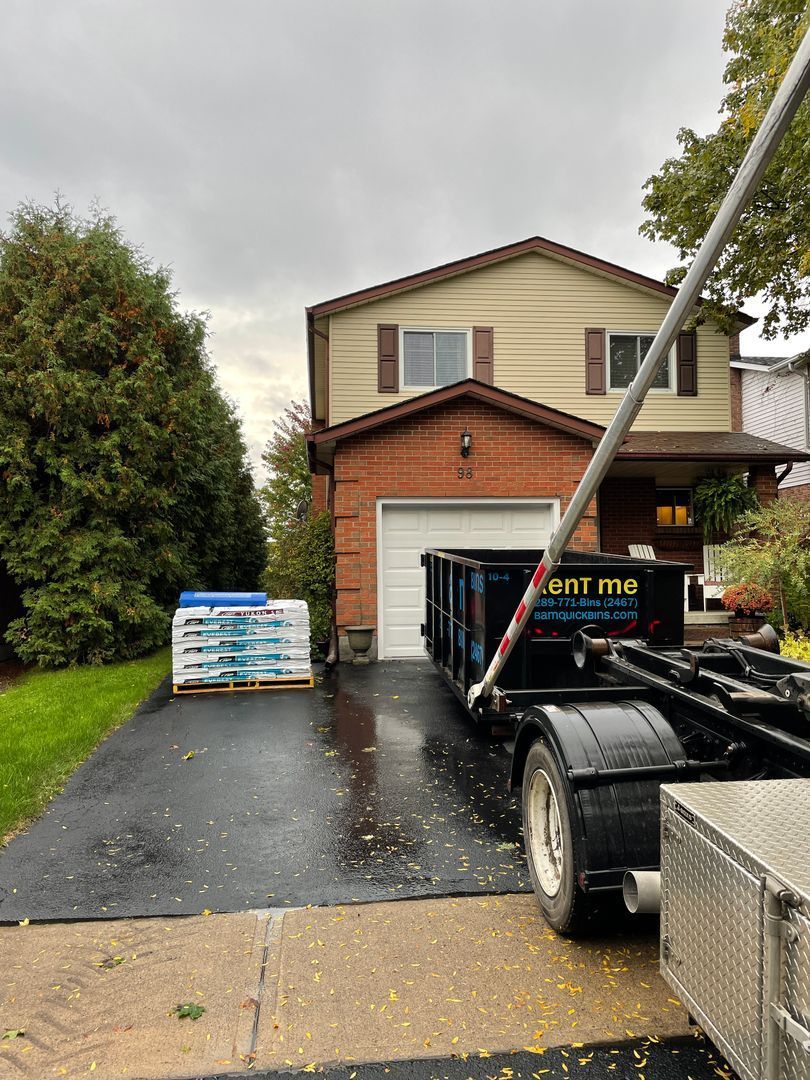
When you choose a spot, think like the driver. There should be a clear, straight approach, enough room to manoeuvre, and nothing overhead like low wires or a canopy. The surface should be solid; asphalt or concrete beats gravel, especially in spring when soft ground ruts. And the bin should sit close enough to your back door that staff will actually walk out to it in January.
If your property has a fenced enclosure, measure it before you sign anything. Enclosures built around one container size do not always fit another, and lid clearance inside a walled corral catches people out more often than you would think.
Read the contract before you sign it
Commercial waste contracts tend to run for several years, which is fine when the terms are clear. Check these points before you sign:
- The term length and what happens at the end. Some contracts renew automatically unless you give notice within a set window.
- How each service is charged. Is there a monthly rental, a per-service fee, disposal costs on top, or all three? Ask for a realistic monthly total at your expected frequency, not just the headline number.
- How changes work. If your volume grows or shrinks, can you change frequency without a penalty?
- Extra charges. Overflow pickups, locks, relocations, and contaminated loads can all carry fees.
None of this is sinister. It is simply easier to read before the bin arrives than after.
What stays out of the bin
Commercial bins take general garbage. They do not take liquids, hazardous materials, or anything that could start a fire or contaminate a load. For most businesses, that rules out:
- Cooking oil and grease, which belong with a grease collection service.
- Paint, solvents, cleaners, and other chemicals.
- Batteries, especially lithium ones, which start fires in trucks and at disposal sites.
- Electronics, which have free recycling streams in Ontario. Our guide to e-waste disposal explains how those work.
- Propane cylinders of any size.
Ontario also has source-separation rules for some larger commercial and institutional properties, which require certain recyclables to be collected separately. If you run a big operation, check whether those rules apply to you. Our construction waste disposal guide covers the same regulations from the jobsite side.
Our commercial program, in plain numbers
Our commercial offering is the 10-yard Dumpster with Lid. It is $250 per month on a 3-year contract or $200 per month on a 5-year contract. Each emptying carries a servicing fee, $130 on 3-year terms and $100 on 5-year terms, plus the actual disposal costs. You can read the full details on our commercial dumpster page.
We set the schedule with you based on real volume. If your waste genuinely needs a weekly pickup, we will say so, and if every second week will do, we will say that too. An honest schedule is cheaper for you and easier for us, since nobody enjoys a truck visit to a half-empty bin.
When a semi in-ground container makes more sense
For condos, apartment complexes, and townhouse developments, a row of surface bins is not always the right answer. Semi in-ground containers, often called Molok® containers, store most of their volume below grade, which keeps waste cooler, cuts down on smell, and frees up surface space. They are emptied by crane on a schedule.
If you manage a multi-residential property, read our guide to Molok semi in-ground bins or the comparison of Molok bins vs traditional dumpsters. We service these systems through our semi in-ground servicing program.
Where we place commercial bins
Our commercial customers run restaurants, shops, offices, warehouses, and residential buildings across southern and eastern Ontario. That includes business parks in Concord and Kanata, retail strips in Mississauga and Hamilton, and main streets from Cobourg to Peterborough.
Call your local division or 1-888-771-2467. Tell us what your business throws out in a normal week, where the bin would sit, and how the truck gets there. We will tell you plainly what it takes to keep up, including when the answer is a smaller schedule than you expected.