A house demolition looks like a one-day job. The excavator rolls in, the roof comes down, and by the afternoon there is a hole where a house used to be. What the neighbours do not see is the paperwork, the utility appointments, and the hazardous materials work that had to happen first, often over several weeks.
This guide walks through house demolition in Ontario in the order it actually happens, from deciding how much of the building comes down to the bins that carry it away. It is written for homeowners planning a teardown and small builders taking on their first one. Rules vary from town to town, so treat it as a map of the process and confirm the details with your municipality's building department.
Full teardown or partial demolition?
Start by being clear about what is coming down, because it changes the permit, the cost, and the debris.
A full teardown removes everything down to and including the foundation, leaving a clean lot for a new build. A partial demolition keeps part of the structure: a rear addition comes off, a detached garage goes, or the house is stripped to its foundation and rebuilt on top of it.
Keeping the foundation can save money, but only if it is sound. An old foundation with cracks, water problems, or footings that do not suit the new design is a false economy, and an engineer should assess it before anyone decides to keep it.
Interior gutting, where the walls are stripped to the studs, sits in a grey zone. Pulling out drywall and flooring is often treated as renovation work, but Toronto's permit guide, for example, lists demolishing or removing all or a portion of a building, and any material alteration, among the projects that need a building permit. Ask before you start swinging.
The demolition permit
In Ontario, a demolition permit is not optional. Section 8 of the Building Code Act says no one may demolish a building, or have one demolished, unless the municipality's chief building official has issued a permit.
What the application involves depends on where you live, so ask your building department for its checklist before you book anything else. Depending on the municipality, it may ask for a site plan or survey showing the building and property lines, confirmation that utilities have been disconnected, and other documents.
Toronto is a good example of how detailed it can get. Its residential demolition permit application includes a tree declaration, a road damage deposit, and an acknowledgement of the city's demolition control conditions, which link the demolition to a replacement building. Other cities are simpler. Either way, apply early. Permits can take weeks, and the excavator cannot start until the permit is in hand.
Heritage checks before you buy or tear down
Older houses carry a risk that is easy to miss: heritage status.
Under the Ontario Heritage Act, a property can be formally designated, which means council has to consent before a building can be demolished. A property can also be listed on the municipal heritage register without being designated. For a listed property, the owner has to give council at least 60 days notice in writing before demolishing or removing a building or structure on it.
Heritage conservation districts add another layer, with their own rules for whole neighbourhoods.
Check the municipal heritage register before you buy a teardown lot, not after. A 60-day pause is an inconvenience. A designation that blocks the demolition entirely can upend the whole project.
Disconnecting utilities
Every service that runs into the house has to be shut off and removed or capped before demolition, and each one is handled by a different party:
- Natural gas: call the gas utility.
- Electricity: call the local electrical utility.
- Water and sewer: call the municipality, and ask what it charges and where the connections get capped.
- Phone, cable, and internet: call each provider.
Book these early. Utility appointments can take weeks to schedule, and your municipality may want confirmation of the disconnections before it issues the demolition permit.
Before anyone digs out footings or a foundation, request free utility locates from the Ontario Dig Authority, formerly Ontario One Call. Disconnecting the house does not remove the lines running to the street, and neighbouring services can run close to the property line.
Hazardous materials: the designated substances survey
This is the step that most often surprises homeowners, and the one that matters most for the people doing the work.
Section 30 of Ontario's Occupational Health and Safety Act requires the owner of a project to determine, before the project starts, whether any designated substances are present, and to prepare a list of them. If the work is tendered, that list has to be included with the tender documents so contractors know what they are bidding on.
The designated substances are set out in O. Reg. 490/09. The ones that turn up in houses are mostly asbestos, lead, mercury, and silica. In practice, homeowners hire an environmental consultant to do a designated substances survey: they walk the house, take samples of suspect materials, and write a report.
Typical finds in older Ontario houses include:
- Asbestos. Health Canada lists cement and plaster, siding, floor and ceiling tiles, roofing products, drywall and joint compounds, insulation around pipes and tanks, and vermiculite insulation among the older building materials that may contain it.
- Lead in old paint. Health Canada says a home built before 1960 probably contains lead-based paint, and exterior paint from 1960 to 1990 may too.
- Fluorescent tubes and old mercury thermometers, which go to a household hazardous waste depot.
Anything the survey finds has to be dealt with before demolition. Health Canada's advice is to hire a qualified asbestos removal specialist, and in Ontario the work falls under the province's regulation on asbestos on construction projects and in buildings, O. Reg. 278/05. Our guides to asbestos testing and vermiculite insulation explain what that involves.
A few other hazards belong on the same checklist. The TSSA says only a TSSA-registered petroleum contractor is qualified to remove an underground or buried fuel oil tank, so ask for the contractor's registration number; have a basement oil tank emptied and removed by a fuel contractor before demolition too. Under Ontario's refrigerant rules, fridges, freezers, air conditioners, and other refrigeration equipment cannot be dismantled or landfilled until a certified person has confirmed they no longer contain refrigerant and tagged them. Paint, chemicals, and propane cylinders left in the house or garage go to a household hazardous waste depot.
Salvage and deconstruction
Before the machines arrive, walk the house with an eye for anything worth saving. Kitchen cabinets, interior doors, windows, light fixtures, hardwood flooring, mantels, and sometimes brick and beams can all find a second life.
Some charities accept donated building materials. Habitat for Humanity ReStores take donated kitchens and appliances in good condition and full working order, sell them to fund local Habitat homebuilding, and can arrange a pickup. Check with your local ReStore about anything else, since condition matters.
Copper pipe and wire, aluminum, and steel are worth pulling out for a scrap yard. Our scrap metal recycling guide explains what is worth separating.
Full deconstruction, where a house is taken apart by hand to recover as much as possible, takes longer and costs more in labour than machine demolition. It suits houses with valuable materials, owners who care about diverting waste, and projects where the schedule has room for it.
How the demolition day usually goes
Once the permit is issued, utilities are disconnected, and abatement is finished, the demolition itself tends to follow the same sequence:
- Soft strip: removing remaining non-structural material, like leftover fixtures, flooring, and drywall, so it can be sorted.
- Mechanical demolition: an excavator brings down the roof, walls, and floors, usually working from the top down and pulling material inward, away from neighbouring properties.
- Sorting and loading: debris is separated into streams and loaded as the work goes.
- Foundation removal: the basement walls and floor are broken out and removed, unless they are staying.
- Backfill and grading: the hole is filled and the lot is levelled, ready for the next stage.
The mechanical part is often done in a few days. Good contractors fence the site, water down debris to control dust, keep to the municipality's noise bylaw hours, and protect neighbouring fences, trees, and driveways.
Sorting the debris into streams
A house is made of materials that go to very different places, and sorting them is the difference between an efficient demolition and an expensive one.
Concrete, block, and brick from the foundation and chimney are heavy, and they belong in their own loads. They go in clean-fill bins through our dirt and concrete service. Our guide to concrete disposal explains how those bins work.
Wood framing, drywall, insulation, and flooring go in mixed construction bins. Asphalt shingles are dense enough that they deserve their own planning; our shingle disposal guide covers why. Metals go to scrap.
Soil from the excavation has its own rules in Ontario: the province's On-Site and Excess Soil Management regulation governs excess soil that leaves a project and where it can be deposited, so larger digs need a plan for where it ends up. Your contractor should know what applies.
On commercial-scale projects, Ontario's waste audit regulation applies to construction and demolition projects with a total floor area of at least 2,000 square metres, so it rarely applies to a single house. Sorting still pays, though. Our guide to construction waste disposal covers setting up streams on any jobsite.
Planning bins around the excavator
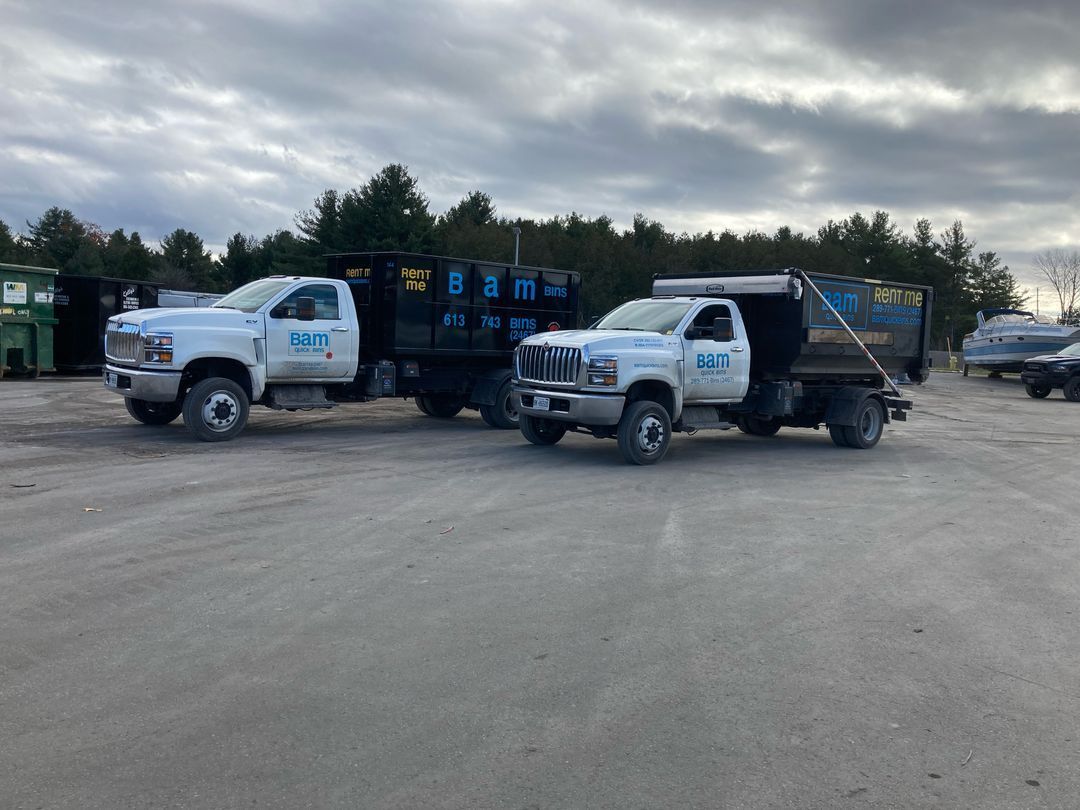
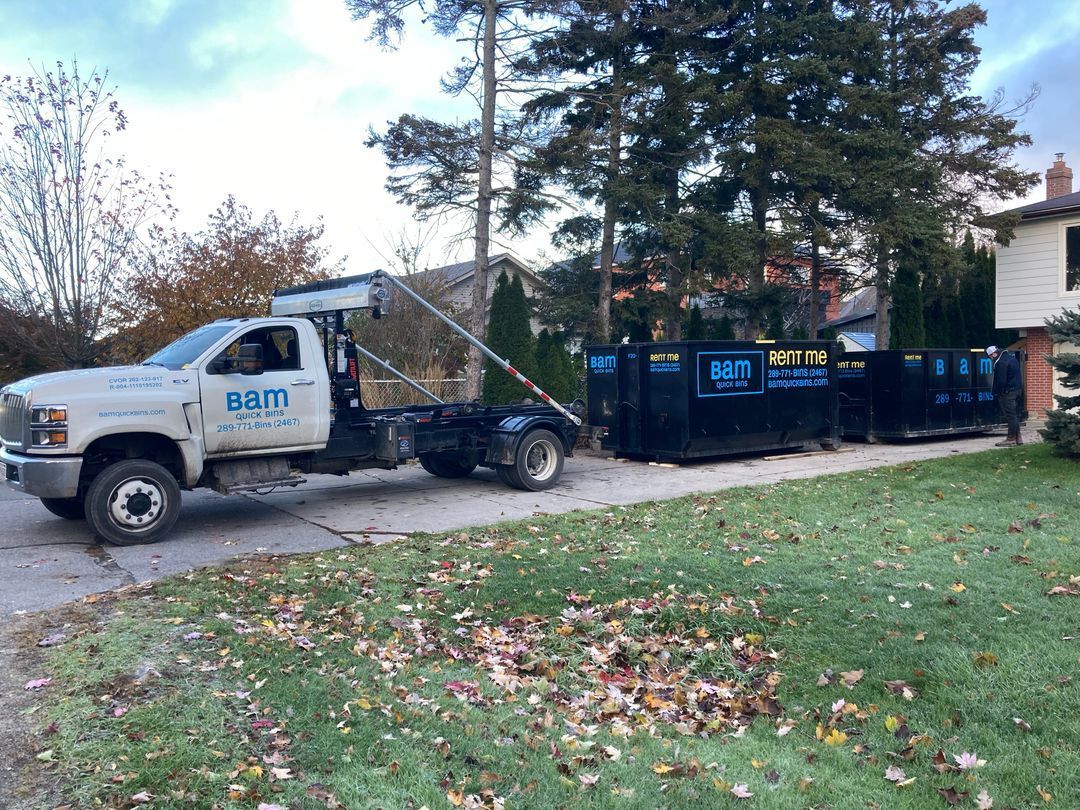
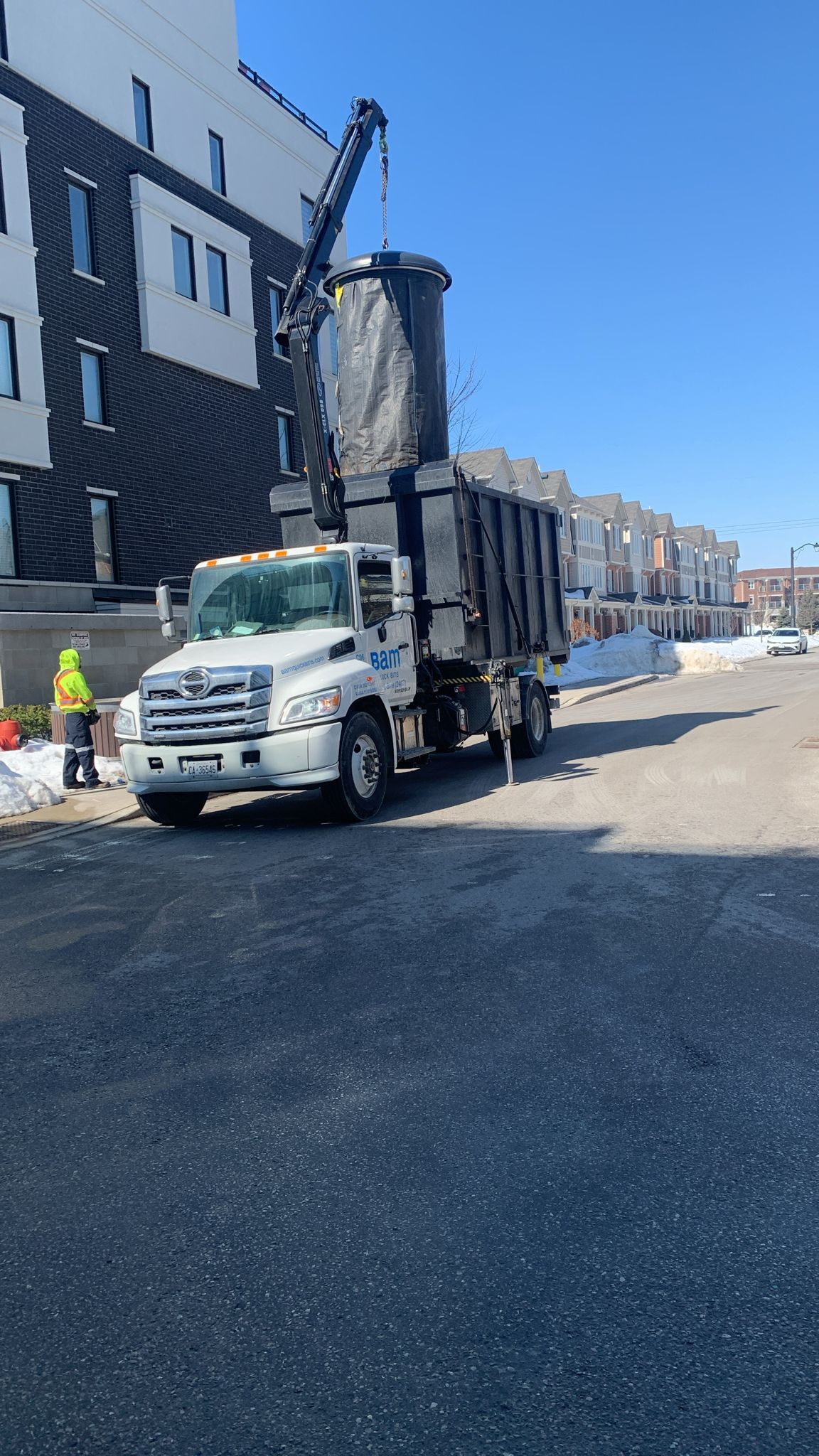
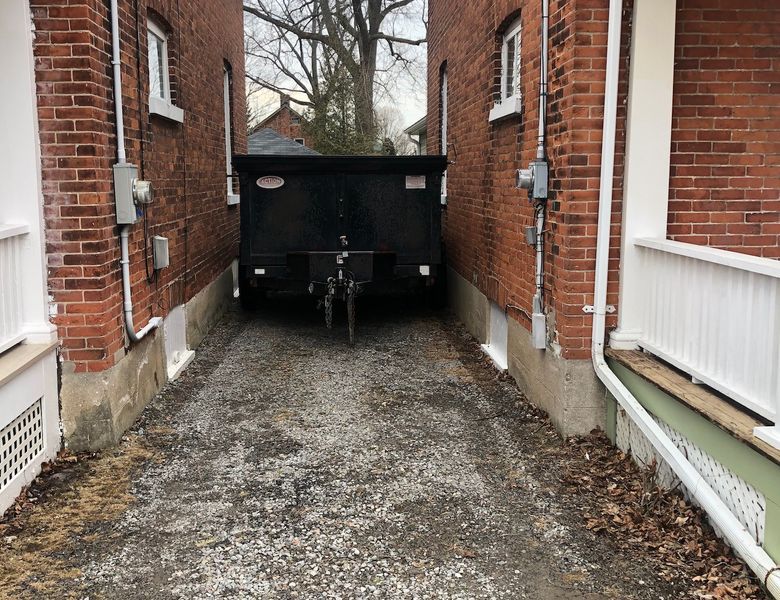
An excavator can fill a 20-yard bin in minutes, so a demolition runs on scheduled swaps. The goal is simple: the machine should never sit idle waiting for an empty bin.
Plan the bins by material, not just by volume:
- Mixed construction debris goes in 20-yard bins, swapped on a schedule worked out with us before the day.
- Concrete, brick, and block go in separate clean-fill loads, filled only partway by design because of their weight.
- Metal goes in its own pile or container for the scrap yard.
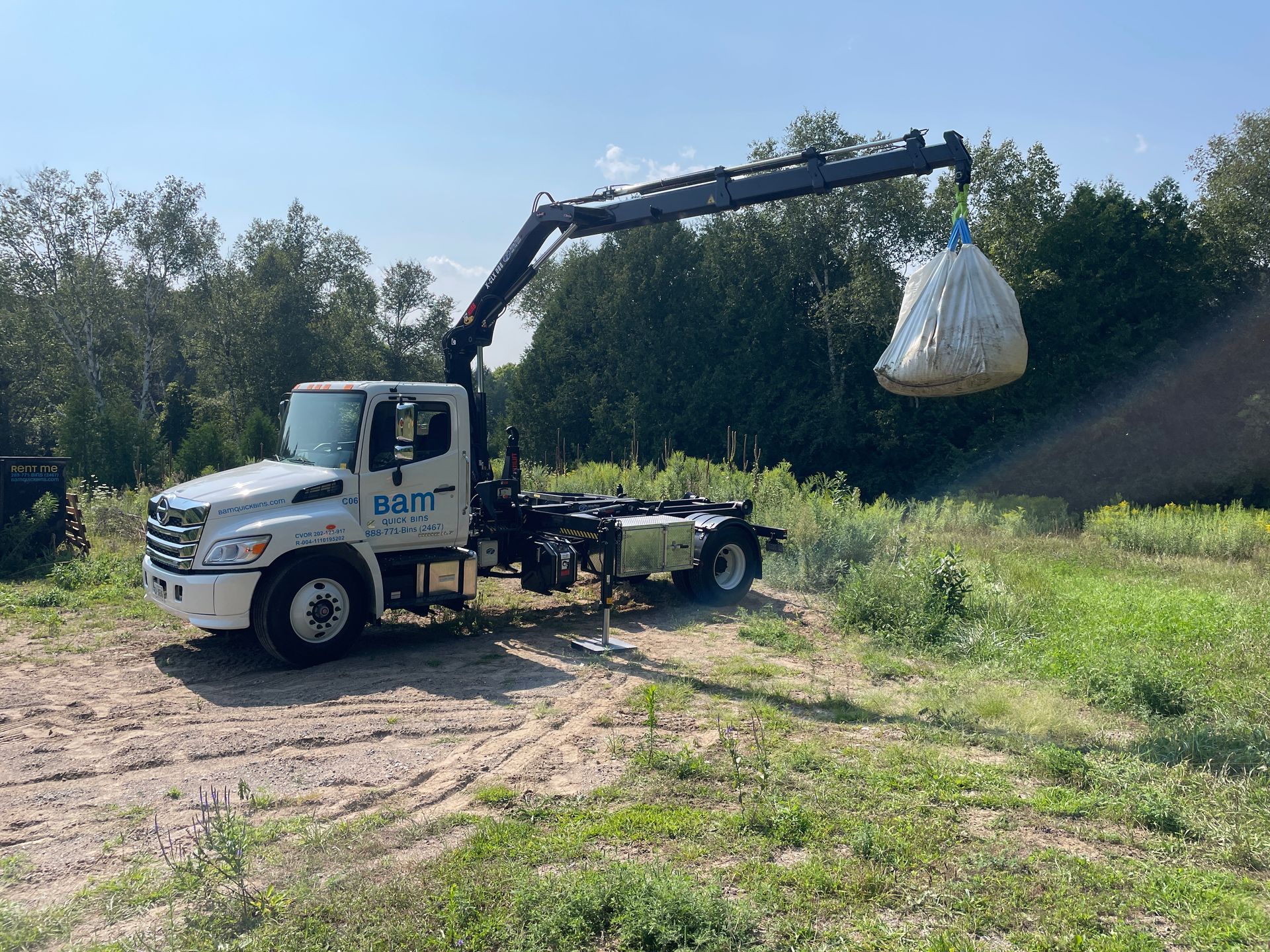
Weight matters as much as volume. A standard rental includes 1 metric tonne of disposal, and demolition debris is dense, so tell us what is coming down when you book and we will plan the loads accordingly. Our construction bin rentals handle the mixed debris, and our construction bin rental guide covers placement and swaps on busy sites.
Partial demolitions are smaller and simpler. A detached garage or a rear addition usually needs one or two 15 or 20-yard bins, plus a clean-fill bin if a slab or footings are coming out.
Questions to ask a demolition contractor
Most homeowners hire a contractor for a full teardown, and the quotes can differ wildly in what they include. Get answers in writing to these questions:
- Who applies for the demolition permit, you or me?
- Who arranges the utility disconnections?
- Is the designated substances survey included, and is abatement included or priced separately?
- How will you protect neighbouring properties, trees, and the street?
- What insurance do you carry, and can you provide a current WSIB clearance?
- Where does the debris go, and how much of it is recycled?
- Does the price include backfill, compaction, and final grading?
A contractor who answers all of these clearly, without being pushed, is usually one who has done this many times before.
After the demolition
With the house gone, a few loose ends remain. Tell your insurance company, since coverage for a vacant lot or a house under construction is different from a standard home policy. Check whether your municipality offers property tax relief during a demolition and rebuild; Toronto, for example, says a property damaged by fire, demolition, or otherwise may be eligible for a cancellation, reduction, or refund of property taxes. If your town collects garbage at the curb, ask whether service can be paused until you move back in.
Then the lot is ready for the next chapter, whether that is a new house, an addition, or a sale.
Where we help
We supply bins for house demolitions, partial demolitions, and the cleanup that follows across southern and eastern Ontario, including North York, Etobicoke, Oakville, Mississauga, and Richmond Hill. Tell us the size of the house, what the foundation is made of, and when the excavator is booked, and we will plan the bins and swaps around your schedule.